Overview
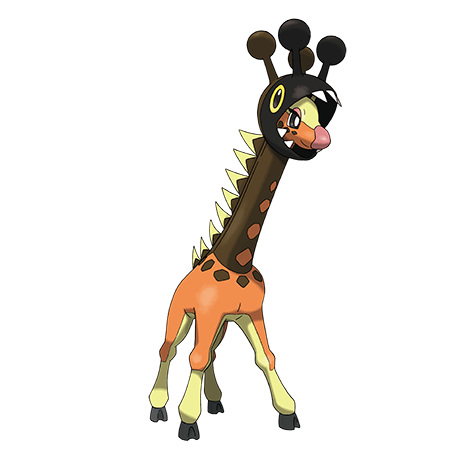
Recruit on sight. Farigiraf isn't a sweeper, isn't a wallbreaker, isn't a flashy pick. He sets Trick Room, eats Hyper Voice through your team, and forces every opponent to re-plan their first turn the second your roster reveals. He sits at the fifteenth-most-used slot in Pokémon Champions doubles, and after this guide you'll know exactly why every Trick Room build in the format runs through him. Notebook open. Field Guide, entry fourteen.
Armor Tail is the entire identity — every priority click on the opposing side becomes a coin they don't get to flip. The veto extends to the partner slot and the value compounds across both.

Pokémon Champions — Switch & Switch 2
Standalone competitive battle game · Online ranked + replays
Affiliate link. We may earn a commission at no extra cost to you.
Why this matters now
Trick Room cores live or die on whether the room actually goes up. A setter that gets Fake Out'd off the click is a dead setter. A setter that gets Sucker Punch'd off the click is a dead setter. A setter that gets Encored into Protect by a Prankster Whimsicott is a dead setter. Most of the format's best Trick Room bodies — Hatterene, Indeedee, the entire Psychic-type bracket — are clicking the room with a coin in the air on whether the opposing side gets to disrupt the turn.
Farigiraf doesn't flip that coin. The coin is gone. Armor Tail removes priority from the equation entirely on his side of the field, which means the room goes up on the turn he clicks it, every time, against any opening that doesn't commit a real attack to break through 120 HP and a held berry. That's the entire pitch in one sentence, and it's the reason this Pokémon won't leave the top fifteen.
What the spread tells you
Read the bars left to right. Two numbers are doing the work. The 120 HP is the headline — it's tied with the upper crust of the doubles meta and sits well above most setters you'd consider as alternatives. The 60 Speed reads like a weakness on the spreadsheet but functions as the feature in practice; under Trick Room, slow is fast, and Farigiraf with a Quiet nature and zero Speed EVs is one of the fastest pieces in the room.
The 70/70 defenses look mediocre in isolation — paired with the HP, they round out into a frame that simply does not die in one turn to neutral coverage. Max-HP Quiet Farigiraf sits at well over 200 actual HP, and that volume is what makes the 70 defensive numbers function. Bulk by raw volume.
The 110 Special Attack is the hidden second weapon. This is not a passive setter — it's a setter that punishes a wasted turn by clicking Hyper Voice for real spread chip. The 90 Attack is a curiosity that becomes relevant if you're slotting Foul Play, and we'll come back to that.
Armor Tail
Blocks every priority move targeting Farigiraf or his ally — Fake Out, Sucker Punch, Shadow Sneak, Jet Punch, First Impression, every Prankster damage move and every Prankster targeted status move. Field-wide effects and side-effects still resolve, but anything that targets a body gets refused at the door.
This is the section to read twice. Armor Tail is the entire identity, and you should treat the alternative — Cud Chew — as a curiosity that runs at under one percent usage and isn't worth a real conversation. The hidden Sap Sipper is similarly off the menu in Champions doubles. Default ability for the meta is Armor Tail at over 99% usage, and the rest is academic.
What Armor Tail does: any priority move that targets a body on Farigiraf's side fails. Fake Out gets cancelled. Sucker Punch fizzles. Shadow Sneak, Aqua Jet, Bullet Punch, Mach Punch, Jet Punch from Palafin, First Impression, Extreme Speed — all of it gets the door slammed in its face. Prankster damage moves count. Prankster targeted status moves count too, which means a Sableye trying to Encore your setup or a Whimsicott trying to Tailwind-and-Taunt the partner runs into a wall.
What Armor Tail does not do: it doesn't stop screens going up on the opposing side, doesn't stop hazards, doesn't stop Tailwind being set on the other half of the field. The mechanic is targeting-based — anything that targets a Pokémon on your side gets refused, anything that resolves on the field or on the opposing side is unaffected. Internalize that distinction and you'll never misplay around it.
The downstream effect on opponents is the real value. The mere presence of Farigiraf on the visible team — even sitting in the back, even on a slot you're not planning to lead — forces the opposing side to assume the priority button might not work. Their Fake Out lead becomes a question mark. Their Sucker Punch finisher becomes a maybe. Their Prankster utility becomes a coin flip on whether you swap him in this turn. You haven't even moved yet and you've already nudged their decision tree.
The moveset
Four slots. Three of them are functionally locked. The fourth is where the conversation gets interesting, but the standard build runs Protect and there's a reason it does.
The headline button and by far the most-used click on this Pokémon for a reason. Five turns of inverted Speed order. The faster you are normally, the slower you become; the slower you are normally, the faster you become. Farigiraf with a Quiet nature, zero Speed EVs, and zero Speed IVs at the bottom end clocks in at one of the slowest legal Speed tiers in the game, which makes him one of the first movers under his own room. That's the math the entire archetype is built on.
The set-up sequence is rarely contested when Farigiraf is the one clicking it, because Armor Tail removes the cleanest disruption tool — priority Fake Out from an Incineroar lead. Without Fake Out as a stop, the opposing team has to commit a real attack to break through the bulk, and against 120 HP and a held Sitrus or Colbur Berry, that's frequently a one-turn problem they can't solve. The room goes up, and the back half of your team — your Torkoals, your Hatterenes, your slow heavy-hitters, your Mega Golurk — start operating at full tempo.
The spread damage button. 90 BP, Normal STAB, hits both opponents, ignores Substitute, and goes through redirection because it has no single target. On a 110 Special Attack frame, that's real spread damage — enough to chip both sides into KO range for the partner inside Trick Room, enough to outright remove anything frail that didn't bring a Normal resist.
The reason this slot is locked: it's the only consistent way to get value out of his Special Attack stat without giving up coverage anywhere else, and it's the entire reason a mythical Throat Spray build keeps living rent-free in everyone's head. Throat Spray, if it ever ships into Pokémon Champions, would push every sound move user — Farigiraf included — into a different conversation entirely. As of this writing the item isn't in the game, so don't build around it. Build around what's legal.
The single-target slot. Psychic at 90 BP is the standard pick, and it's the right pick when you want the headroom to actually kill something. The notable alternative is Twin Beam — two hits at 40 BP each for 80 BP total, slightly weaker on paper, but with one specific advantage that justifies the trade in some lineups: it breaks Focus Sash.
The cleanest application is Sneasler, which is four-times weak to Psychic and lives every clean Psychic at full HP behind the Sash. Twin Beam takes the Sash off on the first hit and lands the KO on the second. If you're seeing Sneasler every other game on the ladder, Twin Beam earns its slot. If you're not, run Psychic for the ten extra base power — it's the difference between a clean Mega Gengar KO and a Mega Gengar living on a sliver, which is exactly the kind of swing that decides games in the late turns.
The damage-calc data is instructive. SpA-invested Twin Beam into Mega Gengar landed and left the Gengar at roughly 10 HP — meaning Psychic at the extra 10 BP would have closed the kill outright. Twin Beam is the Sneasler-meta pick; Psychic is the everything-else pick.
Protect buys a turn for the partner to set up, scouts the opponent's commitment, and forces them to spend their two attacks against the partner — who is presumably bulkier or more replaceable than Farigiraf himself. It's the safest fourth move and the highest-floor pick for laddered play.
The honorable mentions are real and worth knowing. Helping Hand is a free fifty-percent damage boost and pairs absurdly well with Torkoal Eruption inside the room — on a Mega Golurk core the same logic holds, and a +50% Headlong Rush from a 159 Atk chassis breaks most of the format's calc. Ally Switch is a positional play — read a targeted attack, swap into the line of fire, and the Ghost-immune Normal/Psychic body soaks what was meant for your Gengar. Foul Play pulls from the opponent's Attack stat and turns Farigiraf into a soft answer to Adamant Kingambit. Imprison is the spice pick — copy Trick Room and Protect to deny the opposing setter their own room. Dazzling Gleam is the coverage choice when your team has a real Dark-type problem.
The 120 HP marquee
120 base HP. That's the number to remember. Tied with the upper crust of the doubles meta. Combined with 70/70 defenses, a max-HP Quiet build sits at well over 200 HP in actual stats, and that volume is what makes the 70 defensive numbers function. Berry items multiply the value: Sitrus restores 25% of that pool — fifty-plus HP from a single trigger — and Colbur halves the chunk that the format's most common offensive type can carve out of him.
The bulk isn't elite. The bulk is sufficient, and sufficient bulk on a Trick Room setter who also locks priority is plenty. You are not asking Farigiraf to wall a Choice Specs Hyper Voice off a Mega Gengar — you are asking him to live through one turn of pressure while he clicks the room. He does that. The math holds.
The Mega Golurk pairing
This is the section that matters most for the current Reg M-A metagame. Mega Golurk is the highest-Attack Trick Room sweeper that exists in the format, and it carries the Unseen Fist ability stack that lets a 120 BP STAB land through a click of Protect. The catch on Mega Golurk is that it needs the room to flip the bracket, and the room going up is the part that the Mega itself cannot guarantee.
Farigiraf is the guarantee. The Armor Tail body sets the room on the turn the opposing team would normally Fake Out the setter off the click. The Mega Golurk lands a Headlong Rush — through the predicted Protect, on the chassis the opposing player thought was scouting safely — and the bracket flips on turn two. That's a two-turn kill window that opens because the room actually went up, and the room actually went up because the priority button on the other side did not function.
The combination is the cleanest version of the Trick Room archetype that exists in the format right now. The two-Pokémon core does not have a hard counter that doesn't involve flipping the room back, which is itself a turn the opposing team is spending instead of pressing damage.
- Mega Golurk — the 159-Attack Trick Room sweeper. Unseen Fist punches through Protect, Farigiraf guarantees the room. The cleanest two-Pokémon core in Reg M-A.
- Hatterene — second TR setter with Magic Bounce. Reflects Taunt and status; redundant room insurance if Farigiraf gets pressured off.
- Torkoal — slow Eruption inside the room is one of the highest damage outputs in the format. Hyper Voice softens both targets into Eruption KO range.
- Sinistcha — Hospitality passive heal for Farigiraf, Rage Powder layered with Ally Switch creates a redirection puzzle the opposing side cannot solve.
- Incineroar / Kingambit — Dark and Steel coverage Farigiraf cannot provide on his own. Both happily run alongside slow setters in TR-leaning builds.
- Kingambit — Armor Tail eats the Sucker Punch, but Farigiraf can't punish back. Normal is resisted, Psychic doesn't touch a Dark/Steel body, Iron Head chip trades poorly.
- Mega Pinsir / Bug attackers — exploits the 2x Bug weakness with STAB damage Farigiraf cannot soak through.
- Tyranitar / Dark coverage — forces a switch or a Colbur Berry trade. The 2x Dark weakness is the second soft ankle Colbur is paying rent to cover.
- Opposing TR setters — flip the room back and Farigiraf becomes the slowest piece on the field by a wide margin. Worst single matchup in the format.
The cleanest counter on that list is the opposing Trick Room setter. Flip the room back and Farigiraf is the slowest piece on the field by a wide margin, swinging the entire archetype's tempo in the wrong direction. The play against a TR-vs-TR matchup is to have the partner — Mega Golurk, Torkoal, the closer — already positioned to take advantage of either bracket, and to use Imprison as a real threat if your build can spare the slot.
Type matchup
Defensive profile is unusual, and it's the second-strongest argument for bringing this Pokémon. Ghost is the headline — flat immunity, which is the single biggest selling point of the Normal/Psychic typing, because pure Psychic types eat Ghost moves super-effectively. Adding Normal to the chassis converts the worst defensive matchup into a no-effect interaction, which is the kind of typing trick GameFreak rarely hands out. Psychic is half-resisted, which matters in the mirror.
Where he gets clipped: Bug and Dark, both at standard 2x. Nothing is four-times super-effective, which is unusual for a dual-typed mon, and that's why berry insurance — Colbur in particular — works so well. He doesn't have an Achilles heel; he has two soft ankles, and Colbur covers one of them outright. The rest of the type chart is neutral, which sounds boring until you realize that on a 120-HP frame, neutral hits don't really matter.
The Ghost immunity is the part to internalize. Most of the format's spike-damage tools route through Ghost STAB — Mega Gengar Shadow Ball, Polteageist Shadow Ball, the entire Shadow Sneak priority bracket. All of it bounces off Farigiraf for zero. That one interaction is the reason this Normal/Psychic chassis exists in the meta at all; pure Psychic Farigiraf would be a calc-bait body the moment a Ghost touched the field, and the Normal half rewrites the math.
Item slot
Three items, three philosophies, all defensible.
Sitrus Berry (default · ~41%) / Colbur Berry (Dark insurance · ~17%)
Sitrus is the laddered default — 25% recovery on a 120-HP frame is more than fifty raw HP back, enough to convert a "Farigiraf gets KO'd next turn" position into "Farigiraf survives one more cycle and the room is up." Colbur halves the first super-effective Dark hit, the difference between losing him to a Tyranitar Crunch and walking out of the exchange with the room intact. Leftovers is the long-game alternative for stall-leaning builds.
Colbur is the second-most-common pick at roughly 17% usage. The catch: it only fires once. After the trigger, you're back to standard bulk, so plan the trade with that in mind. Leftovers is the long-game pick on stall-leaning builds — the recovery is small per turn but compounds across the room timer.
Niche but worth noting: Mental Herb against Encore and Taunt leads, Silk Scarf for a damage-boosted Hyper Voice, Focus Sash on read-heavy builds where you suspect a one-shot threat. Sash is rare because not much in the meta actually one-shots a 120-HP body through Sitrus or Colbur insurance.
For natures and EVs: max HP is mandatory. The remaining 256 EVs go into Special Attack, Defense, or Special Defense depending on what your team needs. Quiet nature is the standard for Trick Room — Special Attack up, Speed down — with Modest as the alternative on builds that want the option to operate outside the room. Don't invest in Speed. The one famous laddered build that does was specifically engineering an outspeed line under tailwind, and unless you're running that exact line, you're throwing away the entire archetype's tempo logic.
Build template
Ability: Armor Tail
Tera Type: Fairy (or Normal for spread Hyper Voice flip)
EVs: 252 HP / 252 SpA / 4 Def
Quiet Nature (0 IVs in Speed for max Trick Room speed)
- Trick Room
- Hyper Voice
- Psychic (or Twin Beam vs. Sneasler-heavy lobbies)
- Protect (or Helping Hand on Mega Golurk / Torkoal cores)
Read the spread one more time. The 0 Speed IV plus Quiet nature is the Trick Room math — under TR, the slowest body moves first, and Farigiraf's job is to be that body. The 252/252/4 HP/SpA/Def split is the open-ladder default; the bulk-leaning variant pushes the 252 into Defense or Special Defense and accepts the small Hyper Voice damage drop. Both reads are live. Default to the SpA-max build for damage; flip to the bulk build on teams that want Farigiraf to survive a third turn of pressure.
The play pattern
One sequence to drill. Lead turn: bring Farigiraf and the partner — Mega Golurk, Torkoal, whichever closer the team is built around. Click Trick Room. The opposing Fake Out either doesn't connect (Incineroar lead, Sneasler lead) because Armor Tail sends it back, or connects on the partner instead of Farigiraf and the room still goes up because the setter is uninterrupted. Turn two, the bracket has flipped, the partner is moving first, and the kill window opens.
The alternate sequence is the back-row Farigiraf — lead a different pair, scout the matchup, and bring Farigiraf in on the swap turn after the partner softens the priority threat. Either pattern works. Build for the one your team supports, drill the click order before the tournament, and do not improvise the Hyper Voice / Psychic decision in the moment. Spread on the spread turn. Single-target on the kill turn.
Building your first Trick Room core in Pokémon Champions? This is the setter. Trying to find the piece that pulls a flagging team back to a winning record? Slot him in. The room goes up, the priority goes nowhere, the partner closes. Three steps. No coin flip.
Farigiraf is the cheapest Trick Room anchor in Pokémon Champions.
- Armor Tail is the entire identity — every priority click on the opposing side becomes a coin they don't get to flip. The veto extends to the partner slot and the value compounds across both.
- Trick Room + Hyper Voice + Psychic + Protect is the 95% set; Foul Play, Helping Hand, Ally Switch, Imprison, and Dazzling Gleam are real but situational. Helping Hand is the slot to swap to on Mega Golurk or Torkoal cores.
- Quiet nature, max HP, dump the rest into SpA or defenses. Sitrus Berry by default, Colbur Berry against Dark-heavy lobbies, Leftovers on stall lines. Speed investment is a trap unless you're cheating a tailwind line.
The companion pieces
This guide pairs with three other Field Guides in the bundle. The Mega Golurk field guide covers the 159-Attack Unseen Fist sweeper that closes the kill window Farigiraf opens — the cleanest Trick Room partner the format has produced this year, and the one this guide keeps coming back to. The Sinistcha field guide covers the alternate Trick Room support — Hospitality, Matcha Gotcha, and a redirection layer that pairs with Farigiraf's Ally Switch for a double-redirect puzzle the opposing side cannot guess through. The Whimsicott field guide covers the Prankster Encore body that locks an opposing setup turn into a single move while the room comes up around it — the third leg of the TR-leaning bracket. And the upcoming Counter-Mega-Golurk strategy guide is the inverse view — how bulky Water cores, Multiscale Mega Dragonite, Sucker Punch priority, and Grass-type leads break the Trick Room lead turn before the Mega gets to click damage, and what that means for Farigiraf's role on the team that's getting countered.
Read those next. Bring a Ghost-immune body. Notebook closed.
Related coverage
If this was useful, here is the rest of saavage.com's coverage on this beat: Whimsicott — Prankster Encore controls the clock, Sinistcha — Field Guide, Mega Golurk — The 159-Attack Trick Room sweeper that punches through Protect, and Maushold — Friend Guard support, recruit on sight.