Overview
Recruit on sight. Whimsicott — Grass / Fairy, cotton-bodied, Prankster-brained — is sitting at the eighth-most-drafted slot on the entire Champions doubles ladder, and the build is essentially solved. There is one Whimsicott set, one fourth-move flex slot, and the rest of the choices come down to tera type and item. Tailwind clocks in at 98.5% usage. Prankster hits 99.5%. Translation: there is no other reason to bring it. We're going to break down the whole kit today — the ability that makes the entire pitch work, a four-move slate built around priority status, the partner core that wins regional sets, and the exact spread that turns a 480-BST fairy into the most-drafted speed-control chassis in the format. Notebook open. This one's the back-row pick on every top-twenty list for a reason.
Prankster is the entire pitch — Tailwind, Encore, Fake Tears all jump priority.

Pokémon Champions — Switch & Switch 2
Standalone competitive battle game · Online ranked + replays
Affiliate link. We may earn a commission at no extra cost to you.
What the spread tells you
Read the bars in two passes. First pass: 116 Speed, 480 BST, fast and frail. Second pass — the one that matters — every defensive number is below average, the offensive numbers don't impress anyone, and the only reason you're here is the Speed tier and the ability slot. Sixty HP is the load-bearing weakness. Eighty-five Defense and seventy-five Special Defense are workable on paper, but most lists don't bother investing in them. They pour everything into Speed and Special Attack and trust the Sash to do the catching.
There is a real argument for a bulkier Bold spread with HP and Defense investment, especially if your team wants Whimsicott to eat a neutral hit and still set the wind on turn two. It's a contrarian build, but it's defensible — Bold-bulk Whimsicott exists in cornercases where the Sash gets cracked early by hazard plays or chip damage. The default answer, the answer that wins more often than not, is Timid max Speed. Run the conventional spread, click the buttons, and let the Sash absorb the one big hit.
The 116 Speed tier matters for two specific reasons, and only those two. One: the Prankster mirror. When both sides of the field bring a Prankster user, the priority bracket collapses and the underlying Speed stat decides who actually gets the wind first. Out-Speeding a fellow cotton fairy is the difference between you setting Tailwind and the opponent setting Tailwind. Two: the small, important pool of non-Prankster threats that live inside the 116 tier. Run the nature, max the stat, and don't spend any more brain on it than that.
Prankster
Status moves go at +1 priority. Tailwind, Encore, Sunny Day, Light Screen, Taunt, Fake Tears, Helping Hand — every one of them moves before the opponent's attacks. The reason Whimsicott has a job at this tier, and the reason 99.5% of competitive lists run no other ability.
That is the entire pitch. Status priority is not a small effect on a chassis with this Speed tier — it's a structural advantage that bends every turn one of every game Whimsicott appears in. You walk on, you click Tailwind, the wind goes up before the opposing lead so much as inhales. Or you click Encore, locking an Incineroar into Fake Out for three turns. Or you click Fake Tears at +1, halving an opposing special attacker's bulk before it ever moves. The opponent's plan does not get to start until you say so.
The one wrinkle worth noting: when both sides run a Prankster setter, the priority bracket no longer arbitrates the turn. The Speed tier breaks the tie. That's the second reason Timid max Speed is the conventional answer — you want to win the cotton-fairy mirror, and you want to outpace the handful of non-Prankster threats sitting at 115 base. Outside of those two cases, Speed is window dressing on this Pokémon. Prankster is the engine. Everything else is paint.
The moveset
Four slots, three of them locked, one that floats. The locked three are the entire reason Whimsicott appears on a team sheet. The fourth is where the pilot gets to express opinions. Most top lists are converging on the same answer there too — but we'll get to that.
The flagship. The reason the slot exists. Whimsicott is the cleanest Tailwind setter in the format, full stop. The only Pokémon putting the wind down faster on raw priority is Gale Wings Talonflame — and Gale Wings cares about HP. A single Fake Out from your partner, a single chip turn before the bird gets its window, and the priority advantage evaporates. Talonflame becomes a Flying-type clicking a regular-bracket Tailwind, and now it's slower than you. Prankster does not care about HP. Prankster does not care about anything that happens on the other side of the field.
The cleanest play is the most obvious one. Whimsicott walks in turn one, clicks Tailwind, your Garchomp at 102 base now operates at 204. Your Charizard, your Kingambit, your slow-pivot Rotom — every middle-Speed offensive piece on your roster gets the next four turns at a tier that doesn't exist in nature. The opponent has to either spend their turn one trying to out-tempo you (usually impossible) or eat the wind and play catch-up for four turns. Both options are bad. That's the trade.
One nuance worth banking. Tailwind is best dropped on turn one nine times out of ten — but the tenth time is when the opponent has obvious counter-Tailwind tech in the lead, like a Trick Room setter or a Tailwind mirror of their own. In that scenario, holding the wind for turn two while you click Encore on the opposing setup move is a real option. It rewards reading. It punishes auto-pilot.
Where the disruption tax shows up. Encore reads the opponent's last move and forces them to click it again for three turns — and Prankster sends the lock through at +1. Catch a player who just clicked Protect, Fake Out, Swords Dance, Trick Room, Bulk Up, Belly Drum — anything that wasn't an attack — and they walk into a forking decision with two losing options. Option A: switch out, eat a free turn of damage and burn a slot. Option B: click the same useless move again and let your hyper-offense load up another swing.
The math gets brutal in the right matchup. On a sun core running Mega Charizard Y, an Encore that lands on the opposing lead is essentially a free knockout window — Charizard takes its swing, partner takes its swing, the locked target either eats both or gets pivoted out for a third Pokémon you also get to swing into. The Shadow Tag synergy with Mega Gengar exists on paper, and you'll see it discussed in theory videos, but Whimsicott is not really a Perish-trapper chassis. Speed control is not what that archetype wants. The right way to use Encore is the obvious way: as a tempo lever on a fast-paced offensive team that already wants to be hitting buttons.
The 5 PP is the only real downside. Encore is not a move you can spam through a long match — you get five clicks across the whole tournament if you don't pivot out and reset. Pick your windows. Don't burn it on a turn one that was going to swing anyway.
The damage button you're allowed to have. 95 base power, perfect accuracy, a 30% chance to drop the target's Special Attack on the back end. Off a 77 base Special Attack stat it is not threatening anything in a vacuum — that's the honest read. Whimsicott is not bringing Moonblast to deal damage, and the calc almost never favors clicking it as the main play.
What sells the slot is the 4× matchup chart. Dragon-Fighting types — Koraidon being the loudest example, but the bracket is full of them right now — eat quadruple-effective Fairy STAB. A Sash-active Whimsicott can absolutely surprise-KO one of those legendaries when the opponent miscounts the threat. The play looks like this: Whimsicott eats a hit on turn one, drops to 1 HP via Sash, your partner takes its swing and chips Koraidon into range, then on turn two Whimsicott clicks Moonblast and the legendary that was supposed to be a wincon dies on a back-row support's damage move. The lobby implodes. The tournament moves on.
The neutral case is just chip plus a coin flip on a Special Attack drop. The good case is a legendary kill that wasn't supposed to happen. Don't draft Whimsicott as a damage dealer — but do click Moonblast in the slot, because passive Whimsicott is bad Whimsicott. The threat of damage is what keeps the opponent from ignoring it.
Here is the move that separates the good Whimsicott pilots from the great ones. Fake Tears drops the target's Special Defense by two stages — and Prankster sends it through before the opposing attacker even gets a turn. Translate that into damage math and the picture sharpens fast: before your opponent's Charizard, Raging Bolt, or Iron Moth so much as breathes, you have already turned its Special Defense into wet paper. Then your special-attacking partner clicks its move, and the calc just ate a stage and a half of bulk that was never meant to come off.
The combo math gets indecent. Fake Tears plus Helping Hand on the same team is the kind of compound interest that wins regional sets — neutral Special attacks turn into KO range against most 70/85 special bulk targets, and super-effective hits start one-shotting things that should never one-shot. The Charizard-Y Heat Wave that was sitting at 75% damage becomes a guaranteed double KO across the back row.
The trade-off is real. The Fake Tears slot historically belongs to Light Screen (still floating around 34.4% usage as the conservative pick) or Helping Hand. The pull-rate of Fake Tears on top lists keeps climbing, and the math is the reason — drop a slot of straight defensive utility for a slot of priority-routed offensive multiplier and the win-condition curve bends toward your fast core. Light Screen is fine. Helping Hand is fine. Fake Tears is the move that wins games you weren't supposed to win.
The marquee number
Eighth-most-drafted Pokémon on the entire Champions doubles ladder, Regulation I. That number is the entire elevator pitch. The format respects this Pokémon because the format cannot function without speed control, and Prankster Tailwind is the most reliable form of that control on any non-Talonflame chassis in the game. Tailwind sits at 98.5% usage on Whimsicott. Prankster at 99.5%. Encore at 85.9%. Moonblast at 88.3%. There is no diversity of opinion here. There is one set, one ability, one job — and the meta has built itself around Whimsicott showing up to do that job.
The partner core
The partner shortlist writes itself once you know what to look for. You're hunting the middle Speed tier — anything roughly between base 60 and base 100 that becomes elite when its Speed gets doubled. Mega Charizard Y is the marquee partner: Drought goes up automatically, Whimsicott clicks Tailwind, and the Heat Wave that lands on turn two is functionally unblockable across the opposing field. Garchomp at base 102 becomes effective 204 under Tailwind, which deletes the entire opposing Speed bracket with one Earthquake. Kingambit gets the same treatment and starts clicking Sucker Punch into a board that cannot outpace it for the next four turns. Rotom-Wash and Rotom-Heat — the slow-pivot setups — all crave the wind ride. Anything that wants to swing big and was being held back by a 70-to-100 base Speed is suddenly competitive at the top tier.
The counters list is shorter and more painful. Sneasler is the obvious problem and the most-drafted answer: Unburden Close Combat does not care that you're a Fairy, and the Speed tier post-Unburden is literally untouchable. Gliscor is the Poison threat that actually shows up in matchups — Gengar exists and runs Sludge Bomb in theory, but most Gengar lists don't bother, so it's the ground-bound Poisons that punish hardest. Steel coverage from any direction is bad news: Iron Head, Flash Cannon, Bullet Punch, all of it is hitting for super-effective off the Fairy half. And the Talonflame mirror is real, even if it's lopsided in your favor when Talonflame doesn't get a clean opening turn. None of these are unwinnable matchups — they're just the matchups where Whimsicott has to play scared instead of clicking buttons.
- Mega Charizard Y — Sun + Tailwind + Fake Tears = solar bombs.
- Garchomp — 102 Speed becomes 204 under Tailwind.
- Kingambit — middling Speed weaponized into priority sweeps.
- Rotom-Wash — pivots that crave the Tailwind ride.
- Sneasler — Unburden + Close Combat ends the cotton run.
- Gliscor — Poison Jab / Earthquake pressure, ignores Prankster on Dark allies.
- Steel coverage — Iron Head, Flash Cannon, Bullet Punch all hit 2× in.
- Talonflame — Brave Bird + Gale Wings races the Tailwind.
Type matchup
The defensive sheet is genuinely useful against the current top board. Whimsicott resists Water, Electric, Grass, Ground, and Dark from its Grass typing; tacks on a Dragon immunity and a Fighting resist from the Fairy half. That's a stack of relevant resistances against the workhorse coverage running on rain cores and Dragon-Fighting offense. Specifically against rain teams, Whimsicott walls Archaludon's Electro Shot and ignores Draco Meteor entirely — which leaves Flash Cannon as the only realistic damage avenue, and Flash Cannon is predictable enough to play around with positioning.
The bad column is short and load-bearing. Poison hits for 4× — that's the matchup-defining weakness, and it's the reason Sneasler and Gliscor are on every counter list. Steel, Ice, Flying, and Fire all hit for 2×. The Fire weakness is why a rain teammate is genuinely useful even when Whimsicott isn't the centerpiece of the rain core — Pelipper already does the wind-and-rain job, but the residual Fire mitigation is real value when the opposing side brings sun in response to your speed control.
Focus Sash
46.3% usage and climbing. With 60 HP and a 4× Poison weakness, the Sash is the difference between landing Tailwind and dying before turn one ends. Covert Cloak is the runner-up at 39.0% if you expect a lot of Fake Out and Nuzzle pressure. Mental Herb sits at 8.6% as a niche answer to opposing Taunt — relevant in the Prankster mirror, not much else.
Focus Sash is the default and it's correct. The HP number is just too low to survive without it — any Sneasel that gets a clean turn one-shots the cotton fairy, and so does any Iron Head from a Steel-typed lead. The Sash also unlocks the Moonblast surprise-KO play described above: you eat a hit, you survive on one HP, you click Moonblast into the legendary that miscounted, and the tournament finds out a 77 Special Attack stat can in fact delete a Koraidon when the math lines up.
Covert Cloak is the right pick in one specific metagame condition: when Fake Out and Nuzzle pressure are stacking up on the lead position. The Cloak ignores secondary effects — no flinch, no paralysis from Static and Nuzzle, no para-cheese on the Tailwind turn. If your local meta is heavy on Incineroar + Pikachu-style flinch chains, the Cloak earns its slot. Otherwise, default to Sash and let the bulk question solve itself.
Mental Herb is real tech against opposing Whimsicott / Indeedee / any Prankster Taunt user — the Herb consumes itself to break the Taunt the turn it lands, letting your Tailwind fire on schedule. It's an 8% pick because the matchup it covers is uncommon, but in the cotton-fairy mirror it's a tempo win.
Tera type splits land where you'd expect them on a frail support: Tera Ghost at 32.6% (Normal and Fighting immunity, Fake Out absorption), Tera Water at 23.2% (the Fire and Ice answer for sun matchups), Tera Normal at 20.0% (the Ghost-immunity flip and a generally clean defensive profile). Pick by your team's actual gaps, not by aggregate usage — the Tera slot is where Whimsicott absorbs a hit it was never supposed to absorb, and that hit is different in every matchup.
Build template
Ability: Prankster
Tera Type: Ghost
EVs: 4 HP / 252 SpA / 252 Spe
Timid Nature
- Tailwind
- Encore
- Moonblast
- Fake Tears
The conventional spread, and the answer that wins more often than not. Timid max Speed wins the Prankster mirror via Speed-tier tiebreak and outpaces the relevant 115-base non-Prankster threats; max Special Attack squeezes every ounce of damage out of Moonblast for the surprise-KO calc; the 4 HP rolls into a slightly better Sash math against multi-hit chip. Tera Ghost is the percentage pick — Fake Out immunity is the single most valuable defensive flip on a turn-one Tailwind chassis. Swap in Tera Water or Tera Normal if your team's matchup spread asks for it.
The contrarian Bold spread looks like 252 HP / 252 Def / 4 SpA, Bold nature, same item — and it's a real option specifically when your team can't afford the Tailwind to fail and you expect chip damage to crack the Sash before turn one resolves. It's not the default. It's not wrong either.
Cotton fairy, iron clipboard.
- Prankster is the entire pitch — Tailwind, Encore, Fake Tears all jump priority.
- Bulk is bait: Sash on, set the wind, click Encore, get out.
- Bring it to sun, bring it to rain, bring it to anything that's slow and wants to be fast.
The pilot tax
One last note before the binder closes. Whimsicott is not a beginner pick. The set is solved, but the play is not — the difference between a Whimsicott that wins games and a Whimsicott that loses tempo is almost entirely in the pilot's read. Knowing which move to lock with Encore. Knowing when Fake Tears is worth the click over Moonblast. Knowing when to hold Tailwind for turn two instead of dumping it turn one. Knowing when to switch out and reset the Sash on a different positional turn. These are not mechanical decisions. They're metagame reads, and they take reps.
If you want to spam damage and watch the calcs land, draft a different Pokémon. There are 18 of them inside the top twenty that will do that job. If you want to actually steer a game — to be the back-row support whose four button-clicks decide which side gets to play offense for the next four turns — draft this one. The cotton fairy's job description is short, the kit is small, and the impact on the turn order is total.
The companion pieces
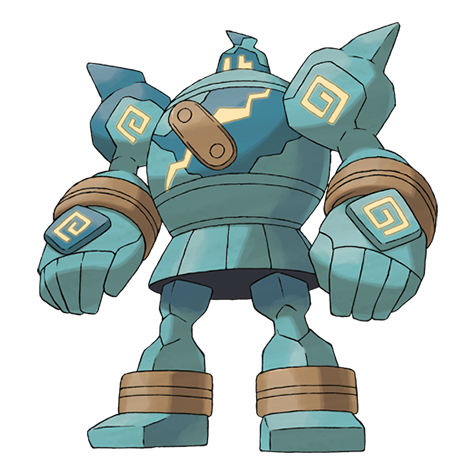
This guide pairs with three others on the same shelf. The Espeon field guide covers the Magic Bounce sponge that turns every Encore and Fake Tears you click into a returned-to-sender problem — the matchup where your Prankster status moves come back at you and the wind never lands. The counter-Espeon strategy article walks through how to play around that bounce when the opposing team brings it. The Sinistcha field guide covers the bulk partner that pairs cleanly with the speed-control core, and the Mega Golurk field guide covers the new Trick Room sweeper that benefits when the wind has died and the bracket flips — Whimsicott sets the tempo on the offense half, Mega Golurk picks it up when the offense stalls.
Read them all. Bring a Steel-type for the mirror. Notebook closed.
Related coverage
If this was useful, here is the rest of saavage.com's coverage on this beat: Sinistcha — Field Guide, Mega Golurk — The 159-Attack Trick Room sweeper that punches through Protect, Maushold — Friend Guard support, recruit on sight, and Gengar — The Perish Trap lead that counts down the room.