Overview
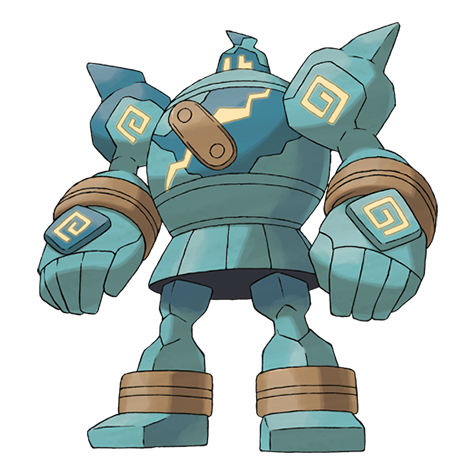
Recruit on sight. Mega Golurk — the Pokémon Champions Mega form — is the highest-Attack Trick Room sweeper that exists in the format right now, and it carries the only ability stack that lets a 120 BP STAB land through a click of Protect. The combination doesn't exist anywhere else on the ladder. The kit is short, the play pattern is brutal, and the entire pitch hinges on one ability and one carve-out you have to memorize before you click. Notebook open. Field Guide, entry thirty-three.
159 Attack plus Unseen Fist plus Trick Room is the only stack in Reg M-A that lands a 120 BP STAB through a click of Protect for chip damage. The combination doesn't exist anywhere else on the ladder.

Pokémon Champions — Switch & Switch 2
Standalone competitive battle game · Online ranked + replays
Affiliate link. We may earn a commission at no extra cost to you.
Why this matters now
Pokémon Champions, Reg M-A, has settled into a Protect-heavy format. Tailwind teams click it on the slow turn. Sun teams click it to scout the Eruption read. Bulky cores click it to stall a Trick Room timer down. The button is everywhere. Most attackers in the bracket eat the scout turn, take chip, and try again next round.
Mega Golurk doesn't. It clicks a 120 BP STAB through the click of Protect for 25% damage on the contact moves on its kit, and the Trick Room teams running it are skipping the scout phase entirely. The opening turn becomes a damage turn. Protect stops being a free out. The match starts a turn earlier than the opposing player thought it would.
What the spread tells you
Three numbers do the work, and one of them is the largest in its bracket. The 159 Attack is the highest non-Mega-Mewtwo, non-Black-Kyurem-locked physical Attack stat in Reg M-A. With Headlong Rush as the STAB chassis, the unboosted hit is one-shotting most neutral targets in the format off a Brave nature, and any Ground weakness on the opposing side is a single-button knockout.
The 105 Defense and 105 Special Defense on top of an 89 HP frame are the second story. Mega Golurk is not a glass cannon — it's a brick. The bulk eats one hit from almost every offensive pivot in the format on the way in, which means the Trick Room turn isn't a one-and-done sacrifice play. The Mega gets to set up, click damage, eat the response, and click damage again. That's the build.
The 95 Speed reads middling on paper and is the entire point of the spread. Outside of Trick Room it just barely outpaces uninvested Kingambit, which matters in the games where you have to throw a Headlong Rush before the room flips. Inside Trick Room, with a 0 Speed IV and a Brave nature, it underspeeds essentially every relevant target in the format and goes first under the inverted bracket. The bracket flip is the design.
The 65 Special Attack is wasted weight on every realistic build. Don't invest. The Mega has exactly one job and it's a physical job.
Unseen Fist
Contact moves bypass Protect for 25% damage in Pokémon Champions — a hard nerf from the original 100% Sword/Shield value. Non-contact moves still respect Protect normally. The carve-out is what makes the kit playable and the same carve-out is what loses you games when you click the wrong button.
This is the section to read twice. Unseen Fist in mainline Pokémon Champions has been re-tuned for VGC 2026 — the original Urshifu mechanic that ignored Protect entirely now lands at quarter damage instead. That sounds like a downgrade and on paper it is one. In practice, on a chassis with 159 base Attack and Headlong Rush as the STAB, the math still wins.
Run the back-of-the-envelope. A neutral Headlong Rush off 159 Atk and a Brave nature is a roughly 200 damage button into the average bracket of bulk in the format. Quarter that for the Protect bypass and you're still landing somewhere in the high 40s of damage on a turn the opposing player thought was free. Stack a Helping Hand from the partner and the bypass damage doubles. The opponent is now eating two-thirds of a clean Headlong Rush through a Protect click, which is two-thirds of a hit they were not budgeting for.
Now the carve-out. Unseen Fist only bypasses Protect on contact moves. That means Headlong Rush bypasses, Ice Punch bypasses, and any future contact move you slot into the fourth slot bypasses. Poltergeist does not. Poltergeist is a Ghost-type damage move that triggers off the target's held item and it is explicitly not a contact move in the move data — the projectile is the item itself, not the Pokémon throwing it. Click Poltergeist into a Protect and the Protect eats it for zero. Click Headlong Rush into a Protect and you land for chip every time.
Memorize that distinction before you ever bring this Pokémon to a tournament. The mistake costs you a turn and a knockout window. The fix is free.
One more note on the ability. The pre-Mega form of Golurk runs Iron Fist as the default ability, which boosts punching moves by 20%. The transformation flips Iron Fist off and Unseen Fist on the moment the Mega Stone activates. Plan the calc with Unseen Fist values, not Iron Fist values — Ice Punch loses the 20% multiplier on the same turn it gains the Protect bypass. The trade is favorable, but the spreadsheet has to know which side of the trade you're on.
The moveset
Four slots. Two damage buttons that get the bypass treatment. One coverage move you have to handle carefully. One flex slot that decides whether you're an attacker or a support piece riding shotgun on a Trick Room core.
The headline button. 120 base power, 100% accuracy, single-target Ground STAB, contact tag, and on the only Pokémon in the format that turns that contact tag into Protect-bypass damage. The math on the open ladder is uncomplicated — Headlong Rush off 159 Atk and Brave is one-shotting the entire frail-Steel bracket, the Heatran/Iron Hands shells, the offensive Electric pivots, and most of the speedy Fire-type leads in the format on neutral hits. On a Ground weakness, anything alive that isn't a dedicated physical wall is dead.
The drawback is the line item that keeps Headlong Rush honest — every click drops Mega Golurk's own Def and SpD by one stage. That matters more than it sounds. The 105/89/105 bulk profile that lets the Mega absorb a turn-one hit goes away the second you click damage. After one Headlong Rush you are reading like 70/89/70, which means the next incoming hit lands harder. Plan the math: lead turn is the bulky turn, post-Headlong-Rush turns are fragile turns, and the partner has to be in position to either Protect-cover or pivot Mega Golurk out before the second response wave lands.
Click Headlong Rush into the predicted Protect, every time. The Protect-bypass damage is the entire pitch of bringing this Pokémon. The 25% chip on a 120 BP STAB through 159 Attack is more total damage than a successful Poltergeist click into a non-Protecting target on most calcs in the format. Make the opponent pay for clicking Protect, not for guessing your move.
The most important move on the kit to understand correctly, because the trap is invisible if you haven't read the data. Poltergeist is 110 BP Ghost-type STAB, single-target, ninety percent accurate, and conditional on the target holding an item. The vast majority of the format holds an item — Choice Specs, Booster Energy, Sitrus, Leftovers, Assault Vest — so the trigger is rarely the bottleneck. The damage profile is the second-best button on the kit after Headlong Rush, and it wallpapers the matchup against anything that resists Ground.
Now the part that ends games when you skip it. Poltergeist is not a contact move. The flavor is the projectile — Mega Golurk weaponizes the target's own held item — and the move data flags it as non-contact. That means Unseen Fist does not apply. Click Poltergeist into a Protect and the Protect catches it cleanly for zero damage. Click Poltergeist into Wide Guard and the Wide Guard catches it. Click Poltergeist into a Quick Guard turn against priority and you wasted the turn.
The play pattern that comes out of this is rigid and worth burning into the muscle memory. If you predict Protect, click Headlong Rush. If you predict no Protect, click Poltergeist into the Ghost-resist or Ground-resist target. The decision tree is binary and clean. The mistake is clicking Poltergeist into a turn the opponent has any reason to scout, because that's the turn the Protect lands and your damage button does nothing.
The 90% accuracy is the secondary catch. The miss rate is real — one game in ten where you click Poltergeist into a clean target, the move whiffs. Plan that into the spreadsheet, not into the moment.
The coverage slot, and the reason Mega Golurk gets to threaten the Dragon and Flying half of the metagame instead of just bouncing off it. Ice Punch is a contact move, which means it inherits the Unseen Fist Protect bypass for the same 25% chip damage as Headlong Rush. Off 159 Attack the bypass damage on a 4x Ice weakness — Garchomp, Landorus-T, Mega Dragonite without a Multiscale buffer, the entire Salamence-Dragonite-Hisuian-Goodra bracket — is in the range of an OHKO threshold even after the quarter-damage cut on a Protect click.
The 75 base power is honest. Ice Punch is not a flat damage upgrade over a non-STAB Headlong Rush in most matchups; it's a coverage tool against the specific cast that resists Ground or punishes Mega Golurk's Ground STAB. The 4x weakness targets justify the slot on their own — Garchomp, Landorus-T, and the Multiscale-broken Mega Dragonite read for clean two-shots on the calc, sometimes one-shots, and the Protect bypass closes the door even if the opponent tries to scout the click.
The freeze chance is a coin in a deep well. Don't plan around it. If it happens you took a free win. If it doesn't, the move was already paying for itself on the matchup.
The flex slot, and the pick that wins the most ladder games on the current build. The reason is the partner cast — Farigiraf and Torkoal are the two most common Trick Room anchors paired with Mega Golurk in the open metagame, and both of them want the Helping Hand multiplier on the cleanup turn. Torkoal Eruption at 50% boost in sun is one-shotting the entire backline. Farigiraf Hyper Voice at 50% boost is clearing the Sash bracket and the Multiscale bracket in the same click. The Mega clicks Helping Hand on the turn it doesn't need to swing, and the partner spreads damage twice as wide.
The two live alternatives for the slot are Protect and Earthquake. Protect is the safe pick on builds that need turn-one scouting against speed control or against Sucker Punch reads — slow, but never wrong on a body the opponent wants to delete. Earthquake gives the spread Ground option, which matters on builds that don't run Helping Hand and want to project Ground damage across both opposing slots. Both have a real argument. Helping Hand wins on the open ladder because the Trick Room partner is the one closing games, not Mega Golurk by itself, and the Mega's job is to be the second-biggest damage button on the field for two turns.
The partner core
Mega Golurk does not function in isolation. It needs Trick Room to flip the Speed bracket, it needs a slow pivot to bring it in safely, and it ideally wants a redirector or a Fake Out body to buy the lead turn. Build the back of the team around three jobs — the Trick Room anchor, the slow Volt Switch or U-turn pivot, and the Fake Out screen — and the Mega gets to print value all game. Skip one of those jobs and the Mega becomes a 159-Attack body that the opposing team scouts to death before turn three.
- Farigiraf — the Armor Tail Trick Room setter. Immune to priority interruption on the room click; sets the bracket flip Mega Golurk needs.
- Torkoal — Eruption + Sun reset under Trick Room. The cleanup partner that uses Helping Hand best.
- Rotom-Wash — slow Volt Switch pivot. Brings Mega Golurk in on a free turn off a chip-and-drop click.
- Whimsicott — Prankster Encore plus secondary Trick Room. Locks an opposing setup turn into a single move while the room comes up.
- Sneasler — Fake Out + Close Combat lead alternative. Buys the room-setup turn against fast offensive openers.
- Bulky Waters — Pelipper, Toxapex, Quagsire. Ground-immune or Ground-neutralizing chassis with the bulk to absorb a Headlong Rush and click recovery.
- Mega Dragonite — Multiscale buffers the Ice Punch one-shot to a two-shot, and the speed advantage outside Trick Room ends the matchup before the room flips.
- Sucker Punch users — Dark-type priority. Bisharp, Mega Mawile, the rare Annihilape. Priority bracket beats the Trick Room flip on the turn the Sucker lands.
- Grass-types — Meganium, Serperior. Ground-immune via Levitate variants or Grass-resist neutrality, and the offensive ones threaten back with Leaf Storm or Frenzy Plant.
The pattern across the counter list is clear. Bulky Waters wall the Ground STAB and resist or shrug off the Ghost STAB. Mega Dragonite eats the Ice Punch through Multiscale and threatens back with Outrage or Extreme Speed before the Trick Room flip resolves. The Sucker Punch bracket sidesteps the bracket flip entirely by clicking priority. Grass-types deny Ground STAB chip and threaten back with their own STAB at minimum. Build around at least two of those four answers on every team you bring this Pokémon to.
The single most dangerous matchup is Mega Dragonite specifically. The Multiscale ability buffers the Ice Punch — even with the 4x Ice weakness, the first hit lands at half damage, which is the difference between an OHKO and a survival roll into a Roost or an Outrage knockback. If the opposing Mega Dragonite is at full HP, plan the turn around chipping the Multiscale off first with the partner's spread attack, then closing with Mega Golurk's Ice Punch. If you can't budget that two-turn arc, the matchup is bad.
Type matchup
Ground / Ghost is one of the cleanest offensive type combinations in Pokémon. Ground STAB is uncontested on Steel, Electric, Fire, Rock, Poison; Ghost STAB hits Ghost and Psychic on the resists chart. The defensive profile is dual-flavored — Ground resists Rock and Poison, immune to Electric; Ghost resists Bug and Poison, immune to Normal and Fighting. The combination of immunities (Electric, Normal, Fighting) is genuinely rare and lets Mega Golurk eat Fake Out for free, ignore Quick Attack and Extreme Speed, and walk through Volt Switch turns on the pivot side.
The weaknesses are the catch and they're real. Water and Grass both hit through the Ground side. Ice is a 2x weakness through the Ground side as well. Ghost and Dark hit through the Ghost side. The five-weakness profile is wide, and Trick Room doesn't fix the type chart — it just reorders the speed at which the Pokémon getting hit gets to hit back. Plan the lead turn around the Water and Dark coverage on the opposing side. If they have a Pelipper or a Roaring Moon, Mega Golurk is a mid-game threat, not a lead-turn one.
The matchup wins are clean against any team built on Electric pivots, fast Normal-type Fake Out leads, or Fighting-type spread coverage. Volt Switch doesn't function. Fake Out from Incineroar or Sneasler doesn't connect. Close Combat from the entire Fighting bracket bounces off the Ghost half. The Mega's lead turn is essentially free against the offensive-pivot half of the format — which is most of it.
Item slot
This is the section where the Mega-form mechanic constrains the conversation. Mega Golurk is locked into the Golurkite Mega Stone — that's the held-item slot, full stop, no flexibility, no Sitrus Berry, no Choice Band. The Mega Stone is the trigger for the Unseen Fist transition and for the BST jump from the base form's 483 to the Mega's 618. Every other item conversation is moot.
The pre-Mega item slot — the slot you would build into on the base Golurk that exists for one turn before the transformation — is similarly moot in practical terms. The Mega Stone has to be there for the form to trigger, and there is no relevant turn-one effect from a Toxic Orb or Flame Orb workaround that would beat the math of the form change. The item line on your build template reads "Golurkite" and that line is settled.
What this means for the team builder: the Mega Stone slot is not a place to pick up extra value. The value comes from the ability swap, the stat jump, and the move kit. The item slot is paying rent for the existence of the Mega form. Treat it accordingly.
Golurkite (Mega Stone) — locked
No alternatives. The held item slot is the cost of bringing the Mega form to the field. Build the team around the constraint — the value lives in the ability, the BST, and the kit, not in the item line. Plan the partner items (Helping Hand pivots want Sitrus or Leftovers; the Trick Room setter wants Mental Herb to clear Taunt; the Volt Switch pivot wants Choice Specs or Assault Vest) around making up the item-slot value Mega Golurk can't run.
For natures and EVs: Brave is mandatory on every realistic build (boosts Atk, lowers the Speed you wanted lower anyway for Trick Room). EVs read 252 HP / 252 Atk / 4 SpD as the open-ladder default — maxing HP gives the bulk a meaningful uplift and maxes the Headlong Rush survival turn, while 252 Atk pushes the 159 base into one-shot territory across the format. Drop the Speed IV to 0 to maximize the Trick Room speed bracket — under TR, lower Speed moves first, and the 0-IV Brave Mega is the fastest thing on the field in most matchups.
Tera type is the call to make once per build. Tera Ground is the offensive pick — STAB-boost Headlong Rush to ridiculous numbers and turn the 159 Attack into a problem the spreadsheet can't catch up to. Tera Ghost is the defensive pick — keep the Ground STAB at neutral, but flip the Ground-side weaknesses (Water, Grass, Ice) off the chassis on the Tera click and convert the Mega into a Ghost-pure body that's immune to Normal and Fighting and resists Bug and Poison. Both reads are live. Default to Tera Ground for damage and flip to Tera Ghost on builds expecting a heavy Water-type lead.
Build template
Ability: Iron Fist → Unseen Fist (on Mega)
Tera Type: Ground (or Ghost for STAB-flip Tera)
EVs: 252 HP / 252 Atk / 4 SpD
Brave Nature (0 IVs in Speed for max Trick Room speed)
- Headlong Rush
- Poltergeist
- Ice Punch
- Helping Hand (or Protect)
Read the spread one more time. The 0 Speed IV plus Brave nature is the Trick Room math — under TR, the slowest body moves first, and the Mega's job is to be that body. The 252/252/4 HP/Atk/SpD split is the open-ladder default; the SpD-light bracket is fine because the Ghost typing immunes the Fighting pressure that would otherwise punish the spread, and the 105 SpD on a 89 HP frame is already comfortable enough to eat one special hit on the way in. Tera Ground is the safer pick for damage; Tera Ghost is the call against bulky Water leads or Bug coverage you want to flip off the chart.
The play pattern
One sequence to drill. Lead turn: bring Mega Golurk and Farigiraf. Farigiraf clicks Trick Room. Mega Golurk clicks Headlong Rush at the threat that didn't Protect, or Headlong Rush through the Protect, depending on the read. Either way, damage lands. Turn two: the bracket has flipped, Mega Golurk goes first, and the click is Helping Hand into Farigiraf's Hyper Voice for a spread board-clear, or Headlong Rush into a knockout if the calc is there. Turn three: the cleanup, with whatever survives.
The alternate sequence is the slow-pivot bring-in. Lead Rotom-Wash and Whimsicott. Rotom-Wash chips with Hydro Pump while Whimsicott clicks Encore on the opposing setup move. Turn two, Rotom-Wash clicks Volt Switch — slow pivot — and brings Mega Golurk in on a free turn while Whimsicott sets up Trick Room. Now you've got a fully-positioned Mega on a fresh Trick Room with a Whimsicott support body alive, and the next two turns are kill windows.
Either pattern works. Build for the one your team supports, drill the click order before the tournament, and don't improvise the Poltergeist read mid-game.
Click through Protect. Never with Poltergeist.
- 159 Attack plus Unseen Fist plus Trick Room is the only stack in Reg M-A that lands a 120 BP STAB through a click of Protect for chip damage. The combination doesn't exist anywhere else on the ladder.
- Poltergeist is not a contact move. The flavor is the projectile, the data flag is non-contact, and Unseen Fist does not apply. Click Headlong Rush into a predicted Protect, never Poltergeist. The mistake costs you the turn.
- Pair with Farigiraf as the Trick Room anchor and Rotom-Wash as the slow Volt Switch pivot to bring the Mega in safely. The Mega's job is to be the biggest damage button on the field for two turns; the team's job is to make sure those two turns happen.
The companion pieces
This guide pairs with three other Field Guides in the bundle. The Farigiraf field guide covers the Armor Tail Trick Room anchor — the partner that makes the bracket flip uninterruptible and keeps the Mega's two-turn kill window honest. The Whimsicott field guide covers the Encore backbone that locks an opposing setup turn into a single move while the room comes up around it, and doubles as a secondary TR setter on the builds that want redundancy. And the upcoming Counter-Mega-Golurk strategy guide is the inverse of this one — how bulky Water cores, Multiscale Mega Dragonite, Sucker Punch priority, and Grass-type leads break the Trick Room lead turn before the Mega gets to click damage.
Read those next. Bring a Water-type for the mirror. Notebook closed.
Related coverage
If this was useful, here is the rest of saavage.com's coverage on this beat: Whimsicott — Prankster Encore controls the clock, Sinistcha — Field Guide, Maushold — Friend Guard support, recruit on sight, and Gengar — The Perish Trap lead that counts down the room.