Valve found performance where the spec sheet said none existed
A 4GB graphics card is not supposed to feel newly relevant in 2026. Modern games eat VRAM for breakfast, and once the memory ceiling gets hit, performance usually falls apart fast.
That is why Valve's Linux-side VRAM work is interesting. In memory-bound games, the improvement can be dramatic. Not because the GPU suddenly got stronger, but because the game stops wasting so much time fighting the memory limit.
Valve's Linux VRAM work can help 4GB GPUs in memory-bound games.
This is not a magic driver update
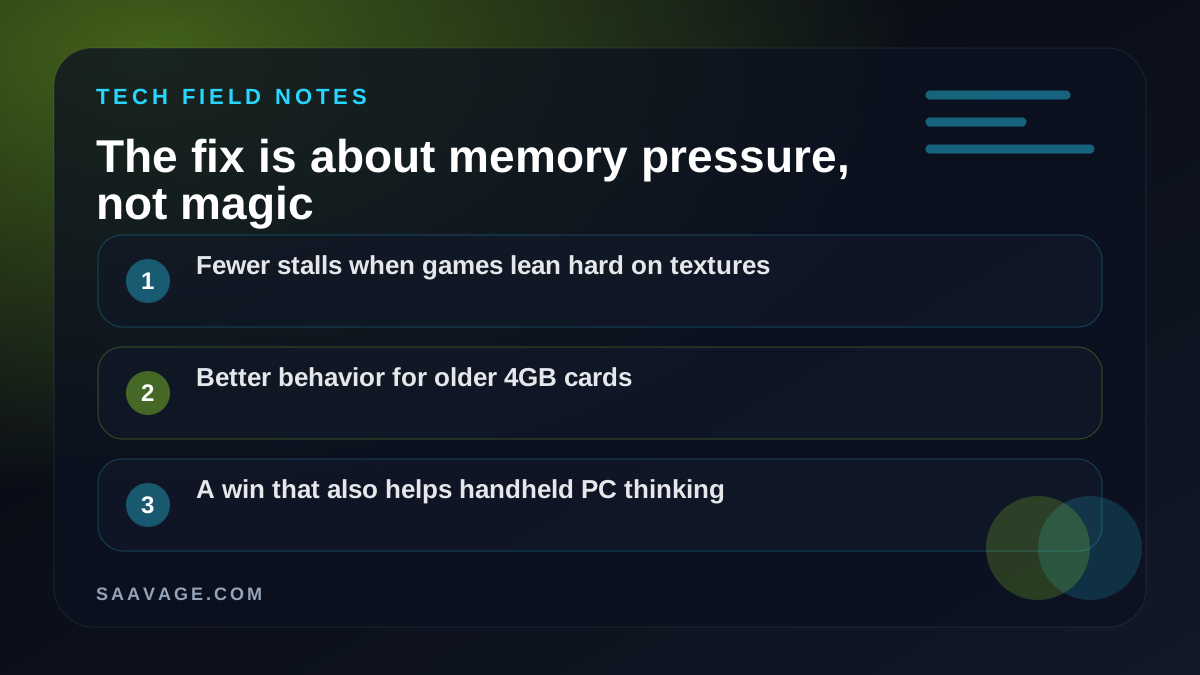
The important caveat is that this does not turn a budget card into a high-end card. If the GPU is too slow, it is still too slow. If the game wants a mountain of compute, better memory handling will not save it.
The win shows up when VRAM is the bottleneck. Open-world games, asset-heavy titles, and anything constantly streaming textures can benefit because Valve is making the memory path less wasteful. That is not magic. It is just good engineering finally landing where players can feel it.
Budget Linux gaming gets the real benefit
The people who should care most are not the ones with 16GB cards. They are the players trying to keep older rigs alive, especially on Linux where Proton has already made a lot of Windows-only games feel native enough.
For them, a software improvement like this can be the difference between a game being unplayable and a game being good enough. That is a real upgrade, even if nobody had to buy a new GPU.
The bigger story is Valve's patience
Valve keeps stacking these Linux gaming wins one layer at a time. Proton, shader work, handheld optimization, now memory pressure fixes. None of it looks flashy alone, but the cumulative effect is hard to ignore.
Windows is still the default gaming platform, but Valve is making Linux less of a compromise every year. If budget hardware keeps getting helped by smarter software, that changes the math for a lot of players.