The Urgent Threat to Modern Digital Security
If you deal with data. Whether it’s your crypto wallet keys, proprietary AI models, or just your banking details. You need to pay attention to this.
A high-profile developer, a maintainer within the Go programming language community, has joined a growing chorus of experts issuing a serious warning: the digital security infrastructure we rely on today is fundamentally vulnerable. The threat isn't theoretical; it's a ticking clock tied to the development of quantum computing.
The core message is blunt: the encryption methods that have protected everything from secure websites to global financial transactions for decades are slated for obsolescence. When large-scale, stable quantum computers arrive, they won't just challenge our security; they will break it. This isn't a distant sci-fi threat; it's a looming, practical disaster that requires immediate, proactive attention.
To understand the panic, you need to understand the math.
The Quantum Threat: Why Current Encryption Will Fail
To understand the panic, you need to understand the math. Most of the encryption used today. RSA, ECC, etc. Relies on the computational difficulty of factoring large prime numbers or solving discrete logarithm problems. For classical computers, these problems are computationally intensive, making them practically impossible to solve in a reasonable timeframe. That difficulty is what gives us security.
Quantum computers, however, operate on principles of quantum mechanics that allow them to process information in fundamentally different ways. The most famous algorithm, Shor's algorithm, is the smoking gun. It provides a pathway to solve the mathematical problems underpinning modern public-key cryptography with astonishing efficiency.
The danger isn't just that a quantum computer might exist; it's that the engineering progress is accelerating faster than our ability to patch the vulnerability. Experts are warning that the timeline for achieving "cryptographically relevant" quantum computing is shrinking rapidly. When that day comes, every piece of encrypted data captured today. The "harvest now, decrypt later" threat. Will be vulnerable to retrospective decryption.
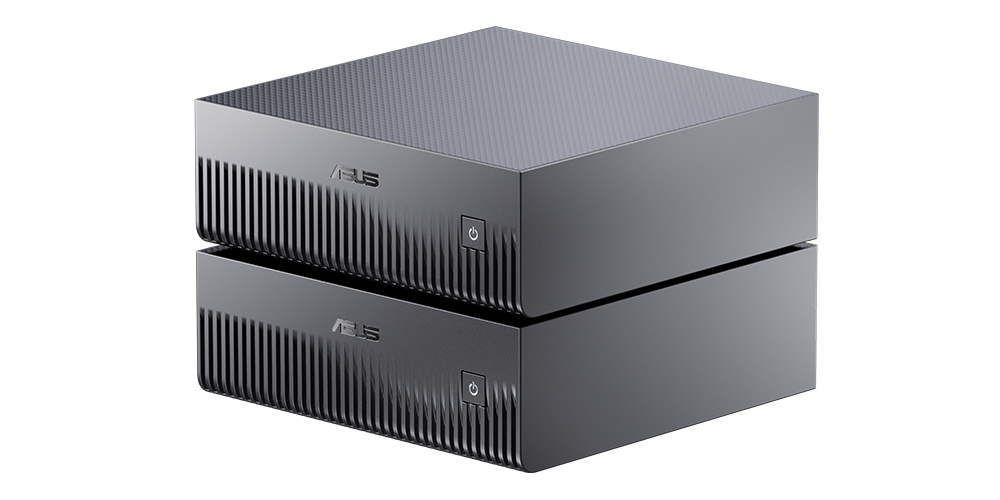
ASUS Ascent GX10 Personal AI Supercomputer
Local AI workstation pick for model testing and AI hardware stories
Affiliate links. We may earn a commission at no extra cost to you.

The Solution: Embracing Post-Quantum Cryptography (PQC)
The fix isn't to wait for the quantum threat to materialize; it's to start migrating now. This is where Post-Quantum Cryptography (PQC) comes into play.
PQC refers to a new generation of cryptographic algorithms designed to resist attacks from both classical and quantum computers. These methods are based on mathematical problems that are believed to be hard for any computer. Quantum or classical. To solve.
The global effort, spearheaded by bodies like the U.S. National Institute of Standards and Technology (NIST), is standardizing these new algorithms. These replacements include lattice-based cryptography, code-based cryptography, and multivariate polynomial cryptography.
The 2024 NIST Standards and the Migration Timeline
NIST finalized its first post-quantum cryptography standards in August 2024: FIPS 203 (ML-KEM, the Kyber-based key encapsulation mechanism), FIPS 204 (ML-DSA, the Dilithium-based digital signature standard), and FIPS 205 (SLH-DSA, based on SPHINCS+). A fourth, FALCON-based standard was published as FIPS 206 in 2025. These are not theoretical anymore. They are official, citable, implementable algorithms that government and enterprise systems are now mandated to migrate toward, with NSA's CNSA 2.0 suite requiring full transition by 2035.
The harvest now, decrypt later threat is the operational driver. State actors are already vacuuming up encrypted traffic. TLS handshakes, VPN tunnels, signed emails. With the explicit plan of decrypting it once cryptographically relevant quantum machines arrive. Anything you encrypted with RSA-2048 today and that needs to remain secret for fifteen years is already at risk regardless of when the quantum machine actually shows up. That's why agencies are pushing migration timelines that look aggressive given how slowly nothing-quantum-yet seems to be moving.
The hard part isn't the math. The hard part is the inventory. Most organizations cannot tell you where every certificate in their stack lives, which library issued it, what algorithm it uses, and what depends on it. Crypto-agility. The ability to swap algorithms without rewriting the whole pipeline. Has been a security-architect talking point for years, and almost nobody has actually built it. The next decade of security work isn't about deploying lattice cryptography. It's about discovering what's already deployed.
Related coverage
If this was useful, here is the rest of saavage.com's coverage on this beat: Quantum Apocalypse Experts Warn of Encryption Collapse, Quantum Threat Looms Over Bitcoin Encryption, Quantum Threat to Bitcoin Real But Manageable According to Bernstein, and Nobel Physicist Warns Bitcoin Faces Quantum Attack Threat.