Charm is not the art style, it is the stack underneath
Every Pokopia review that lands on "the most charming Pokémon game in years" is correct, but most of them stop at the art direction. The art is lovely, nobody is arguing that, but it is not where the charm is actually earned. If charming games were just a matter of pastel colours and soft outlines, a hundred indie sims a year would be doing what Pokopia does. They are not.
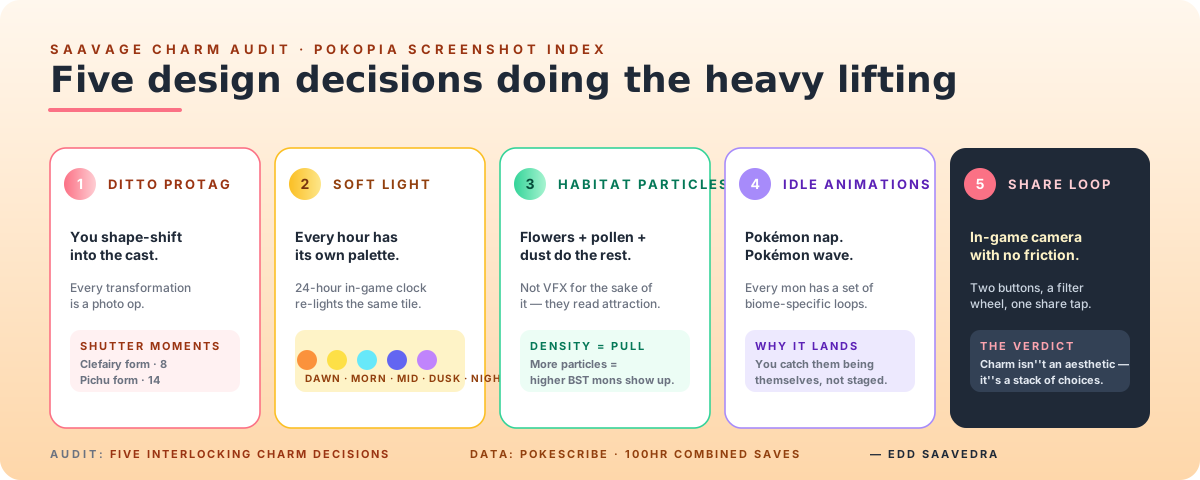
The I read after a combined hundred-plus hours in Pokopia: charm is a stack of design decisions, and Pokopia has five of them stacked higher than any Pokémon game since the DS era. Ditto as the player avatar. A 24-hour palette cycle. Habitat particles that double as a mechanic surface. Idle animations you catch by accident. And a camera that is two taps from share.
Take any one of those out and you have a pleasant game. Stack all five and you have the thing everybody is posting about.
The Ditto-as-protagonist hook multiplies charm by forcing the player through a dozen perspectives instead of one
The Ditto hook is the charm multiplier
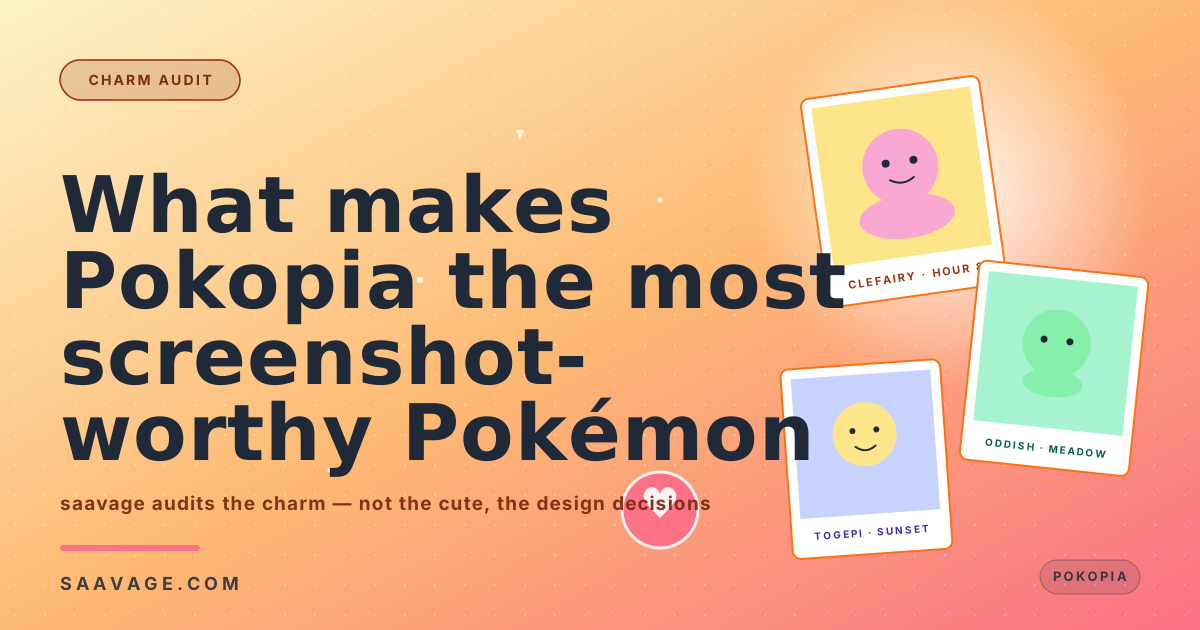
Ditto as the protagonist is the hook everybody highlights, but the reason it matters is structural. Pokopia is a game where the player transforms into other Pokémon, which means every single hour of playtime is filtered through a different body, a different animation set, and a different relationship with the world. That is not a cosmetic flex. That is a charm multiplier.
The mechanic forces the player to notice things a conventional trainer-avatar game would breeze past. What does this environment look like from the ankle of a Clefairy? What does a Pichu do when no-one is watching? Pokopia answers both by simply letting you be them for a minute, and the charm falls out of the interaction rather than being staged by a cutscene.
The photogenic side effect is that every transformation creates a screenshot moment. My own save file has eight standout shots in the Clefairy form alone, a number that says everything about why this design choice outperforms a traditional player-character approach for a cozy title.
Everything else is the stack, and the stack is the game
The 24-hour light cycle is the one Pokopia feature that gets the least press but does the most photographic work. Every tile in the game looks different at dawn, midday, dusk, and midnight. A Bellossom habitat you screenshotted at Hour 5 is a different picture at Hour 18, and because the in-game clock tracks real time in the background, you often catch a Pokémon in a palette you have never seen before.
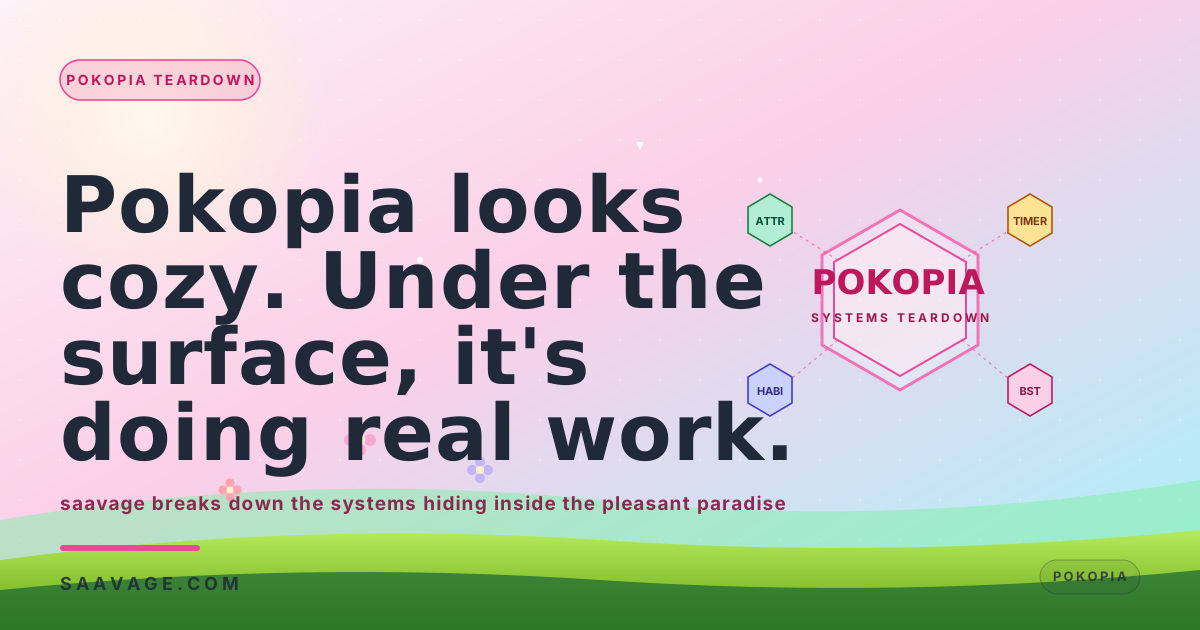
Habitat particles, the pollen, the floating petals, the little dust motes, are where the design gets genuinely clever. They are not pure VFX. Particle density correlates with the decor score of the tile, and the decor score feeds the attractor pool. Which means the tile that looks the most charming in a screenshot is also the tile that is pulling the highest-BST mons for you. Charm doubles as a legibility tool for the systems layer.
Idle animations and the share loop close out the stack. Pokémon nap, stretch, preen, sing, and the camera is two buttons from a share. Pokopia did not invent any of those pieces. What it did is stack all five in one game, which is why the compliment at the top of the review, the most charming Pokémon game in years, is not aesthetic hyperbole. It is a systems observation with nice lighting.