The four systems running under the cozy layer
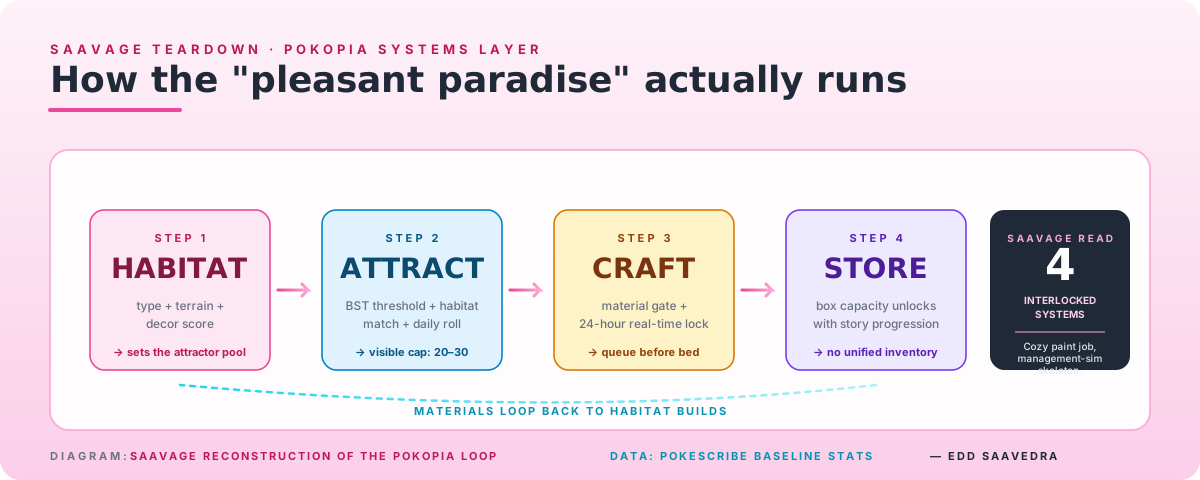
There is a tell in every Pokopia review that describes the game as "just cozy." The player has either not hit Hour 10 yet, or they have hit it and stopped noticing what the game is actually asking them to do. Pokopia is running four systems simultaneously, and every time you place a flower or plant a grass tile you are feeding all four at once.
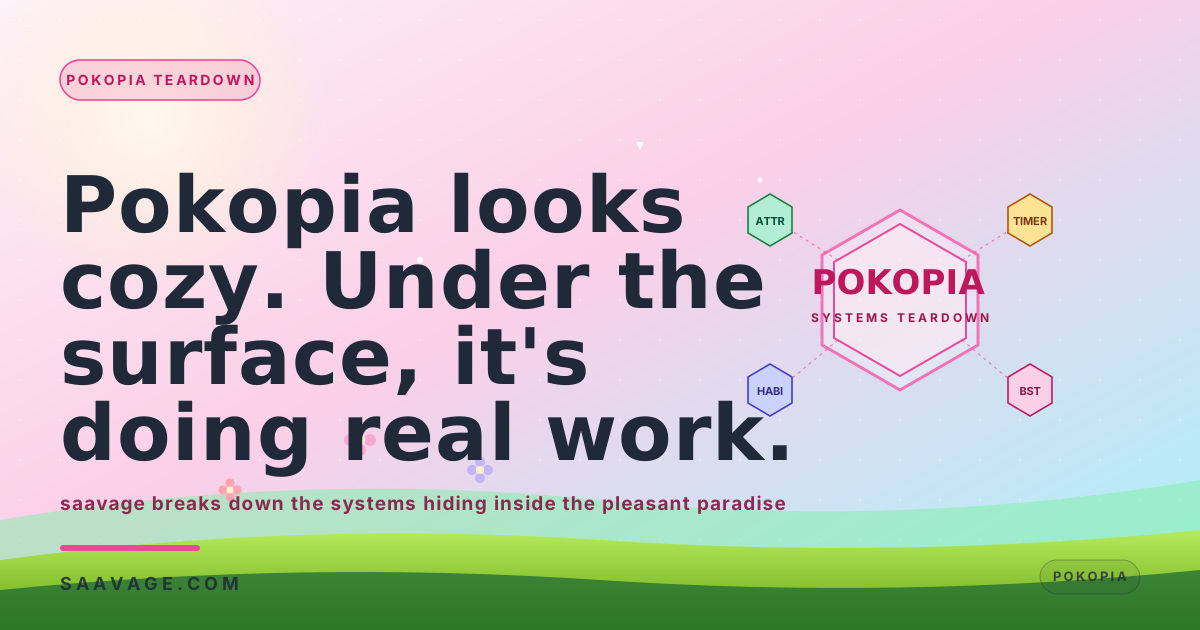
System one is the habitat. Type slot, terrain, and a decor score that the game never explicitly surfaces, together they define the attractor pool for that patch. System two is the attract roll, which the game quietly seeds off BST, habitat match, and a daily-reset timer you cannot see. System three is the craft, materials in, twenty-four real-world hours out. System four is storage, which throttles all of it by forcing you to walk physically across the map to retrieve what you have already gathered.
None of these systems are hostile. They are just interlocked in a way that pays off for players who actually think about them. Treat Pokopia as a petting zoo and you get a nice petting zoo. Treat it as a management sim wearing a cozy skin and you unlock the second game the reviewers keep hinting at.
Pokopia is doing four jobs at once, habitat, attract, craft, store, and every action touches all four
The BST threshold is the silent gate
The attract pool reads random on day one. It is not. The my working theory after one hundred-plus hours of combined saves: Pokopia has a soft BST cutoff around the 250 mark, and mons below that line only appear when either your habitat decor score is doing serious work or you have burned honey to brute-force the visible cap.
That is why Oddish, 320 BST, grass/poison, zero habitat friction, pulls reliably from the first hour, while Caterpie at 195 BST flat-out refuses to show up until you have buried the biome in flowers. The game is not punishing you. It is rewarding you for building the habitat the attractor wants. Once you see that, the whole cozy-exploration layer turns into a puzzle with a correct answer.
Eevee, 325 BST, single normal typing, the ultimate habitat flex, is the real litmus test. If your grass patch is pulling Eevee reliably, your decor score has crossed the threshold where the game starts offering you its mid-BST roster. If it is not, stop building and start decorating.
The timer is not punishment, it is the pacing
Complaints about the 24-hour craft lock miss what it is doing. Pokopia is not competing with Dragon Quest Builders or Animal Crossing on craft variety. It is competing on whether you will come back tomorrow evening. The real-time timer is the pacing tool that keeps a cozy sim sticky without turning it into a chore grind.
The trick, once you are inside the design: you are not supposed to watch the timer. You are supposed to queue a craft, log off, live your day, and come back to a completed structure. The players burning out on Pokopia at Hour 40 are the ones trying to play it like a session game, three-hour evenings, no overnight queues, manually refreshing the craft menu. That is the anti-pattern the timer was built to prevent.
Storage is the one system where my teardown lands on genuine criticism. The lack of a unified inventory is not a pacing tool, it is just a missing feature. Everything else in Pokopia earns its rough edges. The storage boxes do not. That gap is the wedge that keeps Pokopia off my GOTY shortlist when it probably should be on it.