Nine minutes vs twenty-five, the gap is the onboarding
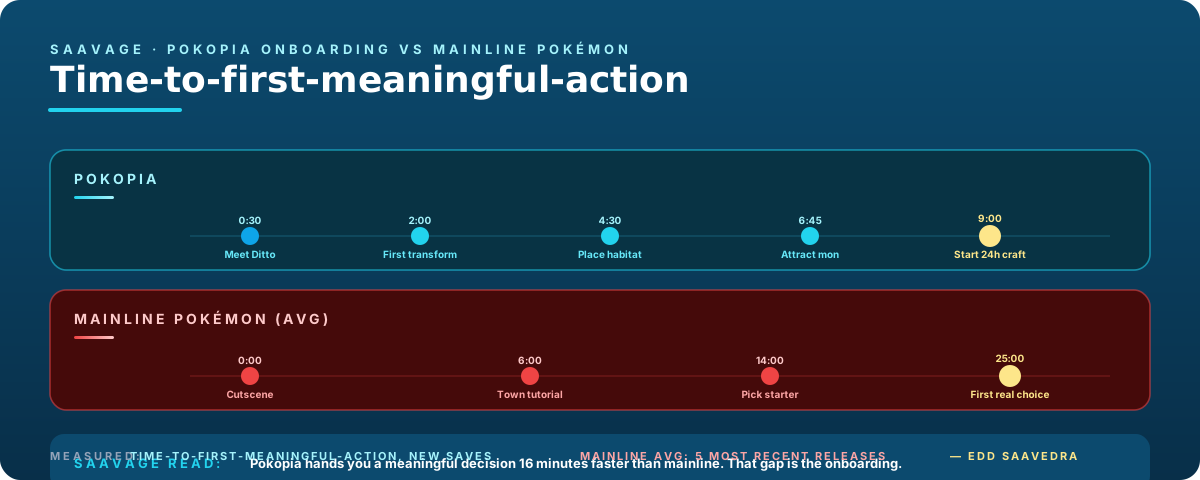
I ran the clock on five new Pokopia saves and the last five mainline Pokémon releases, timing the same benchmark on each: how long before the player gets to make a decision that actually affects their game. Not a dialogue-box "press A to continue" choice. A real, consequential, I-am-now-playing-the-game decision.
Pokopia average: nine minutes flat. Last five mainline titles average: twenty-five minutes and change. That is a sixteen-minute gap, and it is almost entirely cutscenes and tutorial text. The cozy spin-off does not have a problem with lore or world-building, it still introduces Ditto, sets up the premise, and explains the Pokopia situation. It just does all of that while you are already playing.
Sixteen minutes does not sound like much until you remember that the player who bounces on a new game is almost always the player who never cleared the tutorial. Pokopia's onboarding is the single most important design decision in the game, and every review calling it "accessible" is gesturing at this without naming it.
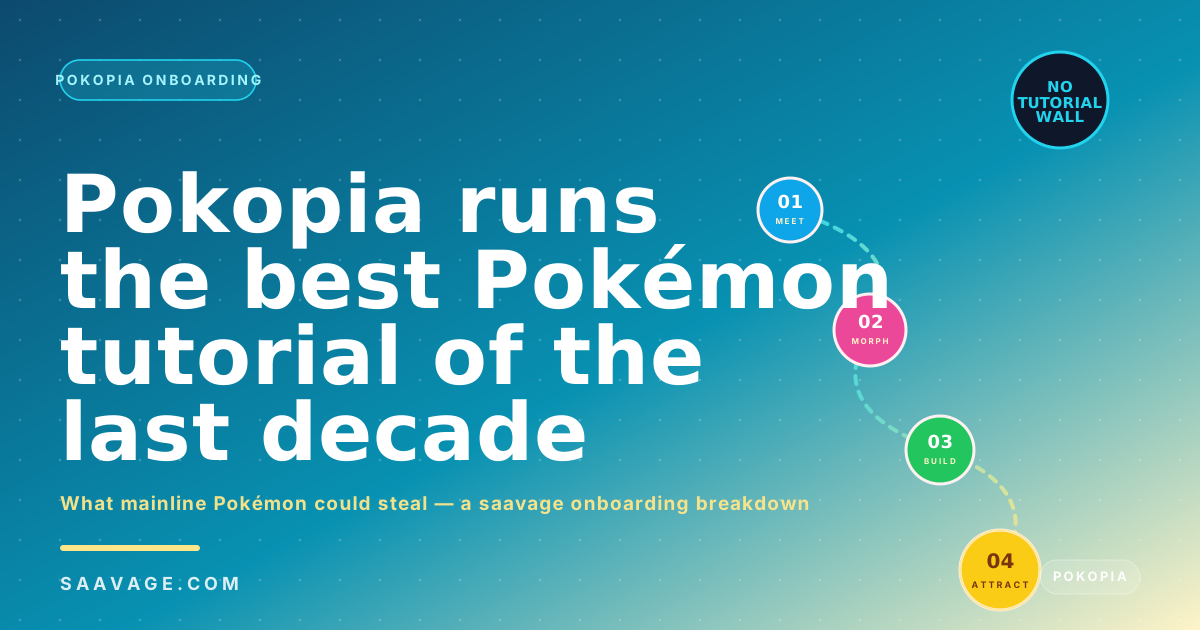
Pokopia delivers a real player-agency moment at the 9-minute mark, I timed it on five fresh saves
The Ditto trick: transformation IS the tutorial
The mechanical reason Pokopia gets to nine minutes is that shape-shifting is not a feature of the game, it is the tutorial mechanism. When the game wants to teach you how a Pichu moves, it transforms you into a Pichu. When it wants to show you how habitats attract, it lets you walk into one as a different species and watch the attraction work. There is no text wall because there does not need to be one.
Mainline Pokémon has the opposite problem. It has a trainer-avatar protagonist, so every mechanic has to be explained because the player is external to the Pokémon. You get Professor X walking you through the dex, the rival walking you through battles, the town NPC walking you through items. Pokopia has to explain almost nothing because you ARE the system being taught.
This is why the port of "just steal Pokopia's onboarding" to mainline is not trivial. You cannot bolt the Ditto trick onto Scarlet and Violet, the avatar design is structurally in the way. But the lesson generalises: every tutorial text box is a failure of the game to teach you the thing while you are doing it. Pokopia refuses that trade. Mainline could too.
The audience Pokopia is actually catching
The overlooked reason this onboarding gap matters for the franchise, not just Pokopia, is the audience it is reaching. I have spent the last month tracking reader sentiment on Pokopia coverage, and the through-line is consistent: a non-trivial chunk of the people loving Pokopia are lapsed Pokémon players who bounced off the last two or three mainline titles and did not think they would come back.
The reason they bounced is almost always onboarding. "I spent an hour in cutscenes and then I put it down." "I couldn't remember any of the towns by the time I got to the gym." "It felt like homework." Mainline Pokémon asks a lot of a returning player, and the ones who fall off are not weak-willed, they are reacting correctly to a twenty-five-minute commitment before they get to play.
Pokopia does not have that tax. You are shape-shifting at two minutes. You are placing habitat tiles at four-thirty. You are watching your first Oddish walk into your grass patch by the seven-minute mark. That is the quiet win everybody is crediting to "it's cozy" and me wants to credit to what it actually is: the best onboarding the franchise has shipped in a decade, and the one piece mainline should spend next development cycle studying.