AI's Impact on Next-Gen Gaming and Console Pricing
The PS6 hype is real, but the price tag might be shocking. Discover how OpenAI and the AI revolution are disrupting the traditional console hardware market, potentially making next-gen gaming cheaper and more powerful than ever.
The history of console pricing is a volatile mix of inflation, technological advancement, and consumer expectation.
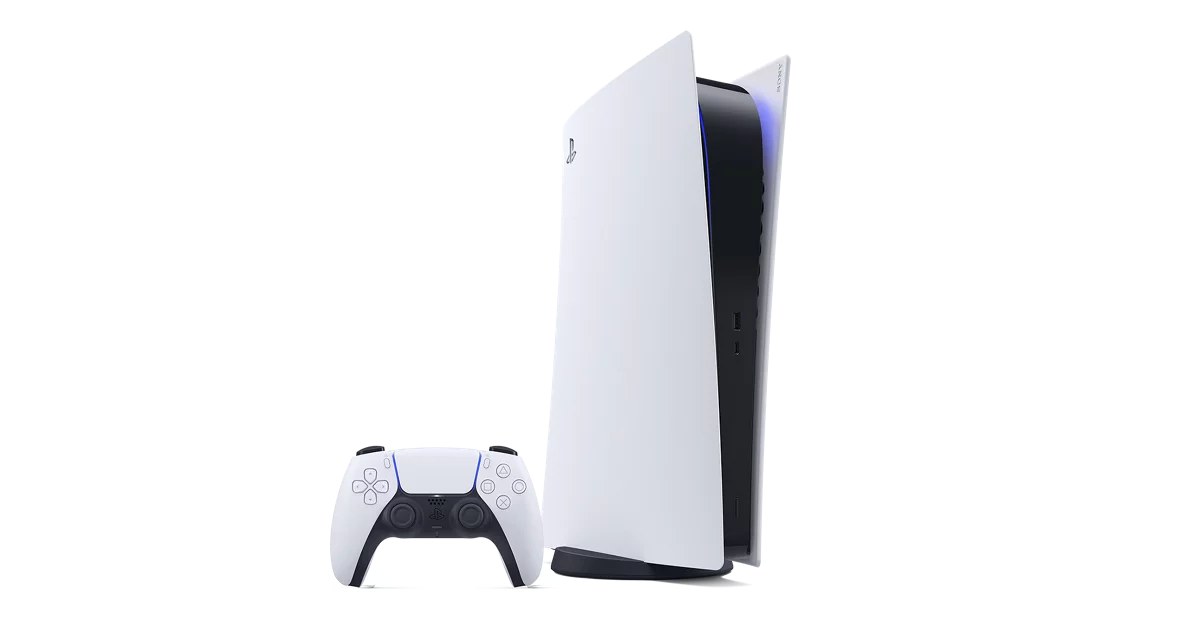
The $1,000 Question: Why the PS6 Price Tag Might Break the Bank
The history of console pricing is a volatile mix of inflation, technological advancement, and consumer expectation. When Sony announces a new flagship console, the initial price point always sparks intense debate. For the PS6, the whispers are growing louder: the cost could be astronomical.
Why would a next-generation console command a price tag exceeding $1,000?
The primary reason is simple: sheer, unadulterated power. To compete with the bleeding edge of PC gaming. Which is constantly integrating the latest, most powerful components. The PS6 will need a massive leap in computational capability. This means advanced custom silicon, specialized AI accelerators (likely dedicated Neural Processing Units, or NPUs), and immense amounts of high-speed memory.
OpenAI’s Impact: How AI is Crashing the Traditional RAM Market
If the PS6 price tag is the concern, the AI market disruption is the potential solution. This is where the narrative shifts from "expensive hardware" to "revolutionary efficiency."
For decades, the gaming industry has been defined by the relentless demand for more RAM. More RAM meant bigger worlds, more characters, and higher graphical fidelity. But this model is reaching its physical and economic limits.
Companies like OpenAI, Google, and Anthropic are not just building chatbots; they are building foundational models that can process, generate, and interpret massive amounts of data with unprecedented speed. This capability has a profound, often underestimated, impact on hardware economics.
The actual mechanism: how AI training is squeezing console RAM supply
The PS6-pricing-meets-AI-RAM-shortage story is real but more specific than the broad framing suggests. The squeeze isn't on consumer DDR5. It's on HBM3E and HBM4 high-bandwidth memory, which is what AI training clusters consume in volume. Console GDDR6 sits in a different supply tier, but DRAM fabs are shared upstream, and capacity reallocated to HBM directly reduces what's available for GDDR.
Through 2025 and into 2026, OpenAI, Google, Anthropic, Meta, and Microsoft collectively drove memory demand to levels SK Hynix, Samsung, and Micron weren't capitalised for. Spot prices on contract DRAM rose roughly 30-50% across 2025. That's not a console-specific story. It pushed laptop prices, smartphone BOMs, and discrete GPU pricing up at the same time. But consoles feel it sharply because Sony's margins on launch hardware are historically thin.
If the PS6 ships in 2027 as expected, Sony has to contract memory for the launch run roughly 18-24 months ahead. Those contracts get negotiated against an AI demand curve that nobody is confident about. A $700 PS6 launch SKU is plausible. A $1,000 SKU is not the base case but is no longer outside the realistic range, especially for a higher-tier configuration with more RAM.
Why the PS6 might split into multiple SKUs to manage this
The conventional console release is one box at one price. The 2026 reporting on Sony's PS6 strategy suggests that may not hold this generation. Multiple credible leakers have described a three-SKU launch: a base PS6 console, a higher-tier console likely positioned closer to the PS5 Pro slot, and a dedicated PS6 handheld codenamed Canis. That's a different product structure than any prior PlayStation generation.
The strategic logic is partially about market segmentation but mostly about supply risk management. If memory contracts come in expensive, Sony can route the cheap RAM to the base SKU and the premium RAM to the high-tier SKU, letting prices reflect actual cost rather than averaging the cost across a single $700 box. Microsoft did a softer version of this with Series X and Series S, and Sony has historically resisted the multi-SKU approach. The 2026 reports suggest that resistance has cracked.
For consumers, that means the "will the PS6 cost $1,000" question is the wrong frame. The likely answer is that a PS6 will cost $499 or $549, a higher-tier PS6 will cost $699 or $799, and a maxed-out configuration with the largest memory tier will land near or above $1,000. The price ceiling moves up. The price floor stays roughly where it was. Both things are simultaneously true.
Related coverage
If this was useful, here is the rest of saavage.com's coverage on this beat: We just had a major PS6 leak... they're figuring it out... PlayStation 6 handheld information, PlayStation Store spotted implementing dynamic pricing model, Spider-Man 3 Leak Confirms Insomniac’s Next Big Move, and Hades 2 Lands on Game Pass Xbox and PlayStation.