Overview
Nvidia's $2 billion investment in Marvell is less a strategic partnership and more a declaration of technological dominance, effectively cementing the hardware requirements for next-generation AI infrastructure. The capital injection is designed to bolster Marvell's capabilities in high-speed interconnects, specifically around the evolution of NVLink Fusion, a technology that deepens the dependency of major AI data centers on Nvidia's architecture.
This move is significant because it directly addresses the primary vulnerability in the current AI compute landscape: the interconnect. While competitors have poured billions into developing alternative silicon, the ability to seamlessly link thousands of GPUs—the core function of NVLink—remains the most critical bottleneck. By reinforcing Marvell’s role in managing these complex data paths, Nvidia ensures that the foundational plumbing of the AI supercomputer remains within its sphere of influence.
The implications extend far beyond a mere supply chain deal. The investment solidifies a proprietary, vertically integrated ecosystem. It signals that the barrier to entry for any competitor attempting to build a large-scale, multi-GPU AI cluster is not just raw compute power, but access to the specialized, high-bandwidth interconnect fabric that Nvidia is now making even more robust and difficult to replicate.
Solidifying the Interconnect Layer with Marvell
Solidifying the Interconnect Layer with Marvell
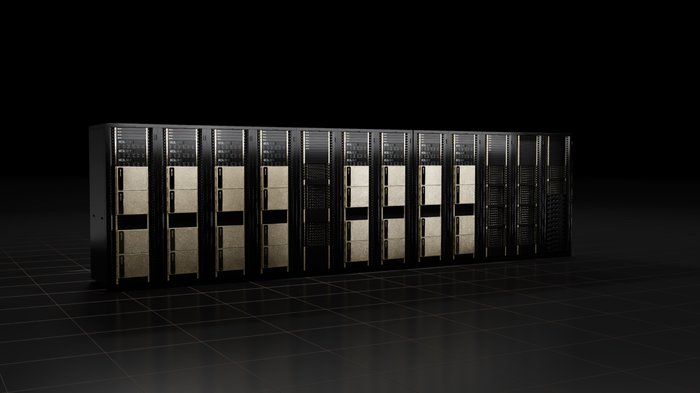
The core of the deal revolves around the maturation and deployment of NVLink Fusion. NVLink is not just a bus; it is the specialized communication protocol that allows GPUs to communicate with near-memory speeds, treating the entire cluster as a single, massive processing unit. Marvell, a historical player in networking silicon, is positioned to be the critical enabler for this interconnect scaling.
The $2 billion investment provides Marvell with the necessary resources to accelerate the integration of these advanced interconnect solutions into its product lines. This allows Marvell to move beyond simply supplying components and instead become a deeply embedded partner in the architectural design of the world's largest AI supercomputers. The goal is to create a system where the compute unit (the GPU) and the communication fabric (the interconnect) are designed and optimized together, making the system highly efficient but also highly specialized.
This level of integration is notoriously difficult to replicate. It requires deep knowledge of the physical layer, the protocol layer, and the software stack—a trifecta of expertise that few companies possess. By investing in Marvell, Nvidia is not just buying chips; it is buying guaranteed, optimized access to the physical realization of its own proprietary communication standards, ensuring optimal performance metrics that competitors cannot easily match.
The Economics of Ecosystem Lock-In
The strategic value of this investment lies in the concept of ecosystem lock-in. In the semiconductor world, lock-in occurs when the cost and complexity of switching to a competitor’s platform outweigh the potential performance gains. Nvidia has historically excelled at this, creating a virtuous cycle where superior software (CUDA) drives hardware demand, which in turn necessitates proprietary interconnects.
The Marvell deal enhances this lock-in by making the physical layer of the system equally proprietary. If a major cloud provider or research institution builds a massive AI cluster using Nvidia GPUs, the interconnect fabric—the ability to scale that cluster efficiently—is optimized for NVLink. Switching to a competing architecture would require not only replacing the GPUs but also re-engineering the entire communication backbone, a process that introduces massive engineering overhead and performance risk.
This creates a powerful economic moat. The cost of switching from a proven, optimized Nvidia/Marvell stack to a nascent competitor's stack is measured not just in dollars, but in months of lost development time and performance degradation. The $2 billion investment is a preemptive strike against this risk, ensuring that the performance gains of the next generation of AI models are realized most efficiently on Nvidia-centric hardware.
Competitive Response and Market Dynamics
The move forces competitors—including AMD, Intel, and various dedicated ASIC designers—to accelerate their own interconnect solutions. These rivals are acutely aware that the interconnect is the new battleground. While some competitors have demonstrated impressive raw compute power, the challenge remains scaling that power reliably across thousands of nodes.
The market reaction confirms the gravity of the move. Instead of viewing the investment as a mere supply deal, industry analysts view it as a consolidation effort that raises the technical hurdle for any challenger. Any company hoping to disrupt the AI compute market must now not only match the teraflops but must also provide an interconnect solution that can demonstrably match or exceed the efficiency and bandwidth of NVLink Fusion.
This dynamic shifts the competitive focus from pure compute density to interconnect density. The winner in the AI hardware race will be the company that can most effectively manage the data flow between processing units. By securing Marvell’s expertise in this domain, Nvidia has solidified its position as the foundational infrastructure provider, not just the chip vendor.