This is what useful local AI looks like
The Linux kernel getting an AI bug hunter sounds like a headline built to annoy maintainers. But this one is interesting because it is not just a cloud demo wearing a hard hat. It is running locally, and patches are actually making it through review.
That last part is the whole story. Kernel work does not care if a tool sounds futuristic. It cares whether the patch is correct. If the AI-generated work clears the same review process as everything else, then it earns the right to be taken seriously.
The Linux kernel AI bug hunter matters because patches are already making it through review.
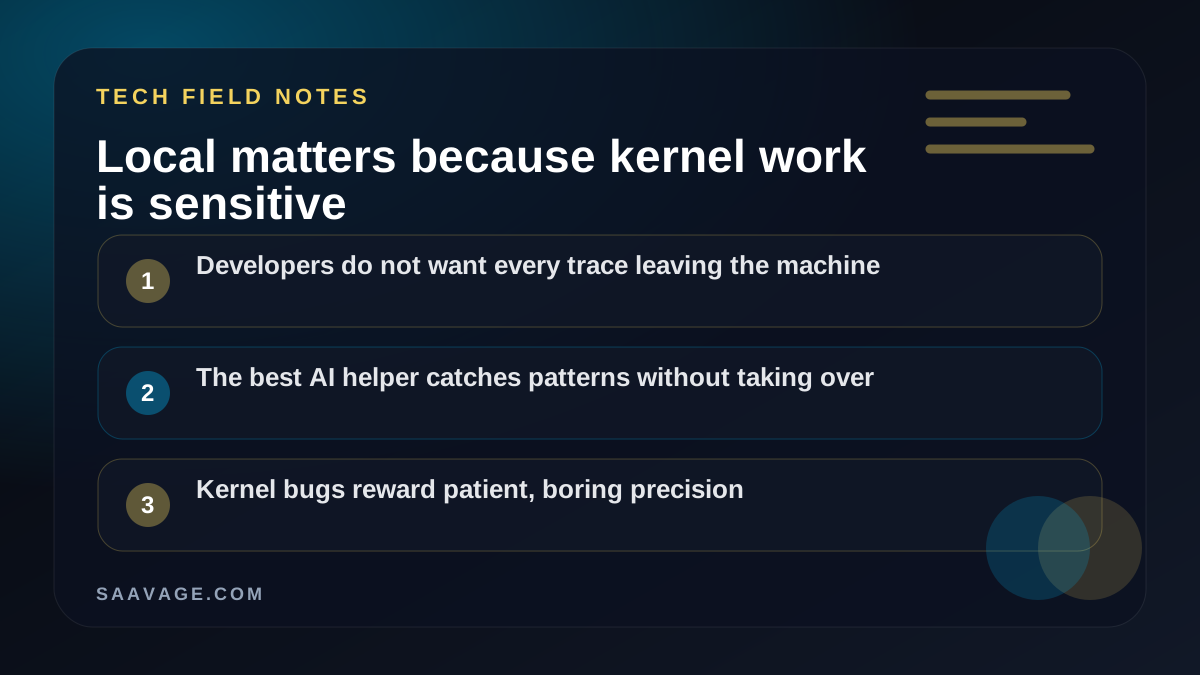
Local beats flashy here
Running the model locally changes the feel of the tool. You are not shipping sensitive code to a cloud service, waiting for a response, and hoping the context survives. The assistant sits next to the developer, closer to the same loop as git, builds, and tests.
That is especially important for kernel work. Race conditions, drivers, and low-level bugs are not the kind of thing you want summarized vaguely by a remote chatbot. You want fast iteration, local context, and a result that can be reviewed like any other patch.
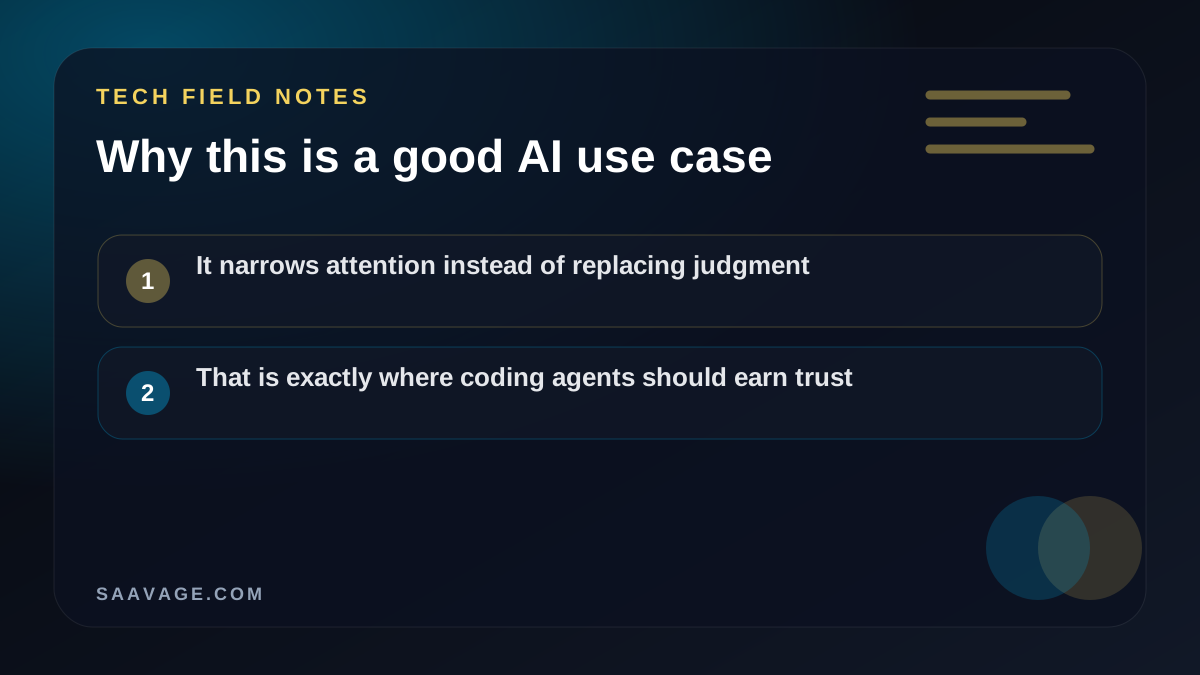
The hardware story is finally practical
AMD Ryzen AI hardware and a Framework Desktop are not the sexiest words in tech, but together they make the point. The AI PC pitch only matters when the local AI does something useful. Finding kernel bugs is useful.
This is a better sales pitch than any keynote demo. If a workstation can run local inference well enough to help with serious open-source maintenance, then local AI is not just for generating images or rewriting emails. It has a place in hard engineering workflows.
The review bar still wins
The reason this does not feel like hype is that the kernel community is not lowering the bar for AI. The patch either survives review or it does not. No magic exception. No special badge.
That is exactly how this should work. AI can help find the weird edge cases and speed up the boring search, but humans still own judgment. If more projects adopt that pattern, local AI tooling could become quietly normal instead of loudly annoying.