Overview
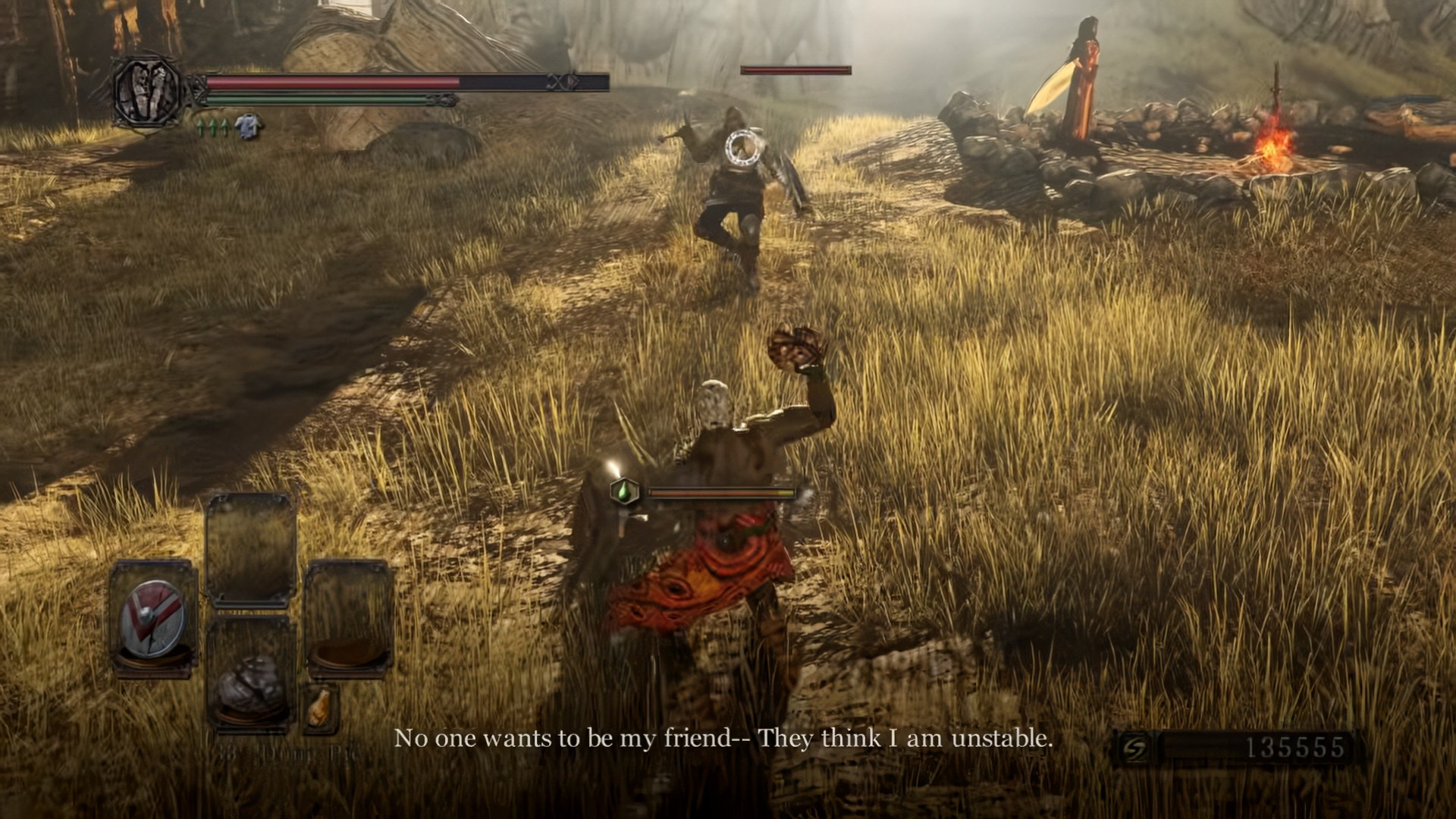
A recent demonstration proved that the established combat parameters of Dark Souls II can be entirely circumvented by environmental absurdity. A player successfully defeated the game's final boss using nothing but dung pie, requiring a documented 42 hits to achieve victory. The feat, captured on video, moves the discussion beyond simple "gimmick builds" and into the realm of deep mechanical exploitation.
The success of the dung pie attack suggests that the game’s physics engine and hit detection systems contain specific vulnerabilities that allow non-combat, low-damage environmental objects to function as viable offensive tools. This is not merely a novelty; it is a precise demonstration of how player ingenuity can map the seams of a complex, proprietary game engine.
The incident serves as a potent case study for game developers regarding the limits of programmed difficulty versus the infinite potential of player agency. When the intended path to victory is circumvented by a projectile derived from refuse, it forces a re-evaluation of what constitutes "fair" gameplay design in modern AAA titles.
Redefining Player Agency in AAA Gaming

The Mechanics of Exploitation
The core technical takeaway from the Dark Souls II exploit is the successful identification of a damage calculation loophole. Most Souls-likes are built upon rigorous, predictable combat metrics: stamina drain, weapon damage coefficients, and specific enemy vulnerability windows. The dung pie, by contrast, operates outside these defined parameters.
The success of the projectile suggests that the game's collision detection system registers the dung pie—despite its low inherent value—as a solid, damaging object capable of maintaining enough velocity and impact force to bypass the boss's high defensive thresholds. The fact that 42 hits were required indicates that the damage output per hit is minimal, yet the sheer consistency and cumulative nature of the damage proved sufficient to overcome the boss's health pool.
This level of detailed mechanical analysis is rarely seen in public gaming demonstrations. It requires players to treat the game not as a narrative experience, but as a complex, exploitable physics simulation. The dung pie, therefore, functions less as a weapon and more as a highly effective, low-cost key to unlocking the game’s underlying code weaknesses.
Redefining Player Agency in AAA Gaming
The incident highlights a persistent tension in the gaming industry: the conflict between structured, curated difficulty and the boundless nature of player creativity. Developers spend millions of dollars crafting intricate combat systems, ensuring that the intended "optimal build" is the most satisfying path.
However, the dung pie exploit demonstrates that the most robust systems are often those that are the most brittle. When a game's physics engine is designed to handle everything from massive boss attacks to simple environmental interactions, the sheer volume of variables creates blind spots. These blind spots are where the player, armed with deep knowledge of the game's engine, operates.
This phenomenon has roots in early PC gaming, where unintended glitches and exploits often became the defining features of the meta. Today, the complexity of modern consoles and engines—with their sophisticated networking and physics models—has simply raised the stakes. The dung pie victory is a modern iteration of the "cheese build," proving that sometimes, the most ridiculous solution is the most technically sound.
The Future of Game Design and Exploits
From a development standpoint, the dung pie victory presents a critical stress test for future titles. If a simple, non-combat projectile can defeat a final boss, it signals a potential lack of integrity in the core combat loop.
Game designers must now contend with the reality that player optimization will always prioritize efficiency over narrative purity. The goal shifts from simply making the boss difficult to making the exploitation of the boss difficult. This might lead to more dynamic, self-correcting physics systems that account for low-value, high-volume projectiles, or it could lead to the rise of specialized "meta-patching" content that acknowledges and integrates such exploits into the game's lore.
For the tech sector, this is a recurring pattern: the software is designed to be rigid, but the human element always finds the way around the edges. The dung pie victory is a perfect microcosm of this principle, proving that the most powerful tool in the gaming ecosystem remains the player's understanding of the system's limitations.