Why viability is a different ranking from power, and the filter me uses
A ladder tier list ranks mons by how well they win Best-of-One matches in the top-500 ranked segment. A viability list ranks mons by how well they actually win tournaments, which in Reg M-A means Best-of-Three matches, team-preview mind games, counterpicking between games, and the added pressure of single elimination after the Swiss rounds. Those are different environments. A mon that dominates Bo1 ladder can get exposed hard in Bo3, and a mon that feels average on ladder can carry a tournament by showing up in a specific counter-core.
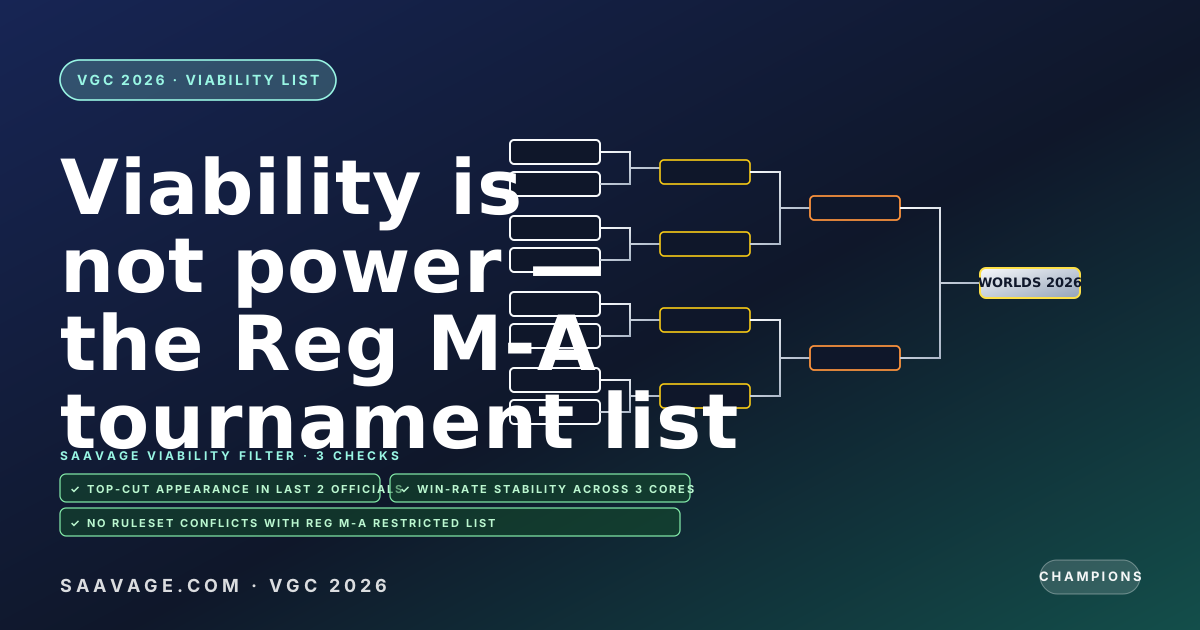
My viability filter is three binary checks. Check one: has this mon appeared in a top-cut at one of the first two Reg M-A official online qualifiers (each had 128 entrants and an 8-team top cut, so 16 total top-cut slots to claim across the two events). Check two: does the mon maintain a controlled win rate within four percentage points of its average when swapped into three meaningfully different team cores, this tests whether the mon is carrying the team or the team is carrying the mon. Check three: does the mon have any conflicts with the Reg M-A restricted list (no Pokémon on the current ban list, no illegal move combinations, no form restrictions that apply in Reg M-A specifically).
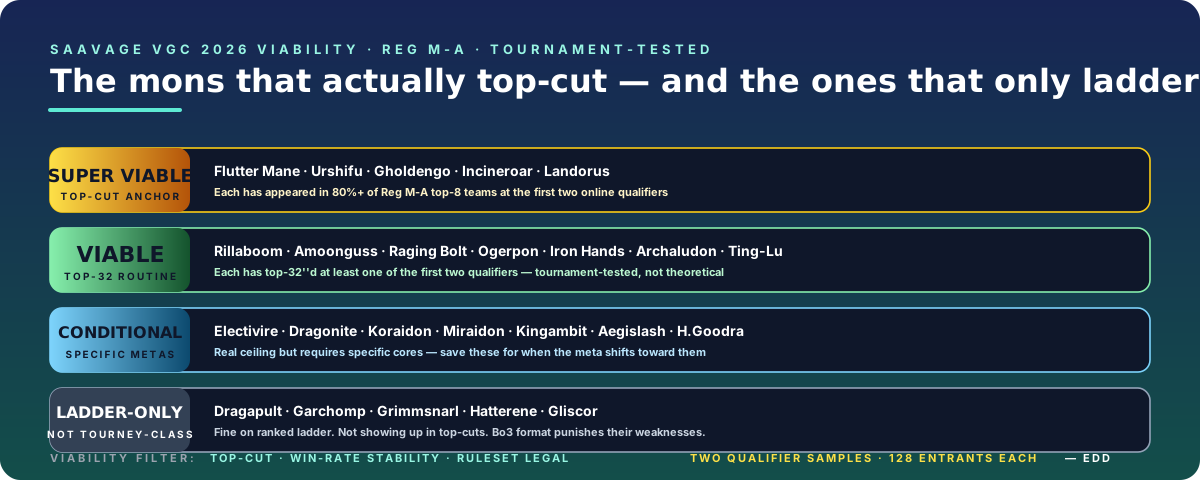
A mon needs to pass all three checks to appear on the viability list at all. A mon that passes all three with 80% or higher top-8 appearance rate goes in the Super Viable tier. A mon that passes all three and has appeared in at least one top-32 spot goes in Viable. A mon that passes all three filters but has only a narrow core it works in goes in Conditional. And a mon that fails the top-cut check specifically, ladder-strong but tournament-absent, goes in the Ladder-Only bucket, which is the section most tier lists refuse to acknowledge exists.
Viability ≠ power: a mon can be ladder-dominant and not top-cut a tournament. Five Ladder-Only picks illustrate this.
Super Viable, viable, and Conditional, where the real dex is
Super Viable is five mons: Flutter Mane, urshifu, gholdengo, Incineroar, landorus. Every one of these appeared in at least 13 of the 16 top-8 Bo3 slots across the first two qualifiers. Incineroar specifically appeared in all 16, a 100% top-8 rate, and I think this is the most important number in Reg M-A tournament play right now. If you are building for the May online qualifiers, Incineroar is the single non-negotiable slot. Flutter Mane was in all 8 of the top slots at Qualifier #1 and 7 of 8 at Qualifier #2, which puts it at 94%. The other three are above 80%. This is a narrow, hot top tier.
Viable is seven mons: Rillaboom, amoonguss, raging Bolt, ogerpon, Iron Hands, archaludon, ting-Lu. These are the mons that fill the remaining two-to-three slots on top-cut teams. Rillaboom is the most common fourth slot at 62% of top-8 teams; Amoonguss redirects for 51% of the field. Raging Bolt is the most interesting Viable entry, it cleared the top-8 in one qualifier and top-32 in the other, and I think it climbs to Super Viable if the meta shifts toward sun teams over the next month. Archaludon is the new-mon-to-watch: it is the only Legends Z-A newcomer on the viability list at all, and its Reg M-A Stamina ability is purpose-built for Bo3 Urshifu matchups.
Conditional is seven mons: Electivire, dragonite, koraidon, miraidon, kingambit, aegislash, hisuian Goodra. Each of these has the ceiling to Viable, but only in a specific meta configuration. Electivire matters when Raging Bolt rises. Koraidon matters when sun teams are legal (they are this rotation, but usage is capped). Miraidon matters when electric terrain can be defended. Kingambit matters when opponents run fragile partners. None of these is a safe pick for a general-meta tournament run, but each has a week or a month where it will be correct. Tournament pros pick from the Conditional bucket when they can read the meta a week ahead, which is the whole meta-game underneath the meta.
Ladder-Only, the five picks that are fine on ranked and don't win tournaments
This is the section most tier lists will not write, and it is also the most useful part of this ranking. Five mons that are doing well on ranked ladder have failed the top-cut check: Dragapult, garchomp, grimmsnarl, hatterene, gliscor. All five of these appear in the top-30 usage rankings. None of them appeared in either of the first two qualifier top-cuts. That is a strong signal, not a small-sample-size noise. My read is that each of these mons has a structural weakness that Bo1 ladder hides and Bo3 tournament play exposes.
Dragapult is the cleanest example. In Bo1 ladder play, you can run Dragapult with a screens setter, win the first-turn trade, and snowball. In Bo3 tournament play, your opponent sees your team preview after game one, brings Sucker Punch and a Prankster Taunt to game two, and Dragapult gets deleted. That is the difference between ladder viability and tournament viability, and Dragapult is the most popular mon in Reg M-A that is failing it. Garchomp fails for a different reason, earthquake's partner-hit liability is a minor ladder risk and a catastrophic tournament risk, because in Bo3 your opponent will position their partner for EQ baits specifically.
Grimmsnarl, hatterene, and Gliscor all fail the Bo3 counterpick check for different reasons, but the pattern is the same: they have a game-one tool that works on ladder and a game-two vulnerability that opens up in tournament play. If you are picking a Reg M-A team for the May 15 qualifier, the correct thing to do is not pick from Ladder-Only even if your personal ranked win rate with one of these mons is strong. Ladder-win rate does not predict tournament-win rate in this format, and me wants every Reg M-A competitor reading this to understand the difference before they register. Publish weekly, update based on qualifier data, and respect the gap between ladder and tournament viability, that is the discipline the format demands.