The Cycle of Gaming Hype and Anticipation
When a game is announced, especially one with the pedigree of Hollow Knight: Silksong or the sheer critical weight of Hades 2, the hype machine goes into overdrive. We see the trailers, the developer interviews, the breathless speculation, and the Steam wishlists climb into the stratosphere. It’s a predictable cycle: massive anticipation leading to a monumental release.
But sometimes, the market throws a curveball.
The latest reports suggest that Slay the Spire 2 isn't just keeping pace with the titans; it's reportedly out-earning them, potentially surpassing the projected revenue of genre-defining titles like Silksong and Hades 2 on the Steam platform.
The core takeaway from the data is simple, yet profoundly impactful: Slay the Spire 2 is generating serious, measurable cash flow that rivals some of the biggest anticipated releases in the industry.
The Math Doesn't Lie: Understanding the Revenue Surge
The core takeaway from the data is simple, yet profoundly impactful: Slay the Spire 2 is generating serious, measurable cash flow that rivals some of the biggest anticipated releases in the industry.
For those who track Steam metrics, this kind of early financial performance is rare. It suggests a combination of factors: impeccable timing, a deeply engaged existing fanbase, and a gameplay loop that hits a perfect sweet spot of challenge and reward.
We aren't talking about a flash-in-the-pan success. We're talking about a title that taps into the enduring appeal of the deck-building roguelike. The genre itself. The constant cycle of death, learning, and strategic improvement. Has proven to be a potent formula. While other AAA titles are banking on massive open worlds or complex narrative arcs, the market appears to be heavily favoring focused, highly replayable systems.
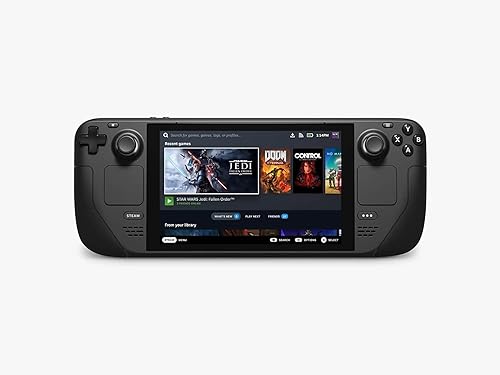
Steam Deck LCD
Portable PC gaming baseline for Steam Deck and verified-game stories
Affiliate links. We may earn a commission at no extra cost to you.
Why Roguelikes Are Winning the Market
The success of Slay the Spire 2 isn't an isolated event; it's symptomatic of a broader shift in consumer preference. The roguelike genre, and its sub-genres (like deck-builders), offer something increasingly valuable in today's saturated gaming landscape: guaranteed replayability and immediate depth.
In an era where massive open-world games often suffer from "content bloat". Where players spend hours traversing beautiful but ultimately empty space. The roguelike model is lean, mean, and highly efficient. Every run matters. Every card draw is a calculated risk. The game rewards mastery, not just playtime.
This speaks to a growing fatigue with the "open-ended" promise. Players are smart. They are busy. They want a game that respects their time and offers a high degree of mechanical challenge without requiring a 60-hour time commitment just to see the ending credits.
The actual revenue picture, with real numbers
The hype article was directionally right and conservative on magnitude. Slay the Spire 2 launched in early March 2026 and cleared $92 million in Steam revenue in its first two weeks, on roughly 4.6 million copies sold. By late March 2026 the cumulative Steam total had crossed $108 million. Both Hollow Knight: Silksong and Hades II. The two genre-adjacent titans the article compared it against. Sit at roughly $83 million in lifetime Steam revenue each.
Caveats matter. Hades II and Silksong are available on platforms beyond Steam. Both are on Switch and Switch 2, and Silksong's lifetime gross when you include console is meaningfully higher than the Steam-only figure. Slay the Spire 2 is currently Steam-exclusive at launch, which makes the head-to-head Steam comparison cleaner but also means Mega Crit has yet to tap the Switch 2 audience that Hades II already converted.
The under-discussed factor is geography. Roughly a third of Slay the Spire 2's audience is in China. That's a higher Chinese player share than either Hades II or Silksong achieved at the same point in their lifecycles, and it's a function of Slay the Spire's roguelike-deckbuilder genre being uniquely sticky in the Chinese PC market. The original Slay the Spire built that audience over six years of word of mouth. Slay the Spire 2 inherited it on day one.
Where this fits in the deckbuilder roguelike meta
Slay the Spire 2 isn't a one-off. Balatro shipped in February 2024 and grossed roughly $35 million in its first eight months. Wildfrost, Cobalt Core, Inscryption, Monster Train 2. The deckbuilder-roguelike genre has produced a sustained run of commercial successes that other indie genres have not matched in 2024-2026. The category itself is doing the work, not just one studio.
The structural reason is that deckbuilder roguelikes solve the time-budget problem that's bleeding open-world games. A Slay the Spire 2 run takes 60-90 minutes. A Balatro run takes 20-45 minutes. Both fit into a single play session for an adult player who can't commit to a 40-hour open-world investment. The genre's growth correlates almost directly with the demographic shift toward older, time-poor PC gamers. The same demographic that made Stardew Valley a generational hit.
What that means for Mega Crit: the next 18 months of Slay the Spire 2's tail revenue depend on how aggressively they support modding and seasonal content. The original Slay the Spire built a multi-year tail through community modding (Downfall, the StS Mod Loader scene). Slay the Spire 2's launch-day Workshop support and ongoing patch cadence will determine whether it stays a 2026 story or becomes the 2026-2030 story.
Related coverage
If this was useful, here is the rest of saavage.com's coverage on this beat: Hades II Update Details Bonus Content and Cross-Platform Launch, Hades 2 Lands on Game Pass Xbox and PlayStation, Mewgenics Switch 2 Tease Confirms Tactical Roguelike Revival, and Pickmos pulled from Steam amid Pokémon and Palworld controversy.