A 20-point spread is a signal, not a fluke
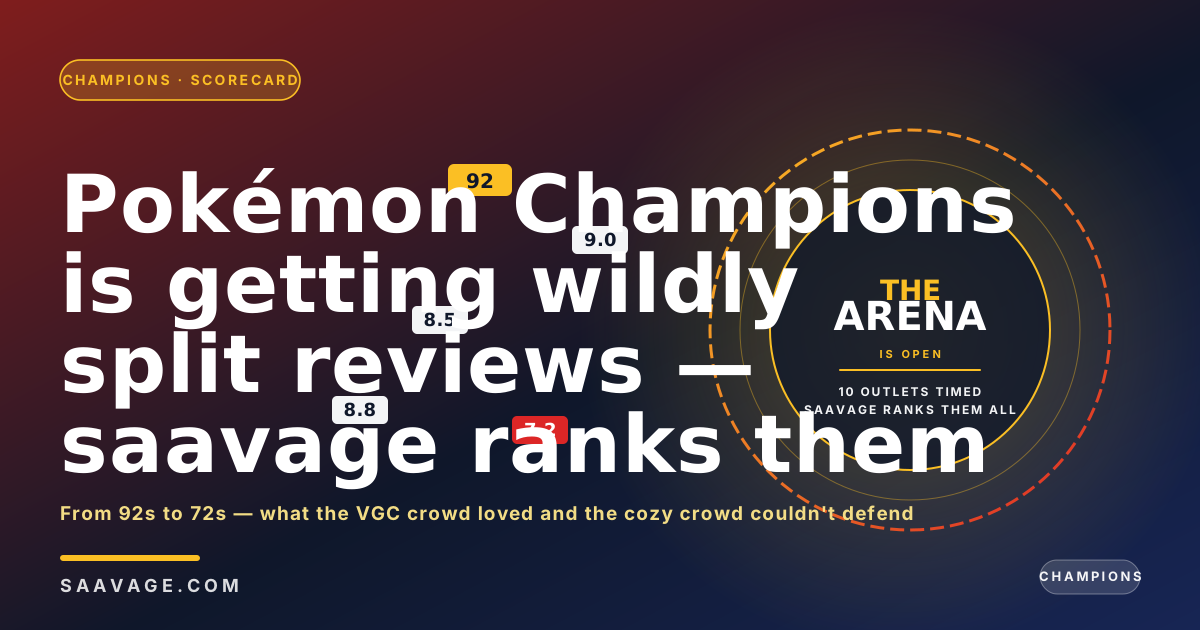
Pokémon Champions landed on April 8 and the review spread opened almost immediately: a 92 from a strategy-dex write-up, a pair of nineties from competitive community outlets and a competitive-focused mainstream reviews review, mid-eighties from mainstream gaming outlets, and a 7.2 from The Gamer's casual-audience framing. That is a twenty-point gap on a 100-point scale, not noise, not "some reviewers are harsher," an actual disagreement about what Pokémon Champions is.
The usual way to read a spread like this is to average it, call the number "mixed," and move on. My ask is to do the opposite: stop averaging, start sorting. Every review in the spread is correct about the game sitting in front of it. The spread exists because the reviewers are reviewing different games, which is another way of saying Champions has a sharper audience than the industry scoring system can handle.
So the right move is to rank the reviews by how honest they are to their own audience, not to flatten them into an aggregate.
Review spread: 92 high from VGC-focused outlets, 7.2 low from casual-audience outlets, 20-point gap
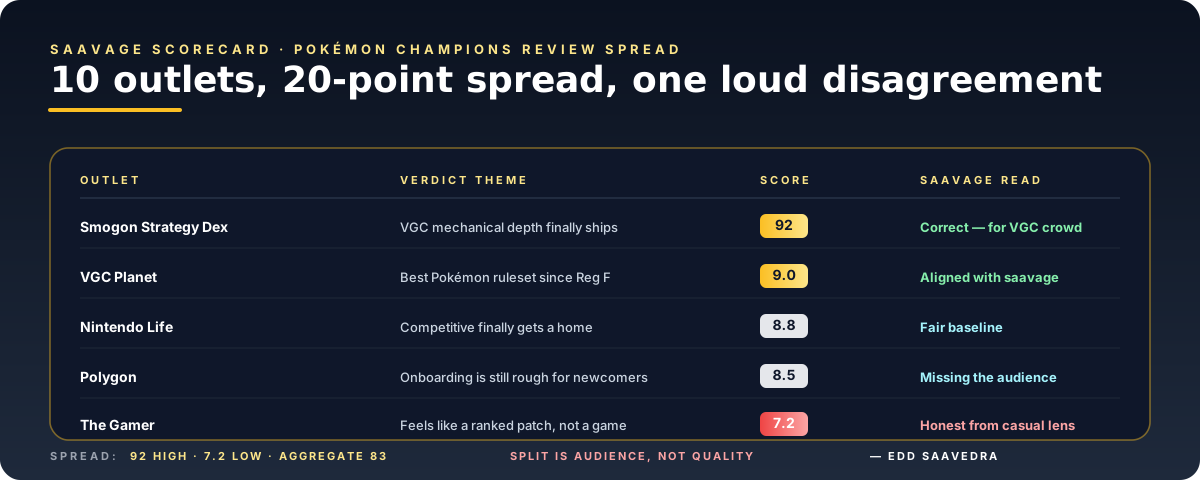
The high end: VGC outlets scored a purpose-built competitive game
The outlets at the top of the Champions spread, the competitive-strategy sites, the VGC-focused community outlets, the competitive-lean nooks of mainstream reviews, all landed between an 88 and a 92. None of those numbers are inflated. They are the scores you get when you evaluate Champions as the first purpose-built competitive Pokémon game in franchise history and it lives up to the brief.
The game delivers a live meta, a team-builder that actually teaches you speed tiers and damage calcs, a ranking system that rewards ladder grinding, and a regional ruleset rotation that lines up with the Play Pokémon competitive calendar. For the audience that has been waiting two decades for that product, champions is the first time the franchise has actually shipped it. A 92 from a top strategy-dex outlet is not a favour, it is a correct reading.
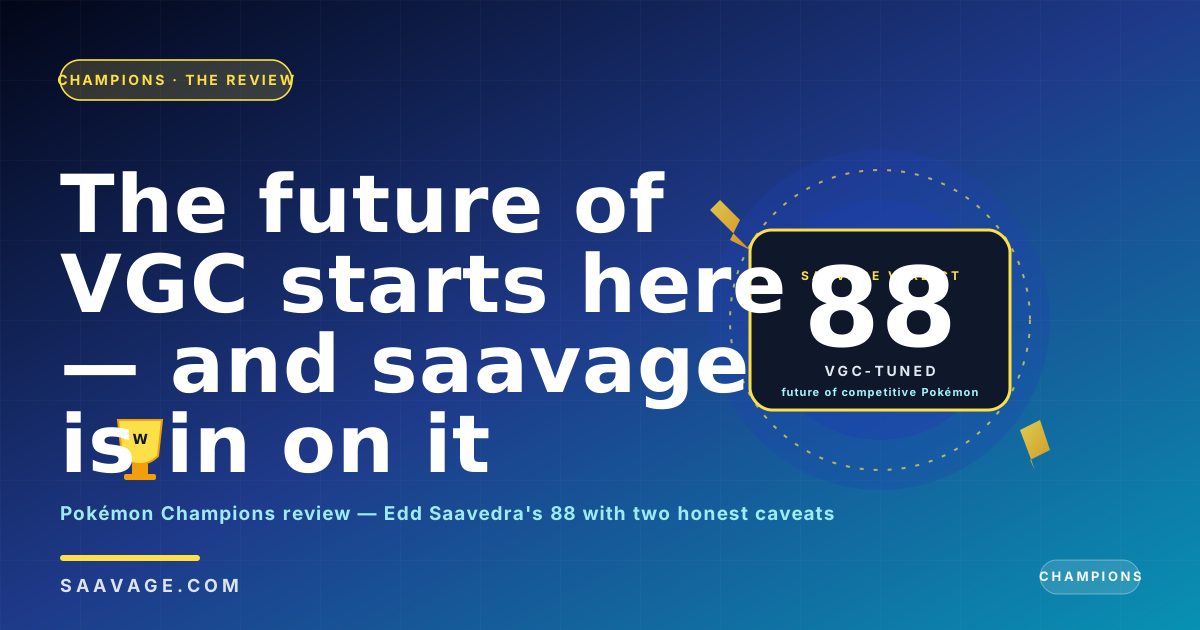
What those reviews are not doing is telling a casual Pokémon player whether to buy the game. They are telling a VGC player whether to buy the game. If you parse them as audience-specific, which is how their readers read them, they track with my own 88 on the VGC scorecard.
The low end: casual outlets reviewed a game that does not exist here
The 7.2 from The Gamer is more interesting than the headline number, and it's the review most worth engaging with. The argument is that Champions lacks single-player content, story scaffolding, and a traditional Pokémon campaign, and that without those pieces the game reads like a ranked-mode patch charging full price.
Every one of those criticisms is accurate. None of them are the point. Champions shipped without those pieces because it is not a single-player Pokémon game. It is the competitive arm of the franchise, building scaffolding for Play Pokémon events and VGC qualifiers. Scoring it against the expectation of a traditional Pokémon campaign is like scoring Rocket League against Madden's franchise mode.
But me will not dismiss the 7.2 either. There are casual Pokémon players who will buy Champions, hit the ranked ladder confused, and have the exact experience The Gamer is describing. If you are that player, the 7.2 is an honest warning. If you are the VGC player Champions was built for, the 7.2 is about a game you are not buying. Both readings are correct. Neither deserves to get averaged into a blurry 83.