When Player Behavior Breaks Game Design Rules
Sometimes, the most absurd things happen in gaming. You spend hours mastering the deep lore, optimizing your builds, and strategizing your perfect raid team. You think you understand the system. You think you know the limits. Then, some player decides to treat the entire game world like a sandbox they can just mess with, and suddenly, the laws of physics. And game design. Are completely broken.
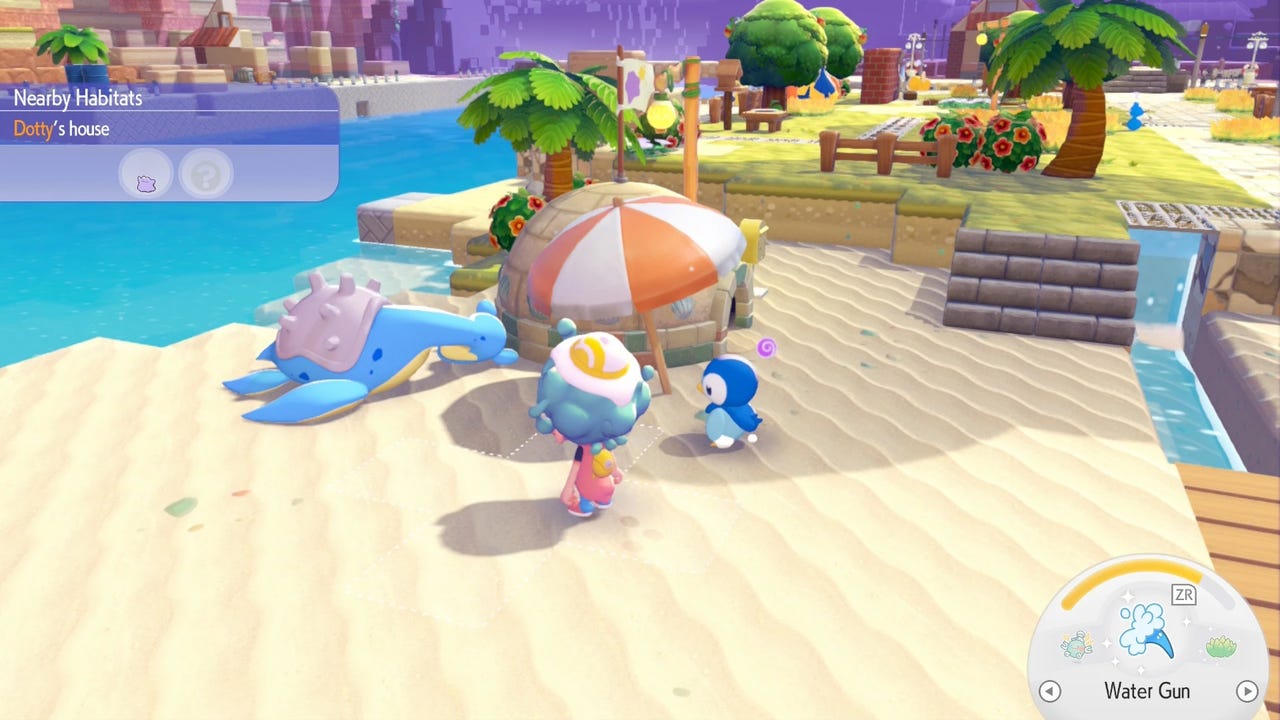
The world of Poképonia recently experienced an ocean drain. This specific event provides concrete data for analyzing potential changes in the direction of Pokémon game development.
A player, let’s call them the ultimate exploit artist, managed to drain the entire ocean. Not a small bay. Not a localized puddle. The whole massive body of water, gone. It’s a feat of sheer, unadulterated digital chaos.
The Mechanics of Digital Chaos: How Did This Even Happen?
The Mechanics of Digital Chaos: How Did This Even Happen?
When you hear "drained the ocean," your immediate thought might be, "Wait, is this even possible?" And in the context of a massive, complex RPG like Poképonia, the answer is: yes.
This incident wasn't a simple bug where a character walked through a wall. This was a highly sophisticated interaction with the game’s core resource management systems. To understand the scale, you have to look at the architecture of the game world. Open-world RPGs rely on intricate systems: water physics, resource spawning, environmental decay, and creature pathing. These systems are designed to interact with each other in predictable ways.
The Implications: Why This Matters to Open-World Gaming
This isn't just a fun anecdote for the community to dissect. For the industry, this is a flashing neon sign pointing directly at potential systemic weaknesses in next-generation gaming.
Think about the current trend in gaming: developers are constantly pushing for bigger, more immersive, and more persistent worlds. We want worlds that feel truly alive, where your actions have lasting consequences. But the more complex the world, the more vulnerable the underlying code becomes.
Why the ocean-drain stunt actually says something about Pokopia
Edge-case stunts get attention because they are funny, but the interesting question is always the same: why was the exploit possible in the first place? Pokopia's case is unusual because the world-shaping system is designed to give players exactly this kind of leverage. The game is not breaking when a player drains the ocean — it is doing what it advertises.
That is also why the patches around this kind of behaviour have been narrow. Game Freak appears to be patching cases where the world-edit produces unrecoverable save states, not cases where it produces absurd ones. That distinction matters: the team is treating expressive abuse as a feature, and only treating destructive abuse as a bug.
For the cozy-sim crowd, the ocean-drain stunt is mostly entertainment. For the design-curious, it is a small window into how the team is thinking about player agency. The full Pokopia hub tracks both — the funny exploits and the patches that follow them.