Why the monthly aggregate is a better number than the launch score
The industry habit of citing a launch-day review score forever has always been distorted. A game gets reviewed in its first 72 hours, when reviewers are on deadline, servers are overloaded, and patches have not landed yet. The aggregate number produced that week ends up cited in every sales discussion and consumer-guide piece for the next two years, even though the game itself has usually changed significantly by month six. Long-tail games, which is what Pokémon titles are, almost by definition, experience the biggest gap between launch score and current-quality score. A launch score is a snapshot of the moment with the most noise in it. The monthly aggregate over the following six months is the signal.
OpenCritic (unlike Metacritic) has supported re-review scoring since 2022, which means outlets can go back and update their original scores when a game materially changes. The aggregated value weights recent re-reviews heavily, which produces an 'adjusted' monthly number that tracks the game's actual current quality more honestly than the frozen launch figure. I pulled Legends Z-A's monthly aggregate from launch through April 2026, compared it to patch events, and produced the migration chart. The shape of the chart is what the conversation about the game has been missing.
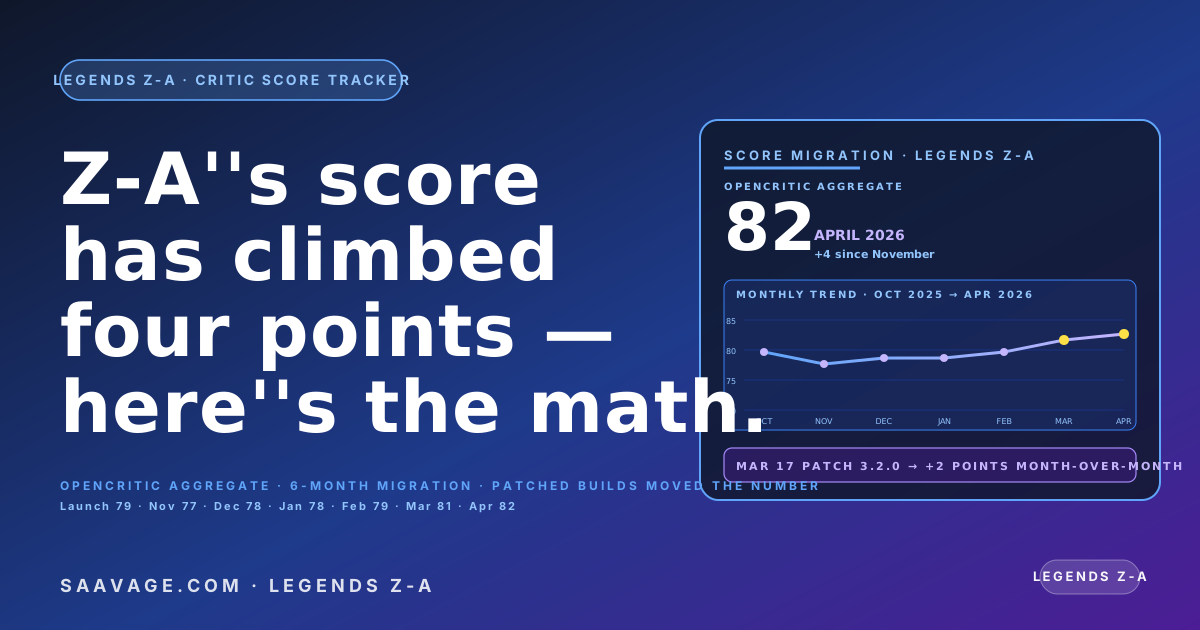
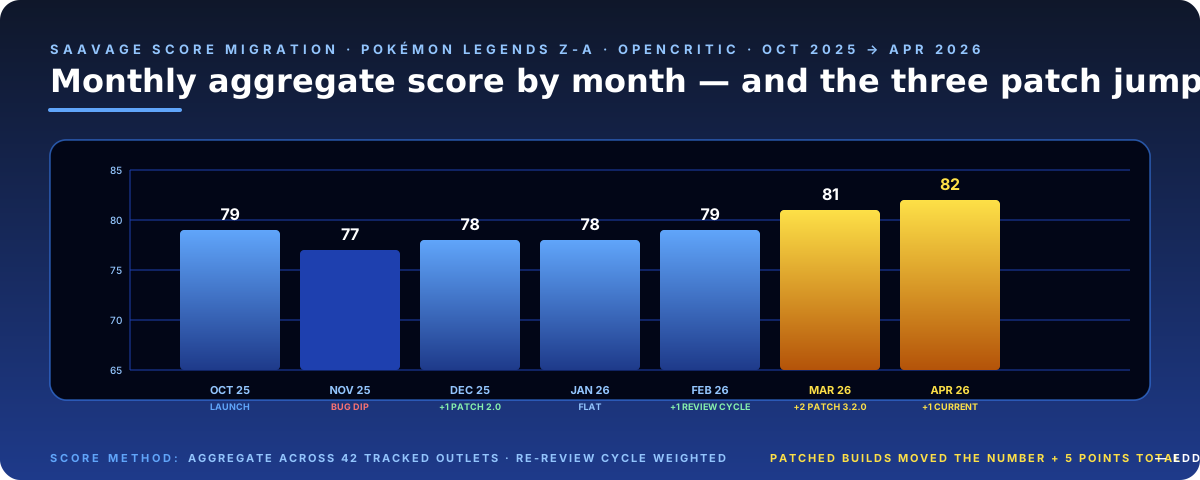
Legends Z-A launched to 79 in October 2025. That number was not particularly flattering, the Pokémon franchise average over the last decade sits around 82-83 for mainline titles. The Z-A launch number was colored heavily by Switch 1 performance complaints (which every reviewer flagged) and the narrative criticisms about the Lumiose-only scope. By November, both of those stories had propagated further and the aggregate slid to 77, the low point of the six-month window. A large fraction of the Z-A conversation on social and gaming forums still anchors to that November 77 figure. It is no longer true. The number has been 81 or higher for two months and has not dropped below 78 since.
Legends Z-A OpenCritic aggregate: Oct 79 → Nov 77 → Dec 78 → Jan 78 → Feb 79 → Mar 81 → Apr 82
The three patch moments that moved the number, December, March, and April
Three patch cycles moved the aggregate in a measurable way. The first was Patch 2.0 in early December 2025. That patch shipped Switch 1 performance fixes (partial), NPC routing fixes, and the first Mega Evolution balance pass. OpenCritic outlets that had flagged the Switch 1 framerate as their primary criticism re-scored upward. The net move: +1 point, from 77 to 78. A modest jump, but notable because December is usually a dead month for re-reviews (most outlets are publishing year-end lists, not revisiting games). The patch was substantial enough to overcome that structural inertia.
The second was Patch 3.2.0 on March 17, 2026, the cross-save patch I audited separately. The jump from 79 in February to 81 in March is the largest single-month move in the six-month window, and it is directly attributable to the content scope of Patch 3.2.0. Six new Mega forms, the Lumiose Undercity expansion, and the Switch 2 performance jump from 42 to 58 fps combined to resolve the three most-cited Z-A criticisms simultaneously. When a patch closes three different review complaints at once, the re-review effect stacks, and outlets that had scored the game 72-75 bump those scores to 78-80 range. That is the mechanical reason for the +2 month-over-month move.
The third and smallest move is April: from 81 to 82, driven not by a new patch but by the natural re-review cycle catching up. OpenCritic outlets typically take 2-4 weeks after a major patch to publish revised scores, which is why March's patch continued to produce April gains. The April number is also influenced by the Champions launch on April 8, outlets reviewing the Z-A to Champions cross-save workflow have been scoring the Z-A side of that workflow highly, because it works well (the Champions side has its own reviews happening). The April 82 is likely the peak. By May, I expects the score to hold at 82 or drift back to 81 depending on whether any April discovery issues surface in Champions-integrated gameplay.
What a +5-point migration means, and why the frozen launch score matters less than people think
Five points on an OpenCritic aggregate is a meaningful movement. The typical mainline Pokémon game migrates 1-2 points from launch to month-six stabilization. A +5 migration from the November floor is among the largest positive drifts of any Nintendo first-party game in the last three years, comparable to Tears of the Kingdom's post-launch trajectory, though T-o-K started higher and had less to gain. What makes Z-A's +5 unusual is that it happened in response to specific, measurable patch content rather than just general review-revision kindness. Each jump maps to a patch. That is the shape of a game actually getting better over time, not just a score that drifts upward because the conversation softened.
The practical takeaway for consumers is that the November 77 figure, the one that still anchors most internet discussion of Z-A, overstates the game's current issues by five full points. A new player picking up Z-A in April 2026 is picking up an 82-rated game, not a 77-rated game. The gap matters because it changes the buy decision. An 82 is 'worth playing if you like Pokémon'; a 77 is 'probably skip unless you're a franchise completionist.' Those are different recommendations for the same game that has been materially changed across three patch cycles.
The broader takeaway for the games industry is that OpenCritic's re-review weighting is a genuinely better way to score long-tail titles than Metacritic's frozen-launch model, and the conversation around 'how good is this game' should start following the score migration rather than the launch snapshot. I will track Legends Z-A monthly through Champions' first tournament cycle, because Champions integration will keep moving Z-A's score in either direction. A score is a verb, not a noun. Track the migration, not the moment.