What The Pokémon Company Actually Said
The quote that set the internet ablaze came from an interview with a senior figure at The Pokémon Company, who when asked about the long-term future of the franchise's roster, responded with something to the effect of: 'Maybe 10,000.' No timeline was attached. No commitment was made. But the fact that the number was spoken aloud — publicly, by someone in a position to know the internal conversations happening at the company — is itself significant.
To understand why this matters, some context helps. The Pokémon franchise has added roughly 100 new species per mainline generation, though that number has fluctuated. Generation I launched with 151. By Generation IX (Scarlet and Violet), the total count reached approximately 1,025. That's nine generations across nearly three decades to reach a thousand. Ten thousand would require a fundamental rethink of how the franchise grows.
What's interesting is that The Pokémon Company didn't frame this as a problem to solve — they framed it as a possibility to consider. That's a meaningful distinction. It suggests the organization is thinking about Pokémon not as a franchise with an endpoint, but as an evolving ecosystem with infrastructure that can be scaled. That's a very different posture than the one many fans feared after the 'Dexit' controversy surrounding Sword and Shield.
Whether 10,000 is a serious target or a headline-generating thought experiment, the conversation it has opened up is genuinely productive for the franchise's future.
The Pokémon Company has publicly discussed a future where the franchise reaches 10,000 total species — a number nearly ten times the current count.

Could 10,000 Species Work?
The skeptical read is obvious: 10,000 Pokémon would be unmanageable. How do you balance a competitive meta with that many options? How do you design games that make players feel they can actually 'catch 'em all' when the roster is a five-digit number? How do you avoid creative dilution when you've already had to design 1,025 distinct creatures with unique typings, move pools, abilities, and visual identities?
These are real concerns, but they're not insurmountable — especially if you abandon the premise that every Pokémon has to appear in every game. That shift has already been happening. The National Dex as a completionist goal quietly became less central after Generation VI. The Dexit controversy forced fans to confront the reality that the franchise may have to operate more like a trading card set — with regional rosters, rotating availability, and home bank systems handling the overflow.
If you accept that framing, 10,000 starts to look less like a number and more like a philosophy: Pokémon as a living, expanding universe rather than a static checklist. Different games could feature different subsets. Players could specialize, collect across titles, and trade into shared ecosystems. The Pokémon HOME infrastructure already gestures toward this kind of distributed model.
The design challenge is real but solvable if the intent is to build an ecosystem rather than a single 'complete' game. That's a big if — but again, The Pokémon Company's willingness to talk about this publicly suggests they've at least thought that far ahead.
What This Means for Pokopia and Future Games
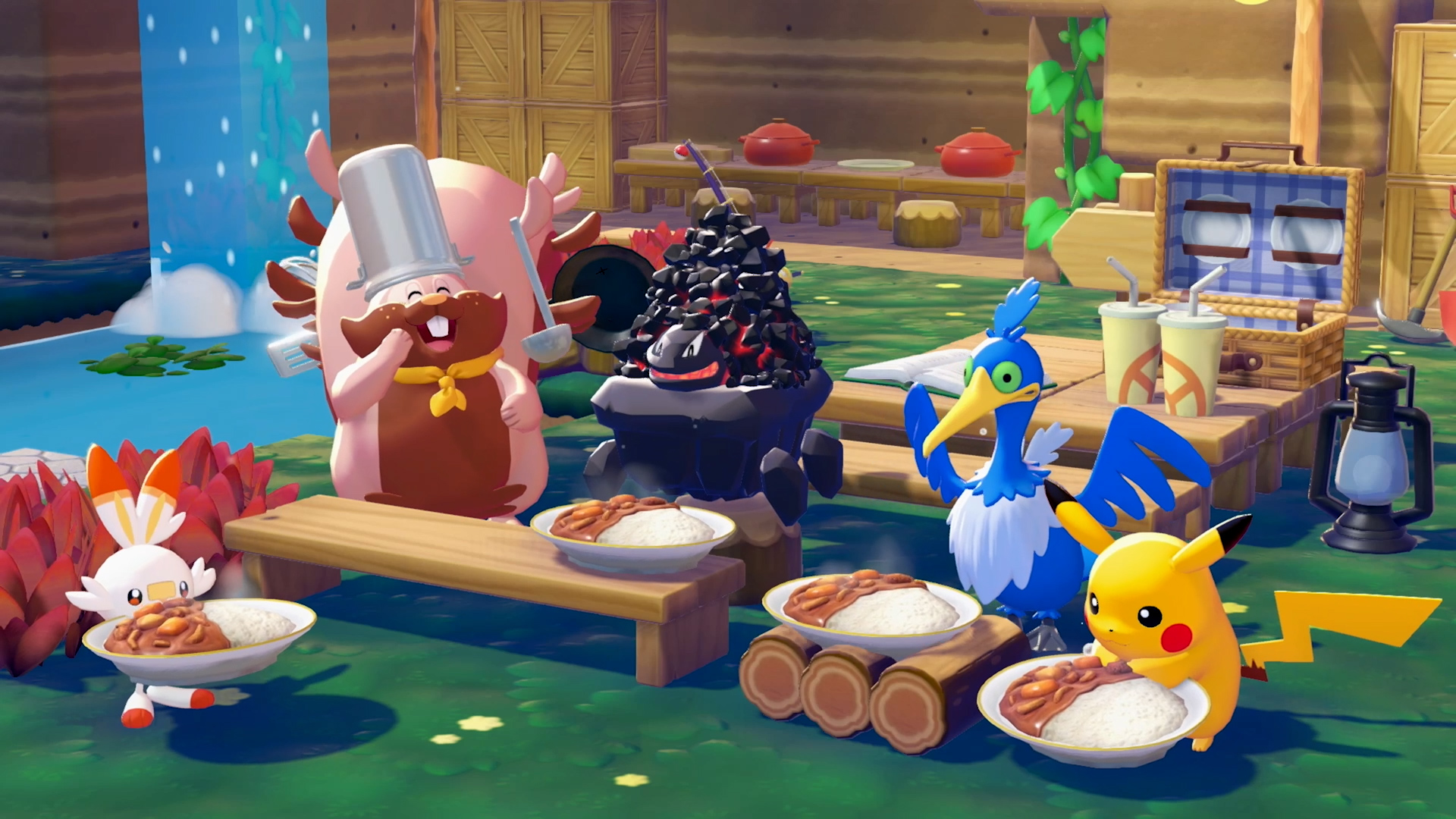
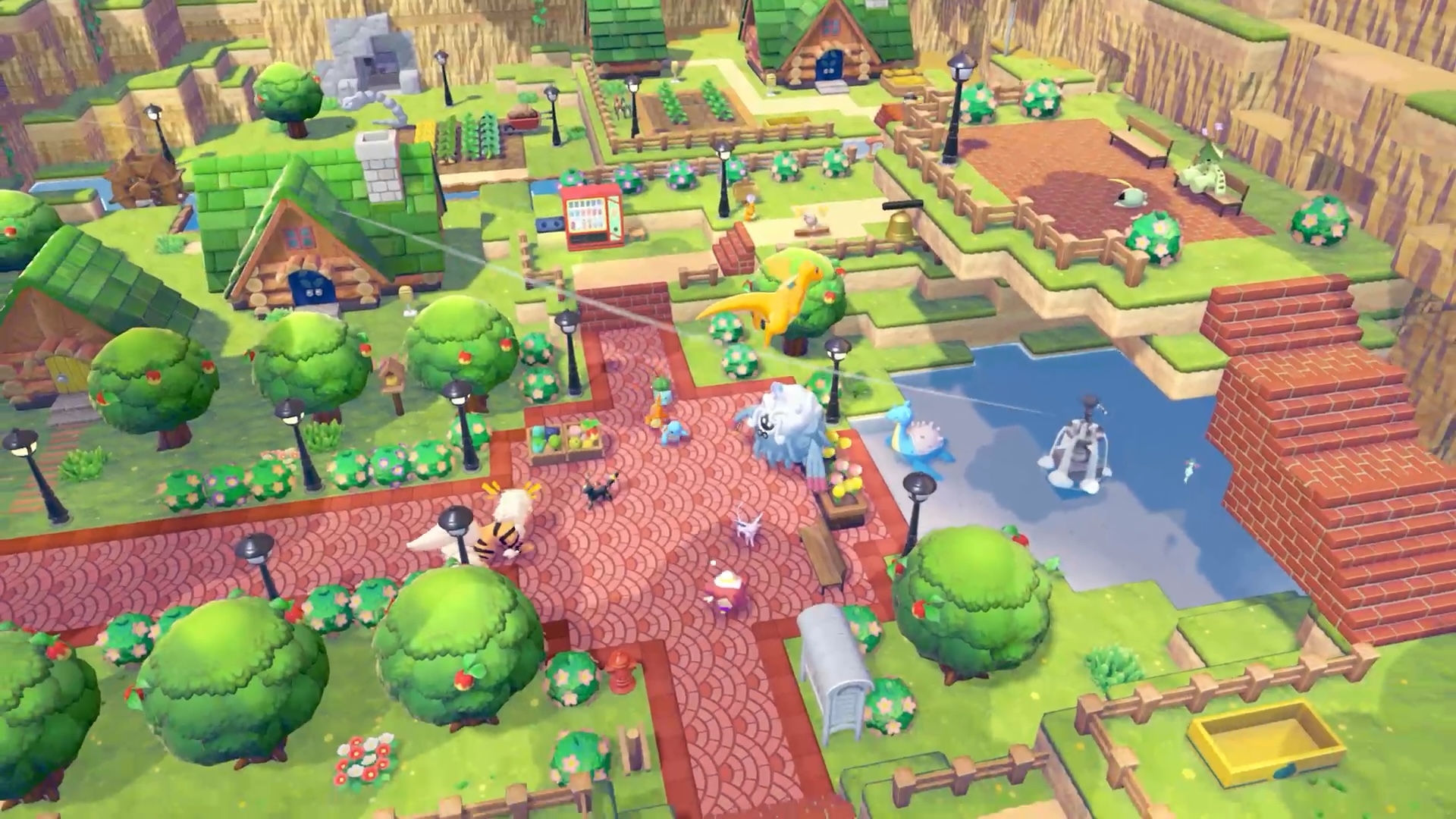
Pokopia is the most architecturally ambitious Pokémon game in the franchise's history. Its open-world design, day/night ecosystem modeling, and region-based encounter systems are all structured in ways that could theoretically scale upward without breaking. Adding more species to a Pokopia-style world is fundamentally different from adding them to a traditional linear-route game — the world simply absorbs them.
That's not accidental. The shift toward open-world design in Pokémon games has always been partly a content-density play. More space means more niches for more creatures. Pokopia specifically has zones that feel deliberately built to accommodate expansion — biomes that could host dozens of species not currently present, environmental systems that reward biodiversity, and encounter logic that distributes creatures across terrain in ways that feel ecological rather than arbitrary.
If future games build on Pokopia's foundation — and given its reception, they almost certainly will — then the infrastructure for a much larger roster is already being established. The question isn't really whether the games can handle more Pokémon technically. It's whether The Pokémon Company can maintain design quality at scale, which is a different and harder problem.
For now, Pokopia sits at the intersection of the franchise's past and this newly described future. It's a game that rewards the depth of what 1,025 species can offer, while hinting at a world that could hold many more. If The Pokémon Company is serious about that 10,000 target — even on a multi-decade horizon — Pokopia is the proof of concept that makes it imaginable.