Why Speed Tiers Matter in Pokemon Champions
In Pokemon Champions, going first in a matchup can determine the entire outcome. If your Garchomp outspeeds the opponent's Hydreigon, you KO it with Earthquake and take no damage. If you are one Speed point slower, you take a Draco Meteor before you can act. Knowing the exact Speed tiers of your Pokemon and your opponents' most common threats is fundamental to making correct in-battle decisions.
Speed tiers become particularly important during team building because they determine which investment targets are worth pursuing. If the fastest threat you need to outspeed has a base Speed of 110, you need to calculate exactly how many Speed EVs and what nature are needed to exceed that threshold before committing to an EV spread.
In the Pokemon Champions meta, speed control through Choice Scarf, Tailwind, and Paralysis creates a more dynamic speed landscape than raw base Speed numbers suggest. Understanding how these speed modifiers interact with the tier list is as important as knowing the base numbers.
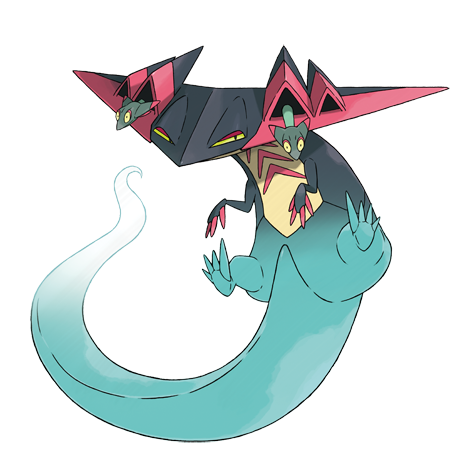
Base 135 Speed: Dragapult (fastest relevant non-legendary)
The Fastest Pokemon in Champions: Base 135 and Above
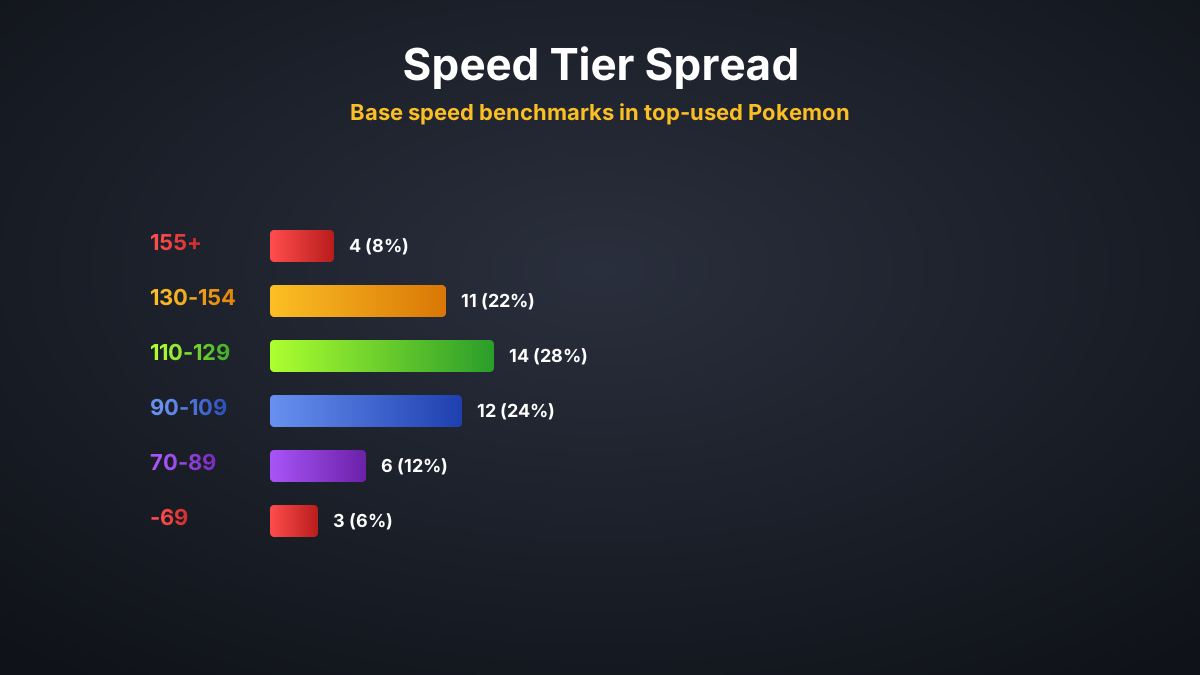
Dragapult leads the relevant Speed tiers at base 135, making it the fastest commonly-used attacker in the Singles meta. At maximum investment with a positive Speed nature, Dragapult reaches 427 Speed, which is only exceeded by legendary Pokemon like Regieleki (base 200) and Electrode (base 150). Dragapult is effectively unkillable before it attacks without Choice Scarf or Tailwind support.
At base 130 Speed, Mega Lopunny and Greninja are the next relevant non-legendary benchmarks. These Pokemon are fast enough to outspeed most of the meta naturally but lose to Dragapult unless they are running Choice Scarf. Greninja's popularity in the meta means many players run Pokemon capable of surviving a hit from it and retaliating.
Base 120 Speed includes Weavile, Alakazam, and Mismagius, three extremely fragile but dangerous attackers who threaten significant damage against the top-tier defensive walls. Their fragility means they do not appear consistently in high-rank teams, but their damage output when they do move first is significant enough to account for in team building.
The Critical Mid-Speed Range: Base 100 to 115
The base 100-115 Speed range is where most competitive matches are decided. Garchomp at base 102 sits right in the middle of this range, and the Speed difference between a Jolly Garchomp at maximum investment and an uninvested or minimally invested Pokemon in this tier is what determines several critical matchups.
Base 100 Speed is a major benchmark because it is the Speed of many top-tier Pokemon in competitive play. At maximum investment with a positive Speed nature, base 100 Speed Pokemon reach 328 Speed. This threshold determines which Pokemon can outspeed neutral-natured, maximally-invested base 100 Pokemon and which cannot without additional support.
Volcarona and Venomoth both sit at base 100 Speed while being significant offensive threats. The investment decisions around these Pokemon, specifically whether to maximise Speed to outspeed Dragapult with a Choice Scarf or to invest in Special Attack for more damage, represent one of the more nuanced EV-spread decisions in the current meta.
Choice Scarf Speed Thresholds
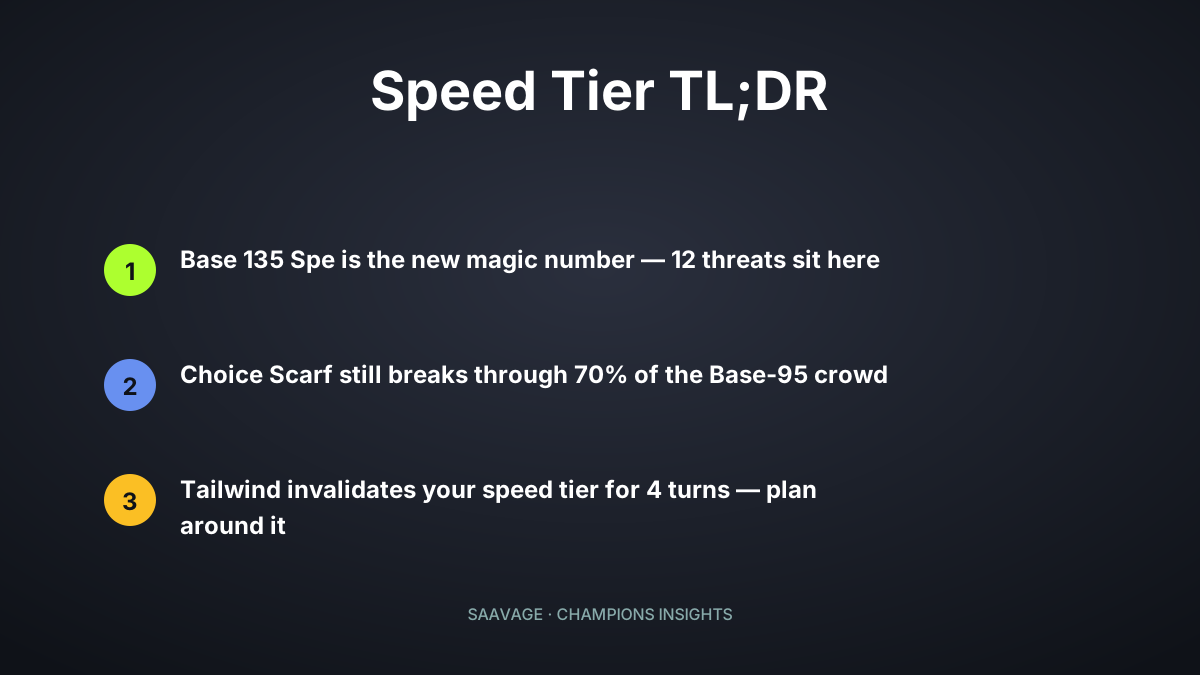
Choice Scarf multiplies a Pokemon's Speed by 1.5x, and understanding which Pokemon this enables to outspeed previously-faster threats is critical for team building. A Choice Scarf Garchomp at maximum investment with a Jolly nature reaches approximately 492 Speed, which outspeeds every non-boosted Pokemon in the game except Regieleki and a Scarf Dragapult.
The most important Choice Scarf calculations are those around the benchmark Speed tiers. A Choice Scarf user with base 73 Speed matches the natural Speed of base 110 Speed Pokemon. This means Choice Scarf Chandelure (base 80 Speed) outspeeds max Speed Garchomp at base 110 Speed when the Scarf is equipped.
When building teams, decide whether your Choice Scarf user's primary purpose is to outspeed specific threats at base 110+ Speed or to serve as a general revenge killer. Dedicated revenge killers often need higher base Speed before the Scarf to ensure they can outspeed the full range of common threats, while lead momentum Choice Scarf users can use lower base Speed if their damage output justifies the team slot.
Paralysis, Tailwind, and Speed Modification in Battles
Paralysis reduces Speed by 50%, which drops most fast Pokemon below the base-100 benchmark and creates severe matchup disadvantages. A fully paralysed Dragapult at base 135 Speed operates at approximately 213 Speed, slower than many uninvested defensive walls. This makes Thunder Wave one of the most impactful support moves in the game for completely reversing Speed advantages.
Tailwind doubles the Speed of all Pokemon on the user's side for four turns, which is an alternative to Choice Scarf for teams that want Speed control without locking their attackers into a single move. The tradeoff is that Tailwind requires a Pokemon to spend its action setting it up, while Choice Scarf is passive, but Tailwind benefits all team members rather than just the holder.
Trick Room, as covered in the dedicated guide, completely reverses Speed order, making all these tier considerations irrelevant while it is active. If you are building a team that expects to face Trick Room at high ranks, including a Pokemon with natural high Speed can serve as an anti-Trick Room measure, since these Pokemon move last under Trick Room but first once it expires.