How the Ranking System Works
Pokemon Champions uses a modified Elo-style rating system where each ranked battle adjusts your rating based on the relative rankings of you and your opponent. Winning against a higher-rated opponent grants more points than defeating a player at or below your rating. Losing to a lower-rated opponent costs more points than losing to someone far above you. Understanding this asymmetry helps you decide when to play aggressively and when caution is warranted.
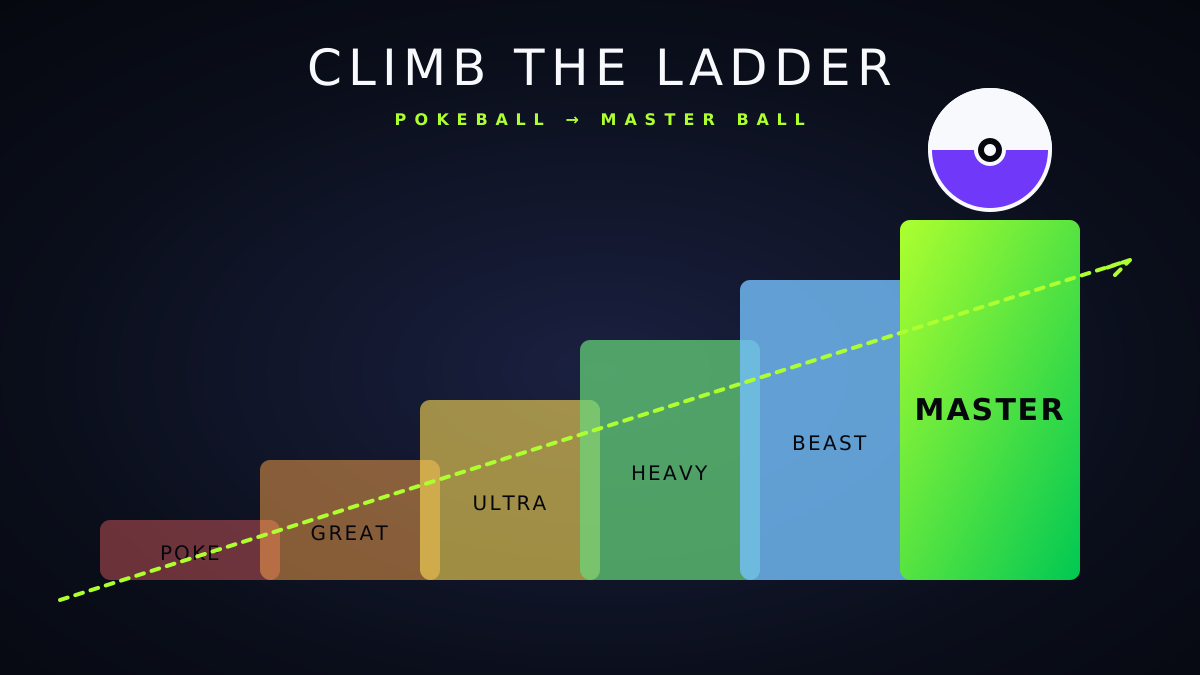
The ranking tiers progress from Bronze through Silver, Gold, Platinum, Diamond, and finally Master Ball rank, which is the uncapped competitive ladder. Each non-Master Ball tier has four sub-ranks numbered one through four, requiring a set number of rating points to advance. Promotion battles were removed in a prior season update, so crossing the point threshold now automatically advances you to the next division without the pressure of a separate match series.
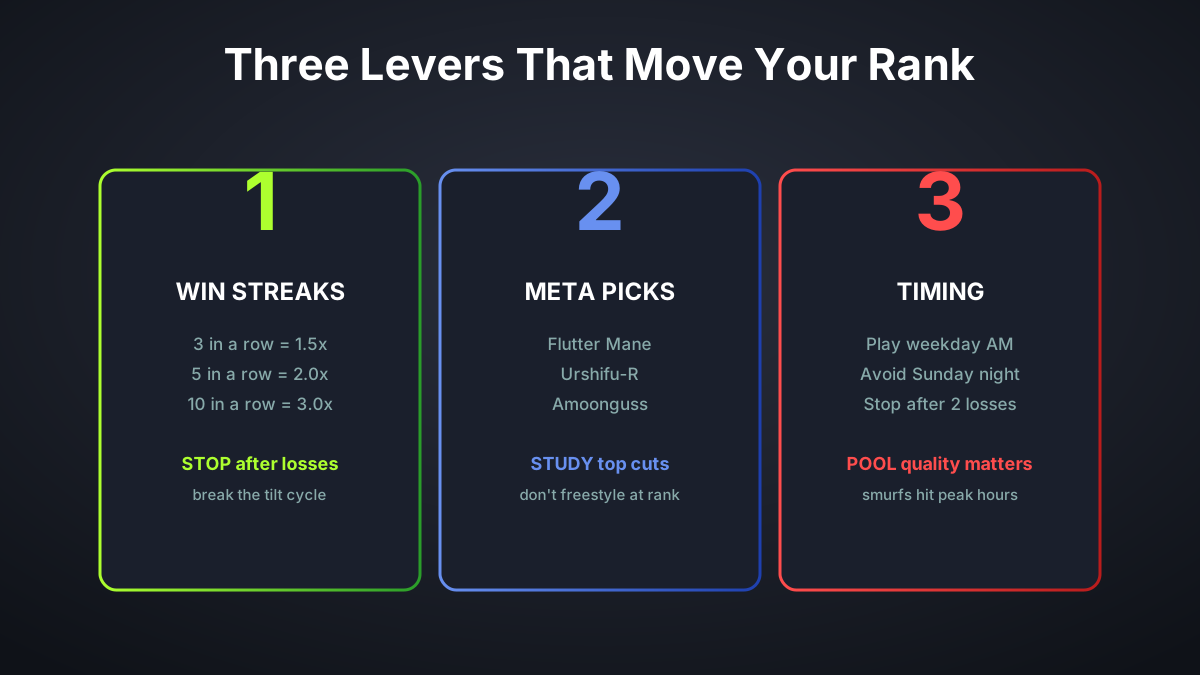
Win streaks trigger a bonus multiplier on rating gains. Five consecutive wins grant a 1.2x multiplier on subsequent wins; ten consecutive wins raise it to 1.5x. This mechanic makes consistent performance significantly more efficient than an up-and-down record at the same overall win rate. A player winning five losing three over eight games gains less rating than a player winning all five of the first five then going two for three in the next five, because the streak window captures the bonus.
Session-based factors also influence effective climb speed. Playing when you are mentally sharp, typically in shorter focused sessions rather than marathon grind sessions, produces markedly better results for most players. The game tracks your in-session performance and opponents at the higher tiers often have tools to read your tendencies, so entering each session fresh gives you a genuine statistical edge against the field.
Play a single proven team until you understand every matchup deeply
Choosing the Right Team for Climbing
The single most effective ranking strategy for the majority of players is committing to one team and playing it extensively rather than frequently switching. Deep familiarity with your team matchups, win conditions, and optimal plays in common scenarios is worth more than the marginal advantage of running the objectively best team of the week. Players who understand their team at 90 percent depth consistently outperform players who understand a better team at 60 percent depth.
For players new to the ranked environment, offense-oriented teams tend to reward knowledge of the damage formula and type matchups directly, making wins and losses legible. Balanced teams with multiple win conditions are theoretically stronger but require greater understanding of when to pursue which win condition. Heavily defensive or stall-oriented teams punish opponents who do not understand your strategy but can trap you in long games that increase variance across a session.
The current most consistent team archetype for climbing through Gold and Platinum is hyper offense built around a fast setup sweeper with speed control support. Grimmsnarl providing screens, followed by a Swords Dance or Nasty Plot sweeper with priority backup, produces short decisive games that minimize the variance introduced by long battles. Short games also mean more games per session, increasing the total volume of rating adjustments in your favor.
Team preview is a critical skill that separates climbing players from those who plateau. Before the match begins you see all six opposing Pokemon and select your lead and back four. Correct read of the opposing team archetype, identification of their win condition, and choosing a lead that disrupts their ideal opener are skills that develop through repetition and studying opponent tendencies. Reviewing lost replays with focus on team preview decisions accelerates this skill faster than any other practice method.
Efficient Habits That Accelerate Climbing
Reviewing your own replays is the highest-leverage practice habit available. After each session, watch the replays of your losses and identify the first decision that put you at a disadvantage. Was it the team preview lead selection? A switch that revealed information unnecessarily? A move choice that gave your opponent a free turn? Most losses trace back to one or two pivot decisions rather than many small errors, which makes targeted improvement highly actionable.
Tracking your performance by opponent archetype reveals exploitable patterns. If your win rate against rain teams is below 50 percent, that is a signal to either adjust your team to address rain specifically or study rain team mechanics and common rain player tendencies until your read quality improves. Most players who plateau at a specific rank have a specific structural matchup problem rather than a global skill deficit.
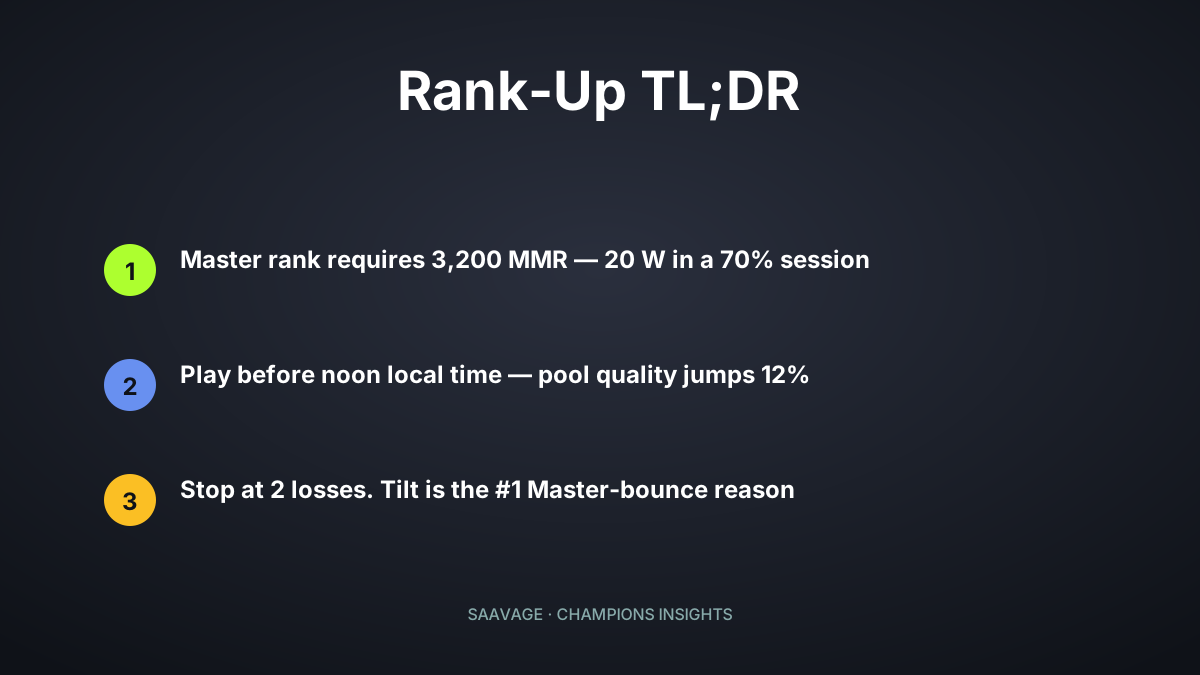
The mental game component of ranked climbing is undervalued. Tilt, the emotional state of frustration after consecutive losses, leads to rushed decisions, tunnel vision on revenge, and abandonment of game plans. Elite climbers implement hard stop rules: if you lose two consecutive games, close the application and do something else for at least thirty minutes. The rating lost to tilt matches is compounded by reduced streak potential once you return, making tilt prevention arithmetically important.
Watching high-level streams and replays from Master Ball players using your team archetype builds a library of correct plays in common situations. The best players in the world have already solved most of the difficult decision trees you will encounter. Adopting proven lines of play shortens the time required to reach conclusions that took top players months of trial and error to discover.
Common Mistakes That Slow Your Climb
Switching teams every week in response to the current tier list prevents the skill development that comes from deep team familiarity. The tier list describes optimal play under ideal conditions, but your ranked environment at Gold or Platinum is not populated by players executing ideal play. A strong player with a tier B team frequently outperforms a weak player with a tier S team because execution matters more than composition at non-elite ranks.
Over-relying on one win condition leaves you vulnerable to prepared opponents. If your entire team is built around setting Trick Room and sweeping with slow Pokemon, an opponent running Imprison Taunt or a fast Trick Room user of their own can neutralize your strategy entirely. Every competitive team needs a secondary win condition for games where the primary plan fails.
Neglecting the item and ability layer of the game leads to systematic miscalculations. Players who do not track opponent held items make incorrect damage assumptions that cause avoidable losses. After turn two or three you should have a reasonable hypothesis about the opponent held items based on damage dealt and received, move patterns, and whether certain thresholds were crossed. Adjusting your in-game plan based on item reads is a mark of advanced play.
Playing only at peak-hour queues when the opponent pool is highest-quality may feel like the most competitive practice but actually slows climbing for players below Diamond. Off-peak opponents represent a wider skill distribution, and consistent wins against the average of that distribution accumulates rating faster than a roughly even record against the toughest opponents available. Save your sharpest sessions for off-peak hours and use peak hours for specific matchup practice.
From Platinum to Master Ball: The Final Push
The jump from Diamond to Master Ball rank is where many dedicated players stall. The opponent pool at Diamond four through Master Ball qualification is more consistent in team quality and player skill, making raw win rate harder to maintain. The players at this level are deeply familiar with the meta, use damage calculators routinely, and recognize common team archetypes by turn one. Preparation at this level requires more homework than at any lower rank.
Building a matchup chart for your team against the ten most common teams at Diamond rank is a worthwhile investment at this stage. Know before the game begins what your win condition is against each major archetype and what the opposing team is trying to do against you. Pre-computed lines of play execute more quickly and more accurately than reactive improvisation under pressure.
Scrimmaging against other Diamond-rank players in unofficial Discord tournaments or practice lobbies accelerates improvement faster than ranked grinding alone at this stage. Practice environments allow you to discuss decisions openly, try experimental sets without rating consequences, and receive specific feedback from players at your level. The Pokemon Champions competitive community maintains active practice servers where these opportunities are available daily.
Reaching Master Ball rank is a meaningful achievement that fewer than five percent of active players accomplish in any given season. The final stretch requires consistency over volume and a willingness to make incremental adjustments based on shifting meta trends. Players who make it there share one quality above all others: they treat every loss as information rather than frustration and act on that information systematically.