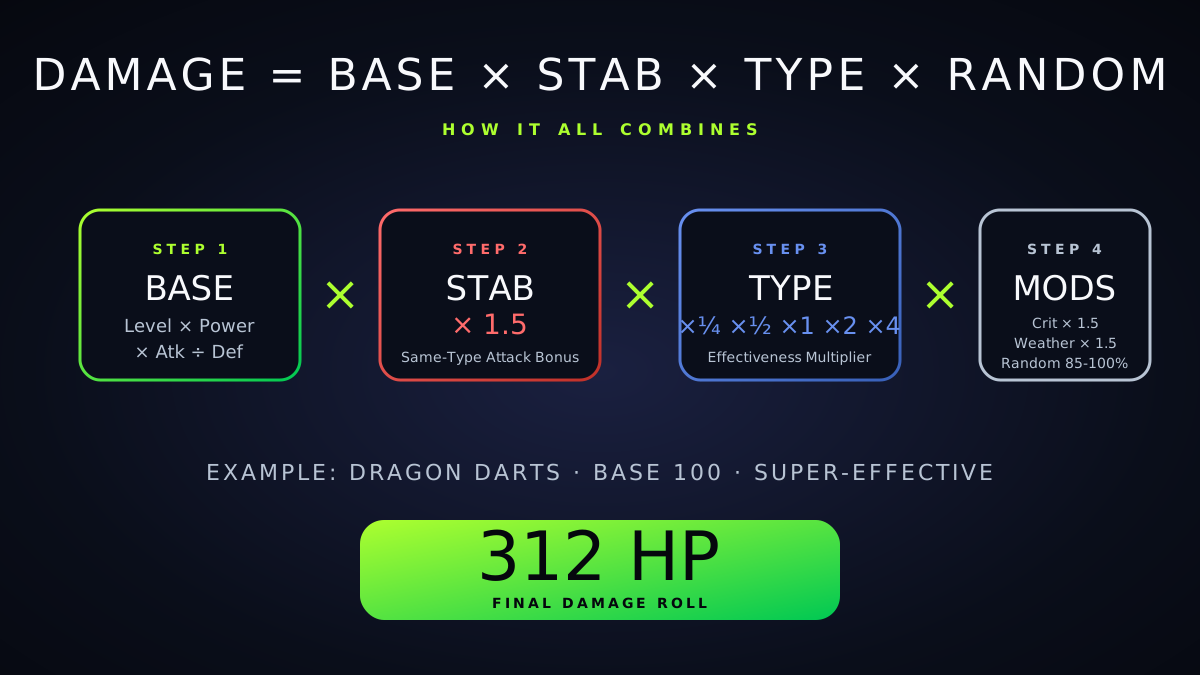
Understanding the Base Damage Formula
Every hit you land in Pokemon Champions is calculated through a precise mathematical formula that has been part of the series for decades but gains new relevance in a competitive environment. The base structure is: Damage equals the quantity of two times the attacker level divided by five plus two, all multiplied by the move base power, multiplied by the attacker relevant stat divided by the defender relevant stat, divided by fifty, plus two. Physical moves use Attack against Defense; special moves use Special Attack against Special Defense.
The level component of the formula means that all Pokemon in competitive play are normalized to level 50, which is standard in Pokemon Champions ranked matches. At level 50 the level modifier contributes a factor of roughly 22, which acts as the universal baseline before any other numbers are applied. This is why a move with 120 base power can still fail to knock out a high-Defense target even with favorable typing.
Base power is the single largest lever in the formula. A move like Earthquake at 100 base power will always outperform a same-type move at 60 base power even accounting for STAB on the weaker move. When choosing between two moves of the same type, base power matters enormously, and factoring in accuracy gives you the effective base power for probability-based decisions.
The Attack-to-Defense ratio is where EV investment and nature choices become decisive. A Pokemon with 252 EVs and a boosting nature in its primary attacking stat gains roughly 63 points over a Pokemon with zero EV investment, which can be the difference between a one-hit knockout and a two-hit scenario against a common defensive spread. Always run damage calculators with the exact spreads you expect to face at your rank.
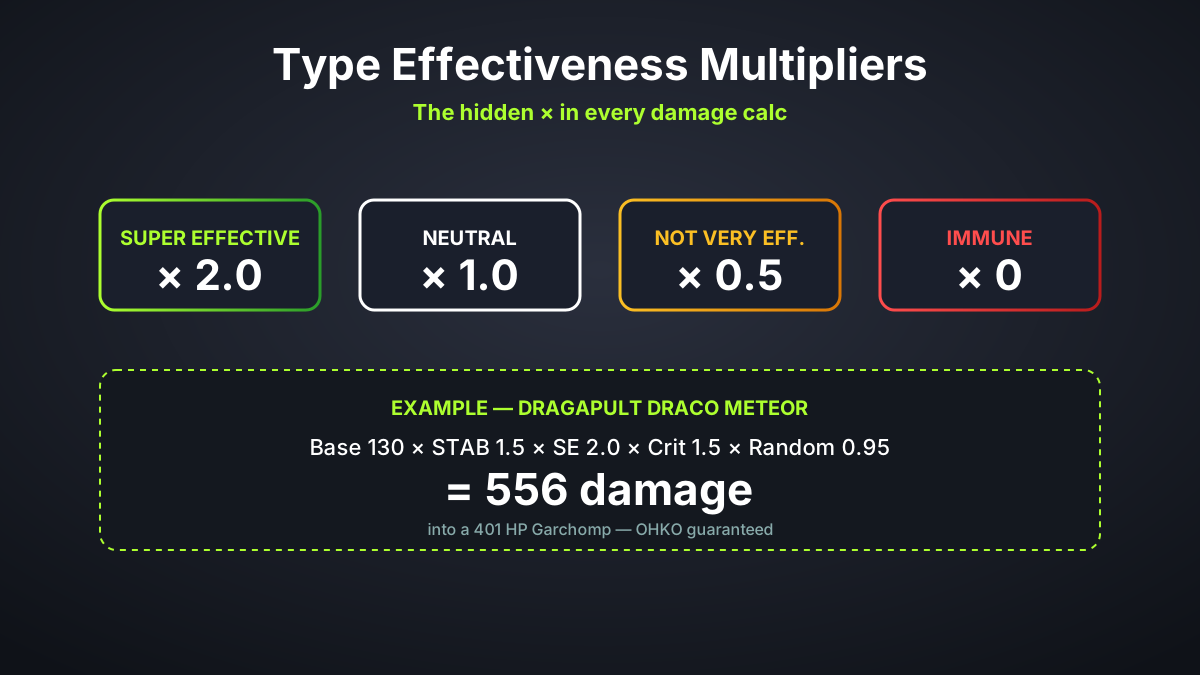
STAB adds a 1.5x multiplier when the move type matches the user type
STAB: The Same-Type Attack Bonus
STAB stands for Same-Type Attack Bonus and applies whenever the type of the move used matches one of the user Pokemon types. The standard STAB multiplier is 1.5, meaning a Garchomp using Earthquake deals fifty percent more damage than an identical non-Ground type using the same move with the same stats. This is one of the most impactful modifiers in the game and a primary reason why Pokemon with dual typing that matches strong offensive moves dominate the meta.
The Adaptability ability upgrades the STAB multiplier from 1.5 to 2.0, making it especially potent on Pokemon like Porygon-Z in certain builds. When you see a Pokemon running Adaptability listed on a team, assume its primary STAB moves deal double the base power compared to a non-STAB user, which can swing damage calculations dramatically. This ability turns moves like Boomburst into truly terrifying wallbreakers.
In a dual-type Pokemon, both types receive STAB independently. A Gyarados using Waterfall benefits from STAB, and if it runs Ice Fang it does not benefit from STAB since Gyarados is Water and Flying. Keep this in mind when choosing moveset coverage because non-STAB coverage moves need sufficiently high base power to compete with STAB options against neutral targets.
Terastallization in newer game modes temporarily changes the STAB calculation by giving the Pokemon a new Tera Type. When Terastallized, if the Tera Type matches an original type, the multiplier increases to 2.0 on those moves. If the Tera Type is something new, the Pokemon gains 1.5x on that type while retaining 1.5x on its original types. This creates complex decision trees for competitive players who must identify enemy Tera Types under pressure.
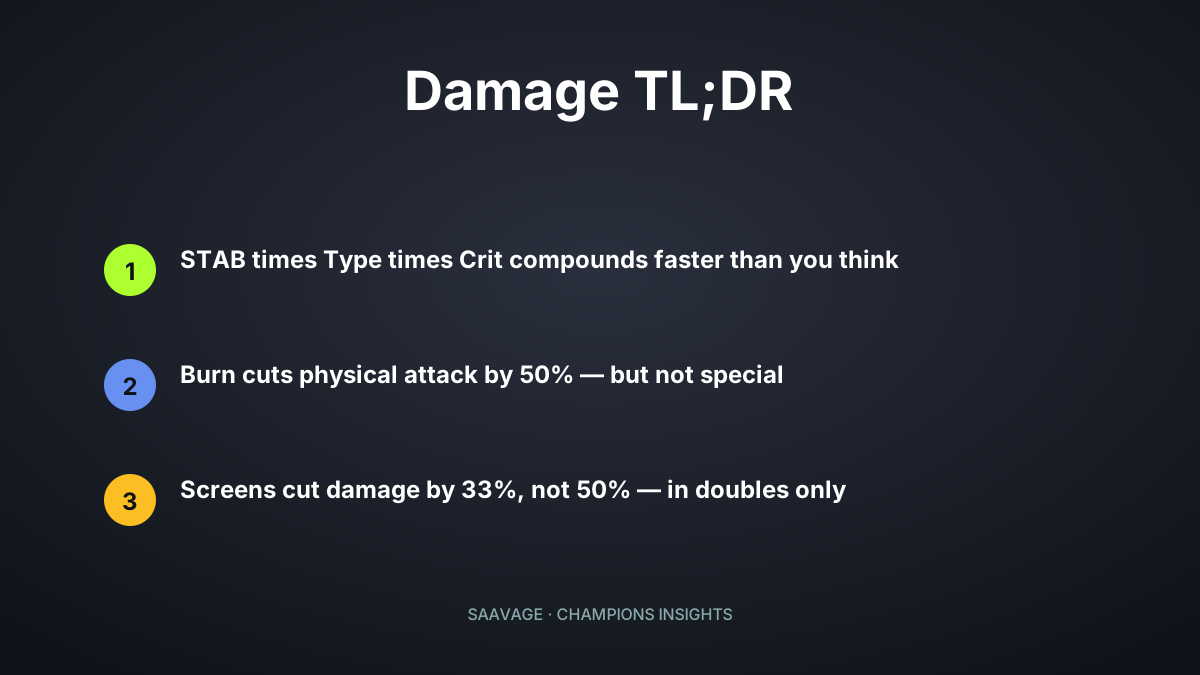
Type Effectiveness Multipliers
Type effectiveness applies a multiplier based on the interaction between the move type and the defending Pokemon types. Super effective moves deal 2x damage; resisted moves deal 0.5x damage; and immune interactions deal 0x. When a move hits a dual-type Pokemon, both type matchups are multiplied together, creating the potential for 4x damage against double weaknesses or 0.25x against double resists.
The most exploitable 4x weaknesses in the current Pokemon Champions meta are Rock on Charizard, Ground on Magnezone, Ice on Garchomp, Water on Tyranitar, and Bug on Tyranitar. Building a team that includes coverage for these common weaknesses gives you consistent knockout opportunities against the most frequently seen threats in ranked play. Knowing which Pokemon have 4x weaknesses lets you confidently run moves you might otherwise overlook.
Immunity is a hard zero regardless of other modifiers. Normal and Fighting moves cannot hit Ghost types; Ground moves cannot hit Flying types or Pokemon with the Levitate ability; Electric moves cannot hit Ground types. These immunities are absolute and no amount of base power or additional modifiers will produce damage. Several abilities and moves can remove or alter these immunities, such as Gravity grounding all Pokemon and Foresight allowing Normal moves to hit Ghosts.
Type chart knowledge is one of the highest-leverage skills in Pokemon Champions because correct type reads can win or lose battles independent of team building quality. Elite players internalize all 324 type interactions and make coverage decisions instantly in battle. If you are climbing ranked, drilling the type chart through practice matches and flashcard-style study is among the highest-return activities you can do outside of actual gameplay.
Critical Hits, Weather, and Other Modifiers
Critical hits deal 1.5x damage and strip away the defending Pokemon stat drops while applying only the attacker stat boosts. The base critical hit ratio is 4.167 percent, rising to 12.5 percent at stage one boost from moves like Slash or items like Scope Lens, to 50 percent at stage two, and 100 percent at stage three. Skills Focus Energy and the held item Razor Claw interact with these thresholds. Critical hits cannot be a crit if the move already guarantees full damage, so they matter most on neutral hits.
Weather modifiers apply a 1.5x boost to matching move types and a 0.5x reduction to opposing types. Rain boosts Water moves and weakens Fire; Sun boosts Fire and weakens Water; Sand has no direct damage modifier but deals chip damage to non-Rock, -Steel, and -Ground types; Snow does not boost Blizzard base power but raises Blizzard accuracy to 100 percent. Weather from abilities like Drizzle and Drought lasts five turns or eight turns with the corresponding Rock if the user holds Damp Rock or Heat Rock.
Burn status halves the damage of physical moves for the burned Pokemon. This is one of the most powerful defensive tools in the game because it can neuter a physical sweeper for the remainder of the battle. Paralysis does not affect damage output but halves Speed and causes a 25 percent chance of full paralysis each turn. Poison and Toxic deal passive damage each end phase and can pressure bulky setup Pokemon into suboptimal plays.
Held items contribute a wide array of additional damage modifiers. Choice Band and Choice Specs multiply Attack and Special Attack by 1.5x respectively while locking the user into one move. Life Orb multiplies all damage by 1.3x at the cost of 10 percent max HP per attack. Expert Belt gives 1.2x on super effective moves only. Knowing which item your opponent is likely running changes how you calculate damage thresholds and determines whether your Pokemon can survive an expected hit.
Practical Application: Using Damage Calculators
The Pokemon Champions community maintains damage calculators updated for each season patch that allow you to input exact EVs, IVs, natures, levels, moves, held items, weather, and abilities for both attacker and defender. Running your planned matchups through a calculator before finalizing your team is standard practice at high levels of play. The most popular tools are available as web apps and can model any situation including multi-hit moves and setup turn scenarios.
Common damage thresholds to optimize for include: can your lead one-shot the most common opposing lead at maximum investment; can your sweeper survive one hit from the most common revenge killer and respond with a knockout; does your wall survive two hits from a boosted attacker at plus two. These benchmarks guide EV spread decisions more concretely than abstract advice about splitting EVs.
Damage variance is a factor that calculators express as a range. Most moves in Pokemon Champions have a random damage roll between 85 and 100 percent of the calculated value. This means a hit that calculates to 94 to 112 percent of a target HP can either not knock out or knock out depending on the roll. Recognizing when you are in a damage range where the outcome is probabilistic helps you decide whether to take risks in high-stakes matches.
Investing time in learning damage math separates players who depend on luck from players who engineer favorable odds. When you know a specific EV spread lets your Pokemon survive the hit you need to survive while still landing the knockout you need to land, your win rate stabilizes because you are removing variance rather than hoping for favorable rolls. Start with your core team members and work outward to understand the full matchup landscape.