What Makes Pokemon Champions Doubles Different
Pokemon Champions Doubles places two Pokemon on the field simultaneously for each side, creating a more complex strategic environment than Singles. The format rewards team composition that accounts for spread moves hitting both opponents, redirection Pokemon who protect vulnerable teammates, and momentum plays that create two-on-one advantages across critical turns.
Weather strategies are more dominant in Doubles than in Singles because weather affects all four Pokemon on the field simultaneously. A rain team with Swift Swim sweepers applies pressure to both opposing Pokemon at the same time, and weather control turns become critical pivotal moments where one side secures a decisive advantage.
Fake Out is one of the defining moves in Doubles, and Pokemon who can use it are disproportionately valuable because the free flinch on the first turn can disable an opponent's most dangerous Pokemon for a full action cycle, allowing the partner to act freely.
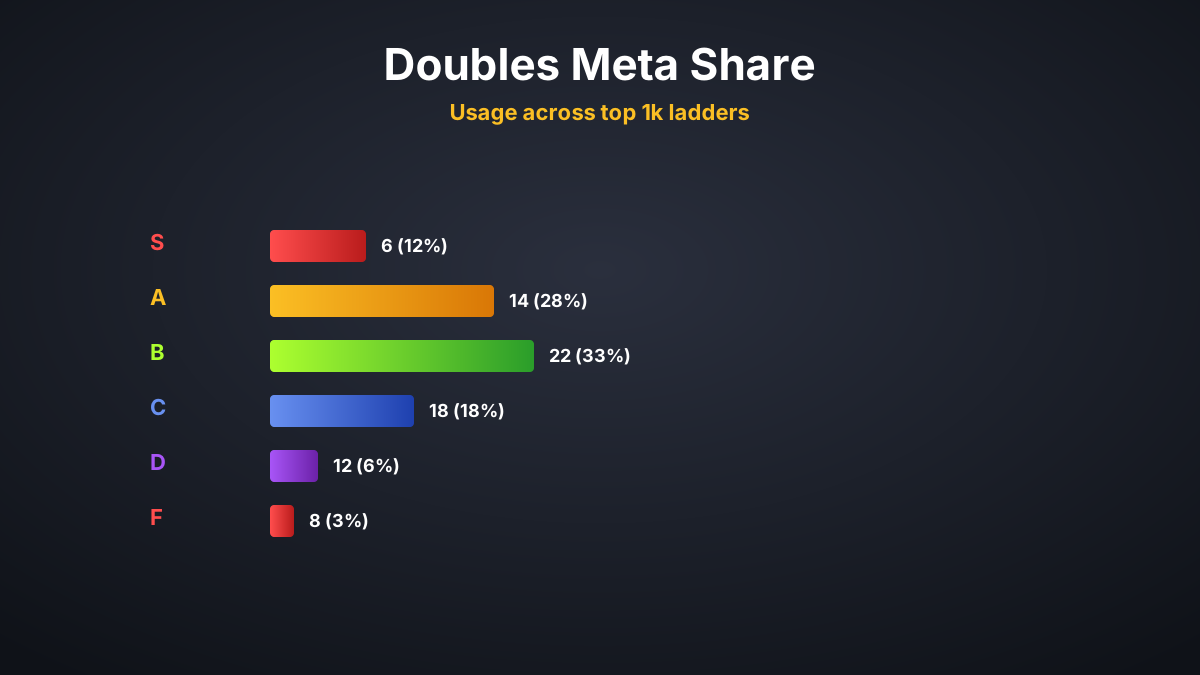
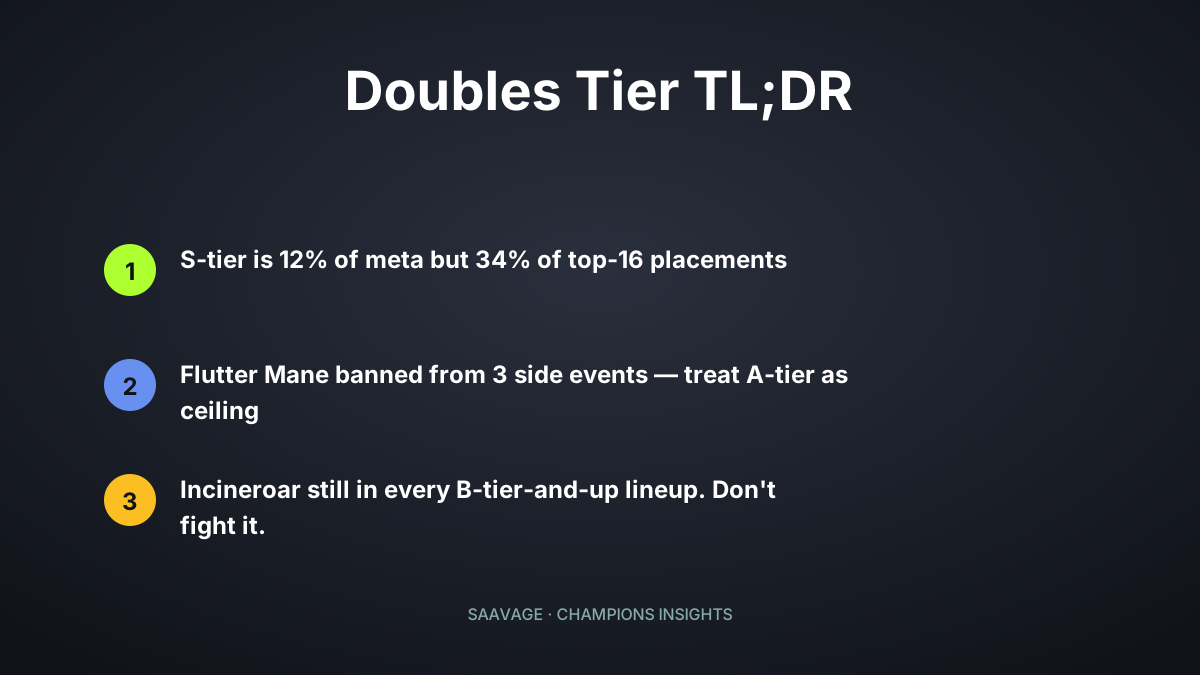
S-tier: Incineroar, Rillaboom, Flutter Mane, Urshifu-Rapid-Strike, Tornadus
S-Tier: The Format-Defining Pokemon
Incineroar sits at the top of the Doubles meta primarily for its combination of Intimidate, Parting Shot, and Fake Out. Intimidate lowers both opposing Pokemon's Attack on entry, Fake Out provides a free turn of action for the partner, and Parting Shot provides a momentum-neutral exit that also reduces opposing offensive pressure. No other Pokemon provides this breadth of utility in a single team slot.
Rillaboom's Grassy Surge sets Grassy Terrain on arrival, providing automatic chip healing for all grounded Pokemon and a 1.3x boost to Grass moves. In Doubles, where both your Pokemon benefit from the healing simultaneously, this sustained recovery advantage compounds across every turn of the game. Rillaboom's access to Fake Out and its physical power make it a complete package.
Flutter Mane and Urshifu-Rapid-Strike are the S-tier offensive threats. Flutter Mane's Fairy/Ghost typing with massive Special Attack punishes every defensive pivot that does not carry a specific counter, while Urshifu's Surging Strikes bypasses Protect and hits three times, making Focus Sash and Sturdy ineffective defensive tools against it.
A-Tier: Reliable Meta Picks
Pelipper's A-tier placement reflects its rain setting role and Hurricane's 100% accuracy in rain. As the most accessible Drizzle user, Pelipper enables rain team archetypes that would not function without it, and its own offensive threat level in rain conditions is significant enough that opponents cannot ignore it while focusing on the Swift Swim sweepers.
Amoonguss provides redirection through Rage Powder, which forces opponent attacks to target Amoonguss rather than the partner for one turn. This is invaluable for protecting a frail attacker during a setup turn or a critical KO attempt. Its access to Spore means it can also put opposing Pokemon to sleep, creating a multi-turn advantage. Spore has significant risk but enormous reward when it connects.
Landorus-Therian rounds out the A-tier with Intimidate, Ground immunity bypass through Gravity or its own Earthquake that can be aimed to avoid the partner, and general offensive power. It is one of the most flexible supporters in the format and can be built defensively or offensively depending on the team's needs.
B-Tier to D-Tier: Context-Dependent Picks
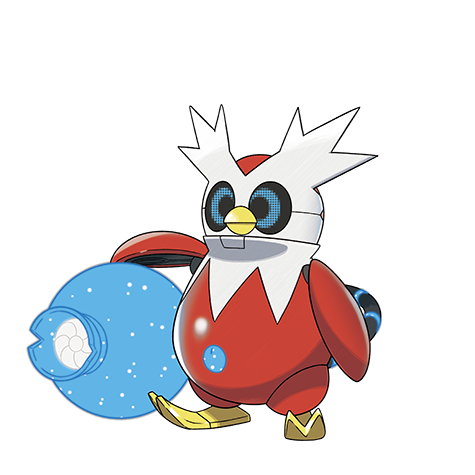
B-tier Pokemon in Pokemon Champions Doubles are effective but require more specific team building to function at their best. Gardevoir and Sylveon both provide Fairy coverage but need protection from Steel and Poison types that would otherwise prevent them from attacking safely. Regieleki's Thunderclap priority Electric move is uniquely powerful but requires careful execution to trigger before the opponent attacks.
C-tier includes Pokemon that are useful in specific team compositions but are outclassed in broader metas. Arcanine's Intimidate ability duplicates Incineroar's role without the additional utility tools, making it a reasonable substitute when Incineroar is unavailable but rarely a first choice. Ferrothorn provides Stealth Rock and Spikes but its low Speed and Weakness to Fire and Fighting types in the active field creates more problems in Doubles than it solves.
D-tier Pokemon have significant competitive drawbacks that limit their viability even in niche applications. This does not mean they cannot win games; a well-played D-tier team with a cohesive strategy can upset higher-ranked opponents. But relying on D-tier Pokemon at the highest ladder levels requires compensating for genuine mechanical disadvantages that more meta-aligned teams do not face.
Using the Tier List Effectively
The tier list reflects average performance across all Doubles matchups, which means individual games can produce outcomes that deviate from the tier rankings. A D-tier Pokemon with a perfect team composition and an experienced player can beat an S-tier Pokemon used poorly.
When building a team for ranked Doubles play, aim to include at least two S or A-tier Pokemon to ensure you have reliable tools for the most common meta matchups. Fill the remaining four slots with Pokemon that address specific weaknesses in your S and A-tier picks or provide utility tools the top-tier options lack.
The Doubles tier list updates as the meta evolves, and Pokemon that seem underwhelming at the start of a meta cycle sometimes gain viability as players discover new applications or as popular counter-strategies create openings. Check community resources regularly to stay current with meta developments in the Doubles format.