This is not really a phone story
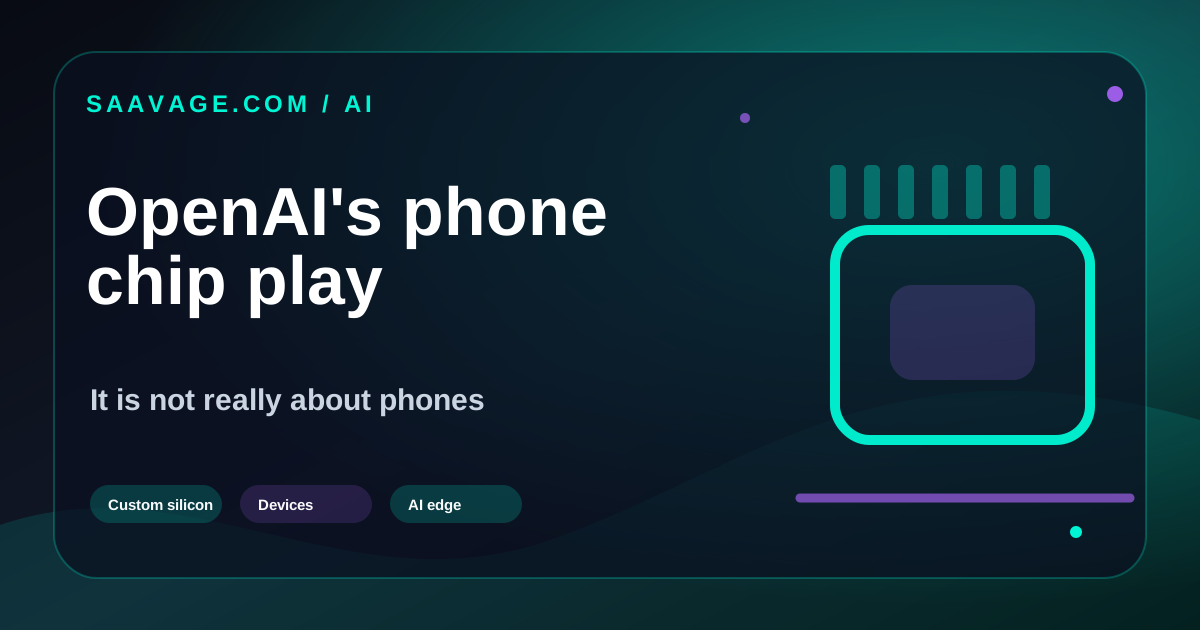
OpenAI reportedly working on smartphone silicon sounds like the company wants to build a phone. Maybe it does. But the more interesting answer is that OpenAI wants a device where its agents can run without asking the cloud for permission every five seconds.
That is a much bigger deal than another slab of glass. If AI agents are going to feel instant, private, and useful, some of the intelligence has to live on the device. That means silicon.
OpenAI's reported phone chip effort is really about local AI agents.
Agents need different hardware than apps
A chatbot can survive a cloud round trip. A real agent cannot always do that. If it is reading your screen, listening to context, checking your calendar, drafting a reply, and taking action, latency and privacy start to matter in a different way.
Today's phone chips are good at narrow AI tasks. They are not built around the idea that a frontier-style assistant is constantly working in the background. OpenAI's chip push only makes sense if the company believes that is where the product is going.
Partnering is the smart shortcut
OpenAI does not need to become Qualcomm overnight. Working with MediaTek and Qualcomm lets it influence the AI parts of the chip without carrying the whole burden of modem design, phone thermals, manufacturing, and every other unglamorous part of shipping hardware.
That is the practical version of vertical integration. Control the piece that makes your product different. Let the chip companies handle the pieces they already know how to ship.
The subscription is the real lock-in
The business model is not hard to see. If OpenAI hardware runs OpenAI agents better than generic phones do, then the device becomes the cleanest way to sell the subscription. The phone is the doorway. The recurring AI service is the house.
That also explains why this could stretch beyond phones. Glasses, home devices, small personal AI hardware, all of it needs the same foundation: local inference, tight model integration, and hardware that makes the assistant feel native instead of bolted on.