Addressing VRAM Bottlenecks in Modern PC Gaming
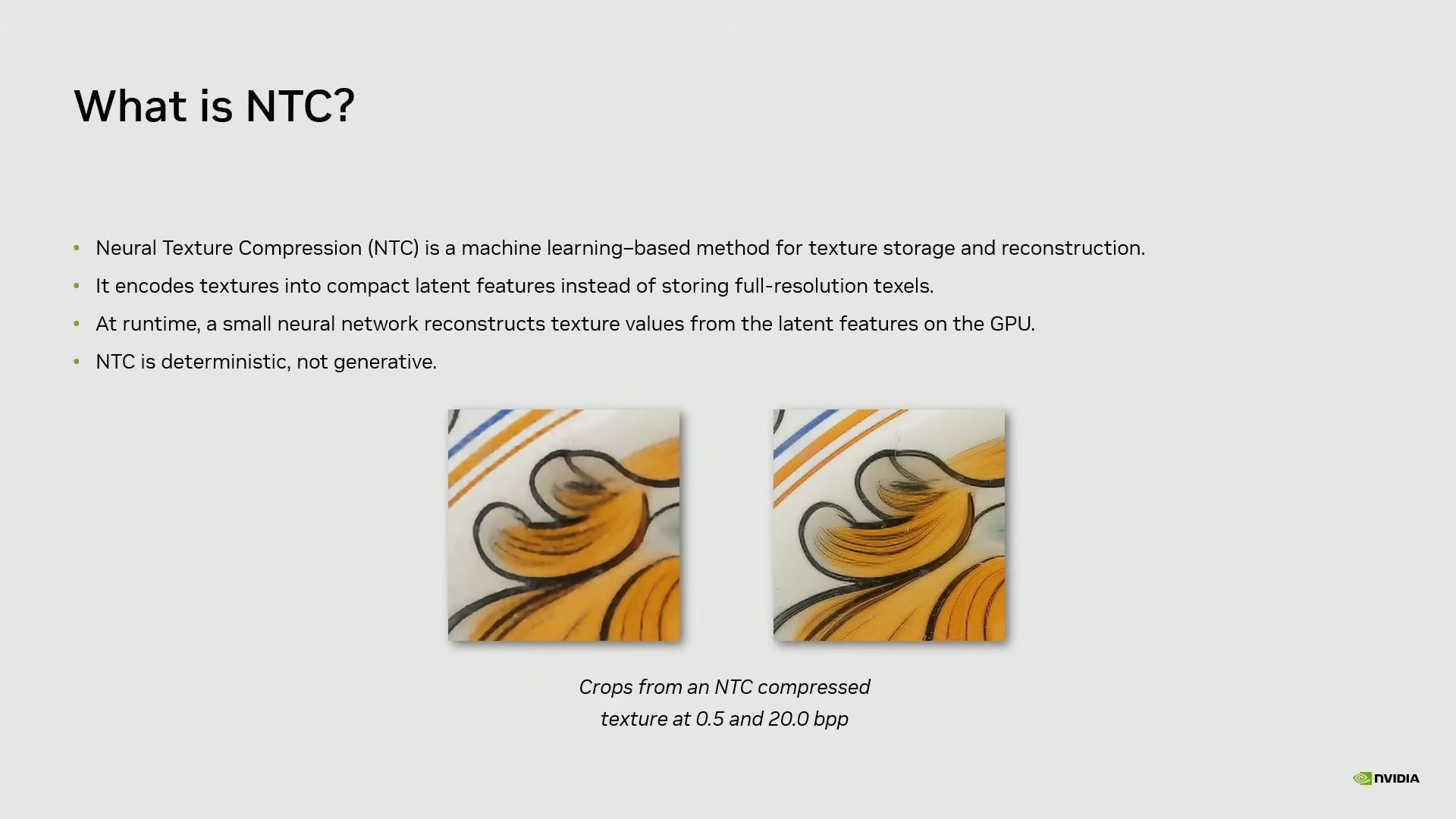
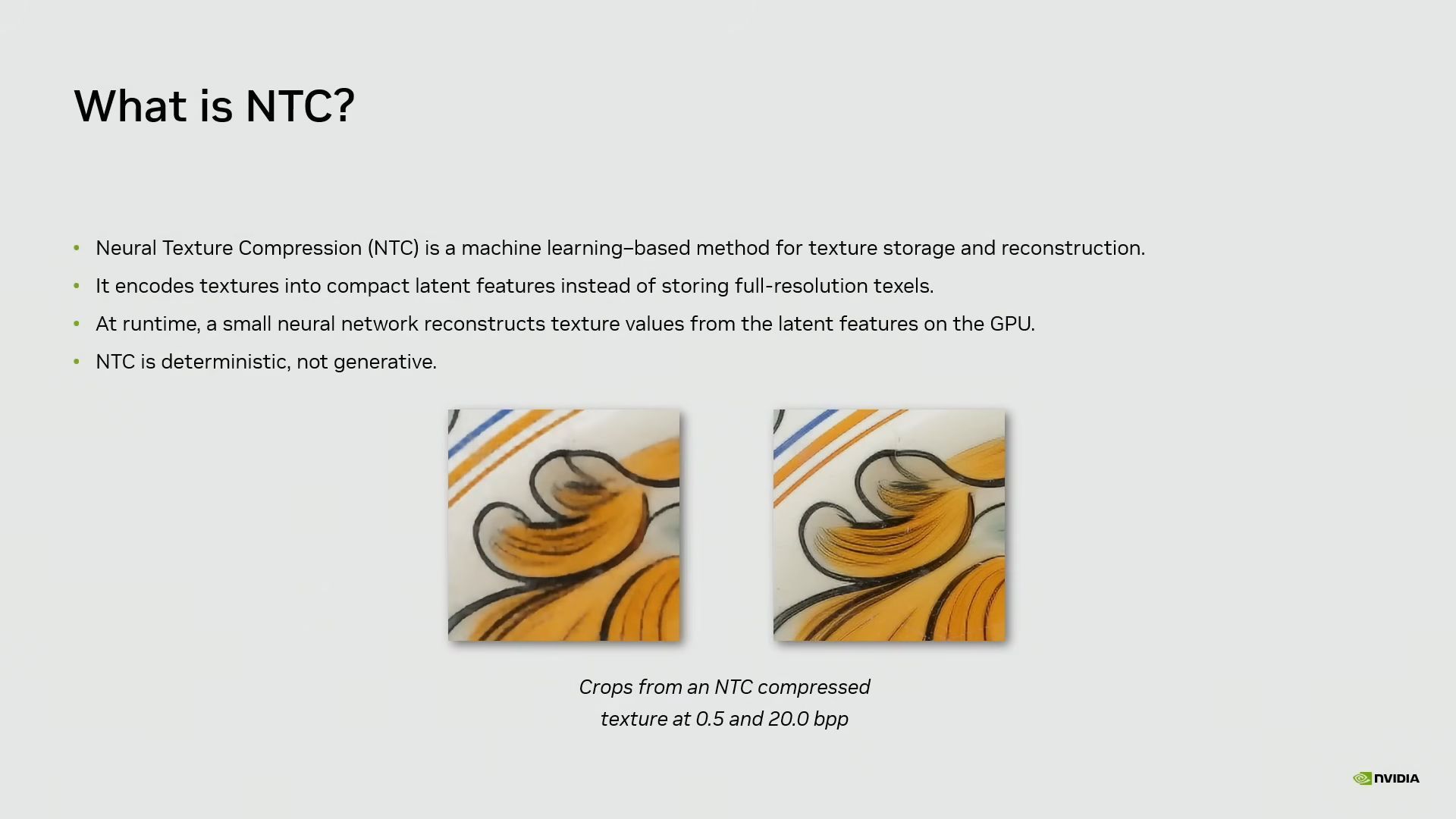
High-resolution textures and complex AI features continue to push VRAM demands past what most GPUs can comfortably handle. Nvidia's answer is Neural Texture Compression, an AI-powered method that cuts VRAM usage by up to 85% while maintaining visual quality that's effectively identical to the uncompressed version.
In demos, the technology achieved visual parity between a 6.5GB VRAM allocation and a 970MB one. If that holds up in real-world games, it means the VRAM requirements that currently lock out mid-range cards could drop dramatically.
Neural Texture Compression slashes VRAM usage by 85% without losing pixels.
H2 Section 1: Understanding the VRAM Bottleneck in Modern Gaming
To appreciate the magnitude of Nvidia's achievement, we first need to understand the problem. VRAM is the dedicated memory on your graphics card that stores everything the GPU needs to render a frame: textures, frame buffers, geometry data, and post-processing effects.
As games become more graphically ambitious, especially with the adoption of 4K and 8K rendering, the data required explodes. A single, highly detailed texture—like the brickwork on a wall or the foliage in a forest—can consume gigabytes of memory. When a game tries to load more assets than the available VRAM can hold, the system must resort to slower system RAM or disk swapping, leading to noticeable stuttering, frame rate drops, and a generally degraded gaming experience.
This necessity has created a relentless arms race in the PC component market, driving GPU manufacturers to constantly increase VRAM capacity. While more VRAM is always beneficial, it also drives up the cost of high-end graphics cards, making top-tier gaming increasingly exclusive.
H2 Section 2: The Magic of Neural Texture Compression
Enter Neural Texture Compression. This technology leverages the power of Artificial Intelligence and machine learning to analyze and compress texture data in a way that traditional compression methods simply cannot match.
Traditional compression (like JPEG or standard GPU compression) works by discarding data that the human eye is least likely to notice, often resulting in visible artifacts, blockiness, or a noticeable "loss of quality." Neural Texture Compression, however, uses sophisticated AI models trained on vast datasets of visual information. Instead of simply discarding data, the AI learns the underlying *patterns* and *information* within the texture. It then generates a highly efficient, compressed representation that, when decoded, reconstructs the original texture with virtually no perceptible loss of quality.
The demo results are the most compelling evidence: the ability to achieve visual parity between a massive 6.5GB VRAM allocation and a mere 970MB allocation. This isn't just a percentage saving; it’s a functional revolution. It means that the visual richness and detail expected from a high-end, VRAM-rich setup can now be delivered by a much more modest memory configuration.
H2 Section 3: What This Means for Gamers and PC Builders
The implications of this breakthrough are massive, affecting both the consumer experience and the economics of PC building.
1. Democratizing High-Fidelity Gaming:** The most immediate impact is accessibility. If the memory bottleneck can be mitigated by AI, gamers who cannot afford the latest, most VRAM-intensive flagship cards can still experience visually stunning, high-detail titles. This levels the playing field, making high-fidelity gaming less dependent on having the absolute highest budget.
2. Future-Proofing Hardware:** For PC builders, this technology changes the calculus of component selection. While raw GPU power will always matter, the emphasis on sheer VRAM capacity might shift. Instead, the focus could move toward GPUs with powerful, dedicated AI cores capable of running these compression algorithms in real-time.
3. Performance Stability:** By reducing the likelihood of VRAM exhaustion, the technology promises dramatically more stable frame rates and fewer stuttering moments, providing a smoother, more consistent gaming experience regardless of the game's complexity.
In essence, Nvidia isn't just selling a better compression algorithm; they are selling performance stability and visual parity, making the next generation of gaming hardware more efficient and powerful.
Conclusion
Nvidia's Neural Texture Compression represents a monumental leap forward in computer graphics and AI integration. It tackles one of the most persistent and costly limitations in modern gaming—VRAM scarcity—with a solution that is both powerful and remarkably efficient.
While the technology is still in demonstration phases, the potential for widespread adoption is undeniable. This breakthrough suggests a future where graphical fidelity is decoupled from massive memory requirements, ushering in an era of truly accessible, high-definition gaming for all. Keep an eye on how quickly this technology moves from the lab into the mainstream GPU drivers; the gaming industry is about to get a major upgrade.