Overview
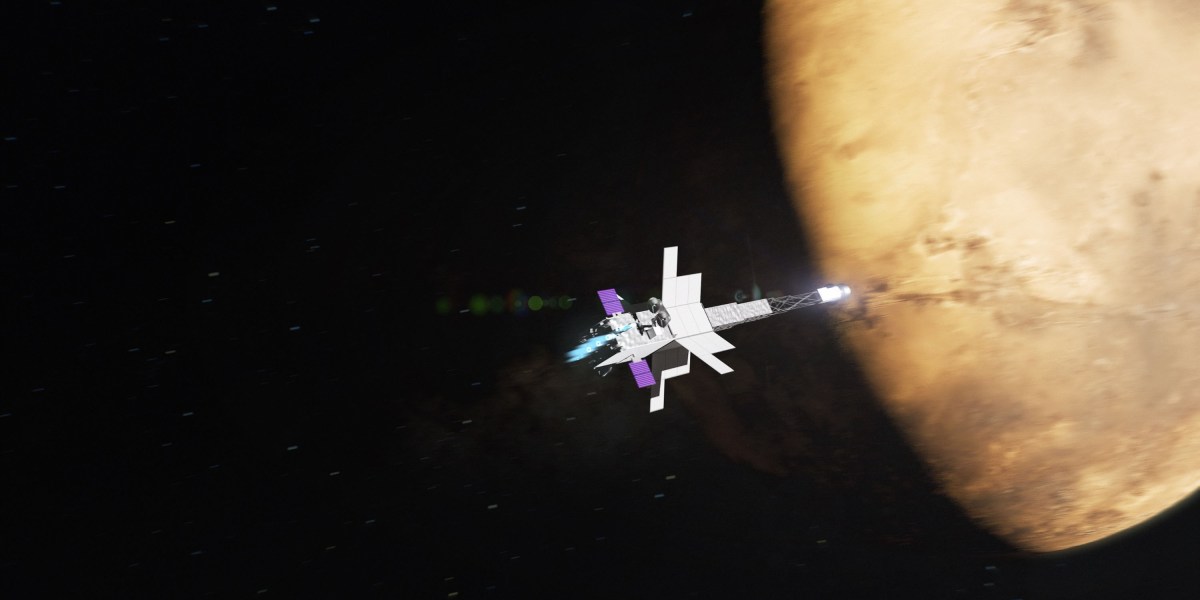
NASA is developing a nuclear fission reactor designed to power spacecraft propulsion systems. The technology would provide sustained, high-density energy that chemical rockets cannot match, making missions to the outer planets, asteroid belt, and beyond feasible within practical timeframes.
Current propulsion is limited by fuel mass: the more propellant you carry, the less payload you can bring. A compact nuclear reactor changes that equation by providing continuous power over long durations, enabling higher speeds and longer missions without the mass penalty of chemical fuel.
The Mechanics of Nuclear Propulsion
The Mechanics of Nuclear Propulsion
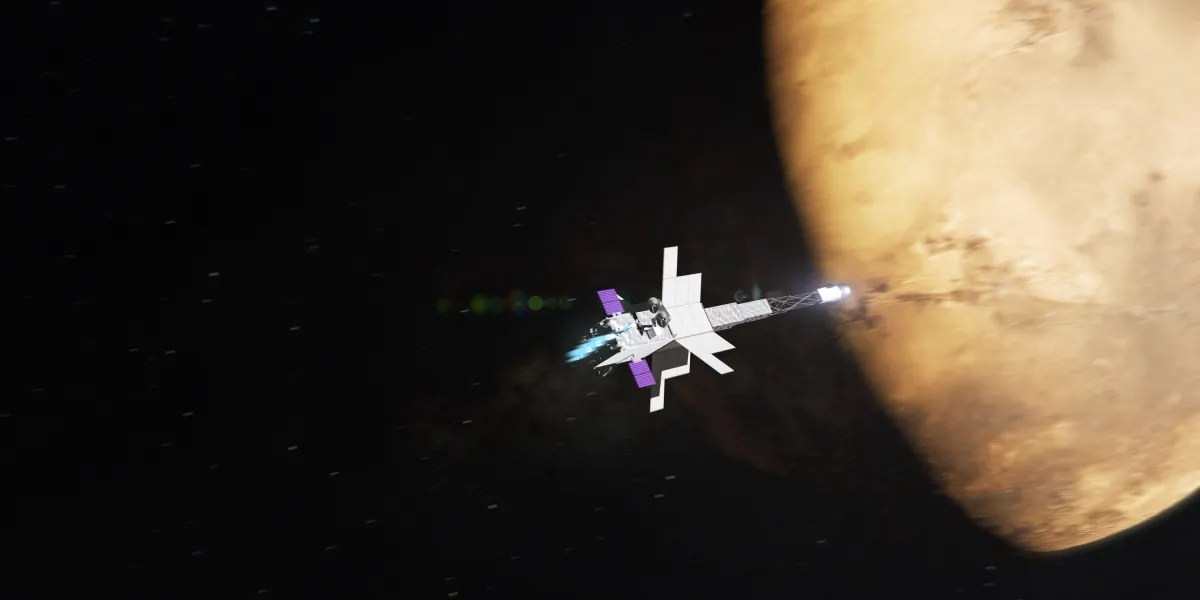
The system architecture involves a dedicated fission reactor, which serves as the primary power source. Unlike simply powering electronics, the reactor's output is channeled into advanced electric propulsion systems, most likely Hall thrusters or magnetoplasmadynamic thrusters. These systems do not generate thrust through combustion; instead, they accelerate ionized propellant—often xenon or argon—to extremely high velocities.
The key advantage lies in the efficiency of the energy conversion. A chemical rocket must carry the chemical energy source (fuel and oxidizer) and the reaction mass. Nuclear electric propulsion, conversely, generates power onboard and uses that power to accelerate a much smaller amount of propellant mass. This dramatically increases the specific impulse ($I{sp}$), a measure of rocket efficiency. While chemical rockets might achieve an $I{sp}$ of 300-450 seconds, advanced electric systems can operate in the thousands of seconds range.
The reactor itself must be designed for extreme reliability and radiation shielding, given the intense environment of deep space. The power generated is used to run sophisticated power processing units (PPUs) that manage the electrical energy flow to the thrusters. This closed-loop system allows for continuous, controllable thrust over years, enabling missions that would otherwise take decades or require prohibitively massive launch vehicles.
Addressing Deep Space Challenges
The primary limitation in deep space exploration is the tyranny of the rocket equation, which dictates that the required propellant mass increases exponentially with the desired change in velocity ($\Delta V$). For missions beyond Mars, the mass penalty of chemical fuel becomes insurmountable for current launch infrastructure. Nuclear electric propulsion circumvents this by maximizing efficiency.
Furthermore, the power source allows for the deployment of sophisticated scientific payloads that require significant, continuous power, such as advanced radioisotope power systems (RTGs) or high-bandwidth communication arrays. A nuclear reactor provides a robust, scalable power backbone that can support everything from deep-space radar mapping to advanced life support systems for future crewed missions.
This technology also facilitates orbital maneuvering and station-keeping in challenging environments, such as the highly variable gravity wells near gas giants. The ability to provide precise, continuous thrust allows spacecraft to perform complex gravity assists or orbital adjustments with far greater energy efficiency than traditional methods.
Implications for Future Exploration
The deployment of nuclear reactors marks the beginning of a new era of interplanetary travel, fundamentally altering the timeline for accessing the solar system's most distant objects. Missions that were previously considered multi-generational endeavors—such as reaching the Kuiper Belt Objects or the theoretical habitable exoplanets—become technologically plausible within a single human lifespan.
For the space industry, this necessitates a massive shift in infrastructure and expertise. It drives the development of specialized nuclear-rated launch vehicles and requires international collaboration to manage the complex safety and regulatory aspects of space-based nuclear technology.
Beyond pure exploration, the power source has implications for resource utilization. If the spacecraft is designed to operate in deep space, the reactor's power could potentially be used for in-situ resource utilization (ISRU) experiments, such as powering mining operations or advanced propellant production at the destination, reducing the mass that must be launched from Earth.