The Smart Bricks rumor cycle that wasn't
Through 2024 and into 2025, a specific rumor gained traction in LEGO community forums: that the company was preparing to roll out a new Smart Bricks platform — connected electronic modules that would integrate with companion apps, add sound and light effects, and potentially sync with LEGO's broader digital ecosystem. Star Wars was floated repeatedly as the launch theme, given its decades-long position as LEGO's highest-revenue adult-collector category.
The speculation drew from observable signals. LEGO had expanded Powered Up hardware lineups across Technic and City. The company's acquisition pace on software and app-integration partners had accelerated. Patent filings surfaced in trade databases showing work on bidirectional communication between physical bricks and mobile software. Analysts built plausible theories around a "Smart Play" brand positioning.
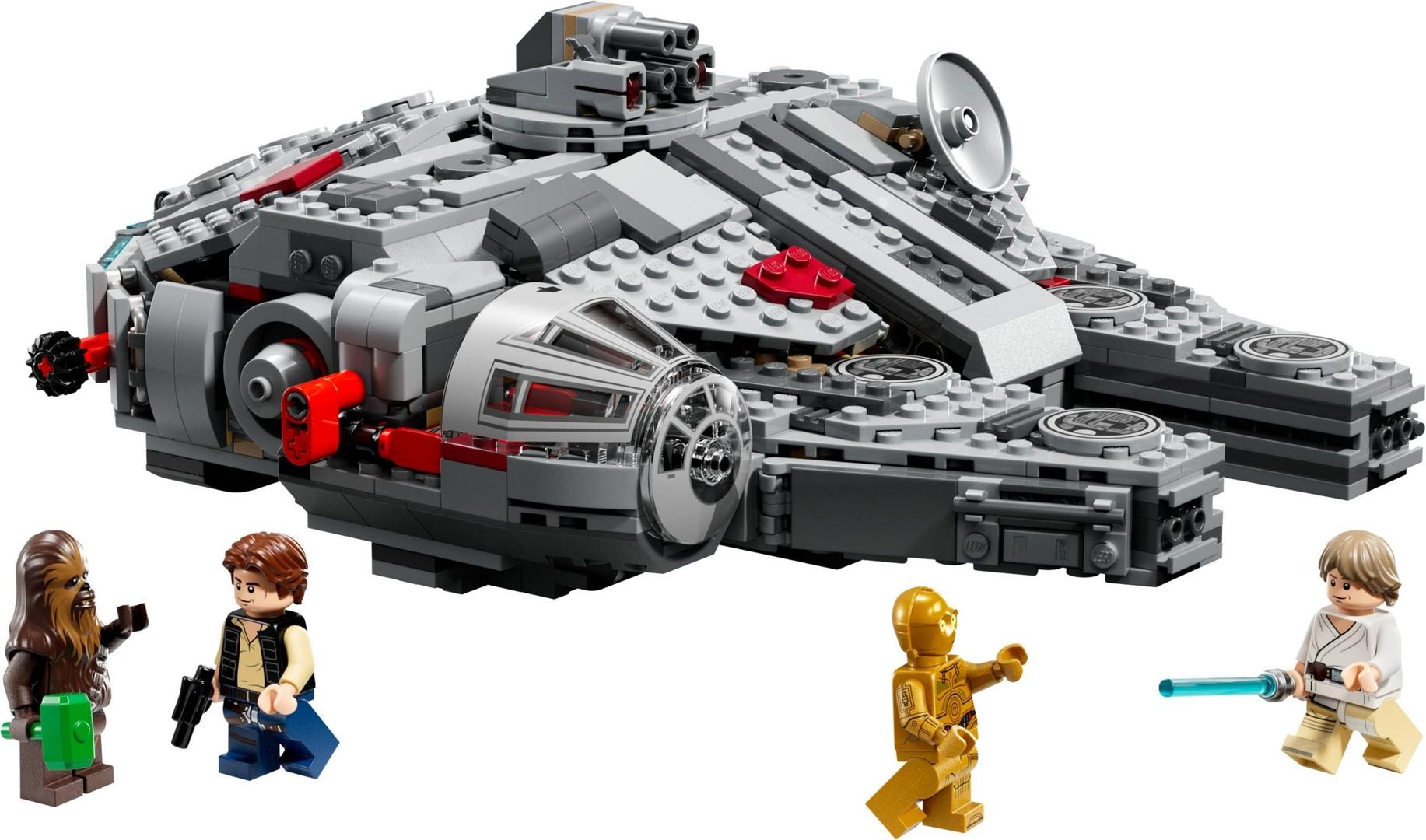
None of that materialized in the 2026 Star Wars wave. The January midi launch (75420-75427) contains zero electronic integration. The April Mandalorian & Grogu wave — 75436, 75437, 75440, 75443, 75446, 75447 — ships with purely mechanical construction. The Yoda and Vader bust sets (75438, 75439) are static display. The Venator (75441) is a pure display capital ship with no functional systems.
LEGO hasn't issued a public statement explaining the decision. But the pattern across 2026 is clear: whatever Smart Bricks was going to be, it isn't part of the current Star Wars product line.
LEGO's 2026 Star Wars wave contains no Smart Bricks electronic integration
What LEGO built instead: traditional play-feature engineering
The argument for adding electronics to LEGO construction sets usually centers on play value — the theory being that sounds, lights, and app integration create engagement beyond what mechanical features deliver. The 2026 Star Wars wave advances a counter-argument: that LEGO's designers can still extract meaningful, durable play value from purely mechanical engineering, and that doing so keeps the sets aligned with LEGO's core construction-set identity.
Look at the 75440 AT-AT (525 pieces) as the clearest example. The AT-AT has articulated legs, a rotating head, an opening torso for cargo access, and spring-loaded turret firing on the chin guns. Every play feature is mechanical. The articulation engineering at this piece count — how the leg joints hold position without slipping, how the torso lid latches, how the turret spring mechanism resets — is subtle build craftsmanship that an app-integrated electronic version would have displaced rather than enhanced.
75437 Cobb Vanth's Speeder (207 pieces) features a traditional spring-loaded projectile system. The Mandalorian's speeder from The Book of Boba Fett is a relatively small build, but the firing mechanism is engineered to function reliably after hundreds of play cycles. That reliability is the long-game payoff of traditional mechanical design. An equivalent app-integrated electronic fire effect would introduce battery dependencies, software update requirements, and hardware failure modes that mechanical mechanisms avoid.
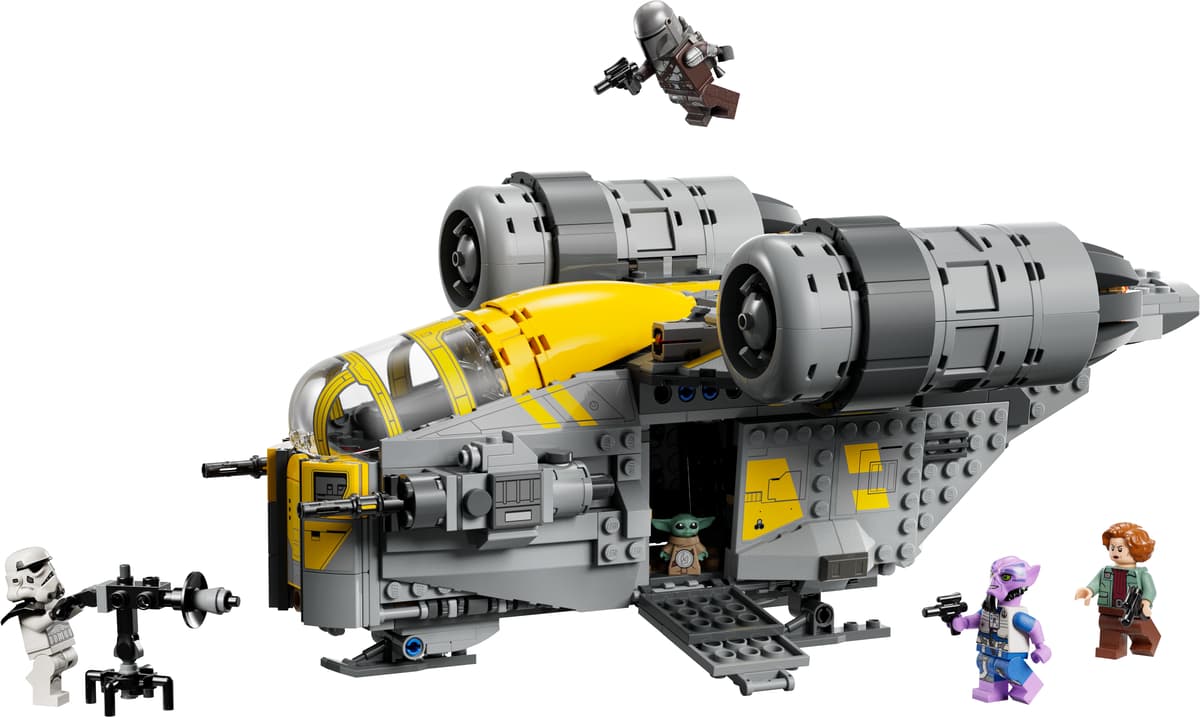
75447 Razor Crest — the Mandalorian's iconic bounty-hunter ship — incorporates mechanical hatches, a cargo bay that opens for a carbonite Mando figure, and pose-able landing gear. None of those require batteries. All of them will still work in fifteen years on a shelf. That's the promise traditional LEGO construction has always made, and 2026 Star Wars kept the promise intact.
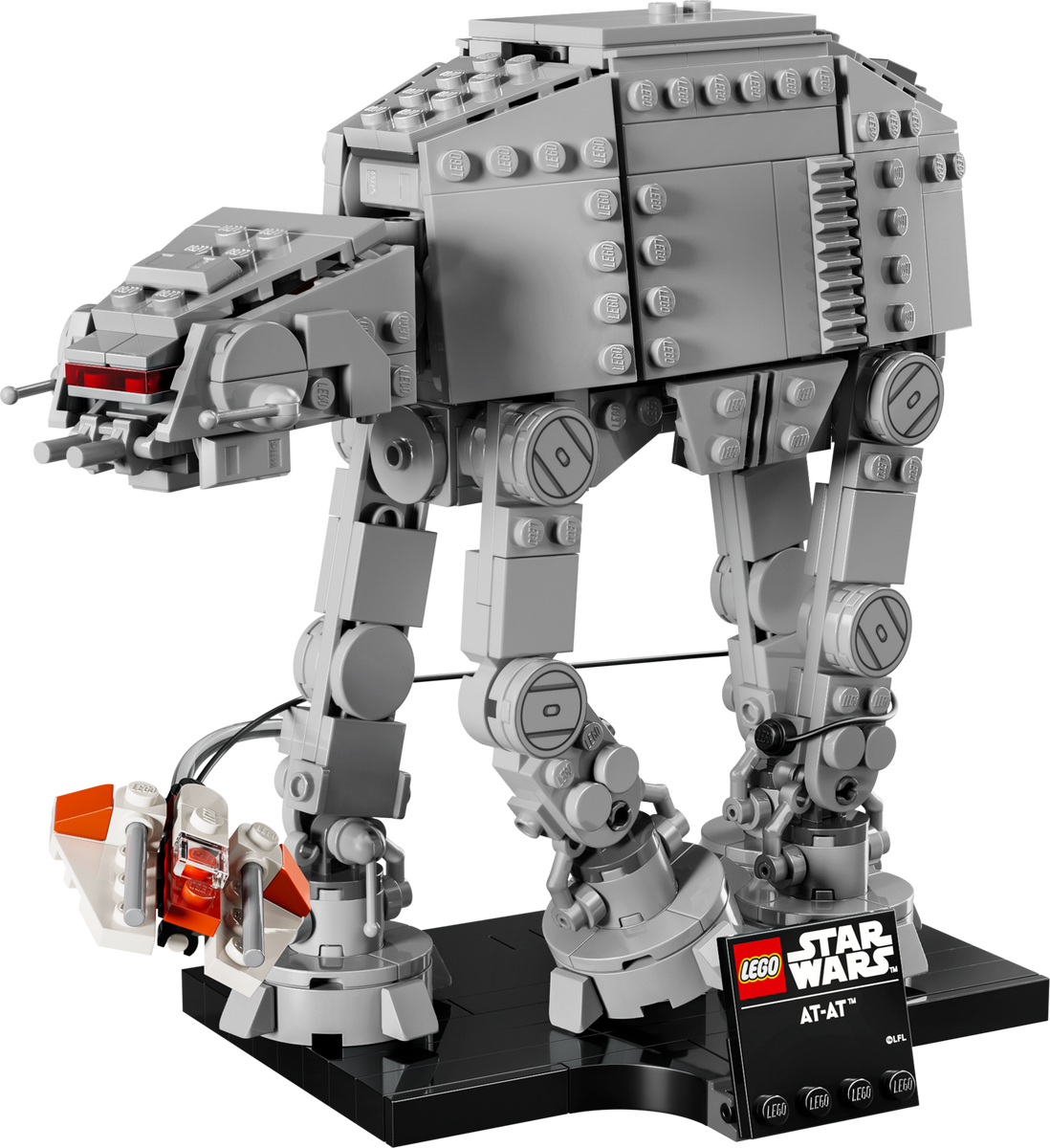
AT-AT
525 pieces. AT-AT with walking-leg articulation, rotating head, spring-loaded cannons — all mechanical.

Cobb Vanth's Speeder
207 pieces. Cobb Vanth's Speeder with traditional spring-loaded firing mechanism.
The Yoda and Vader bust sets as the purity test
75438 Yoda Bust and 75439 Darth Vader Bust — LEGO's 2026 display-only busts — are an informative counterexample. These sets have zero play features at all. No articulation, no firing mechanisms, no opening hatches. They're pure display sculpture.
If LEGO had wanted to push Smart Bricks, these sets would have been the obvious venue. A lit-saber Darth Vader, or a Yoda with audio lines from Empire Strikes Back, would have been the kind of high-profile showcase Smart Bricks integration demands. LEGO instead shipped them as static builds with no electronic components.
The design decision tracks with how other LEGO adult-collector busts have been positioned. The Marvel Helmet Collection, for example, has shipped dozens of static sculpture builds (Iron Man, Spider-Man, Captain America, etc.) without any app integration or electronics. The design thesis is consistent: for display sculpture, the build process and finished silhouette are the product. Electronics would fracture the identity.
Reviewer reception has been mixed on the Yoda and Vader bust sets specifically (see our separate deep-dive on the reception), but no reviewer has argued that the solution to the criticisms would have been to add Smart Bricks electronics. The criticisms are about sculptural fidelity, not about lack of tech integration.

Why the Smart Bricks pass is strategically smart
The decision to skip Smart Bricks for 2026 Star Wars reads, in retrospect, as three strategic wins for LEGO.
First: it preserves the construction-set identity. LEGO's durable competitive moat is that a 1970s LEGO brick still snaps into a 2026 LEGO brick. System integrity across decades is the differentiator no competitor can replicate. Introducing electronic components that will inevitably obsolesce (batteries, wireless standards, app compatibility) would fragment that system-level compatibility. Keeping Star Wars — the theme most likely to attract mainstream cross-over buyers — firmly in the mechanical-construction tradition reinforces the brand's core promise.
Second: it avoids battery and app-dependency costs. Electronic components raise set MSRPs through hardware cost, support-infrastructure cost, and ongoing software maintenance obligations. The 2026 Star Wars wave hit a broadly accessible $20-$100 price band specifically because LEGO didn't have to price in electronic subsystems. A Smart Bricks-enabled version of the same wave would have likely shipped at 30-50% higher prices, collapsing the accessibility thesis that defined the launch.
Third: it lets LEGO keep the optionality. LEGO hasn't publicly ruled out electronic integration for future lines. By not rolling it out in the flagship 2026 Star Wars wave, the company preserves the option to deploy Smart Bricks thoughtfully in a different product category — Technic, perhaps, or a dedicated innovation subline — rather than forcing it into a core identity theme where the fit is questionable.
Where mechanical engineering shines brightest in the wave
Specific 2026 sets that reviewers have singled out for showcasing play-feature engineering craft:
75440 AT-AT (525 pieces, April wave): the articulation engineering is the standout. Leg joints use ball-and-socket construction that holds pose. The four legs can walk in unison through synchronized manual articulation. The head swivels 360 degrees. The torso opens with a latch mechanism. Spring-loaded chin-turret cannons fire small LEGO projectiles. Play value per piece is higher than any app-integrated equivalent could deliver.
75447 Razor Crest (April wave): cargo bay opens to hold a carbonite-frozen Mandalorian, landing gear deploys and retracts, cockpit canopy opens for minifig access. The whole ship reads as functional rather than static. Kids can play with it; adults can display it; the mechanical features support both modes.
75443 Grogu's Homestead (107 pieces, April wave): at small scale, the set is a diorama build with an opening gate, a rotating weather vane, and interior furniture play elements. Zero electronics are needed to make the scene playful.
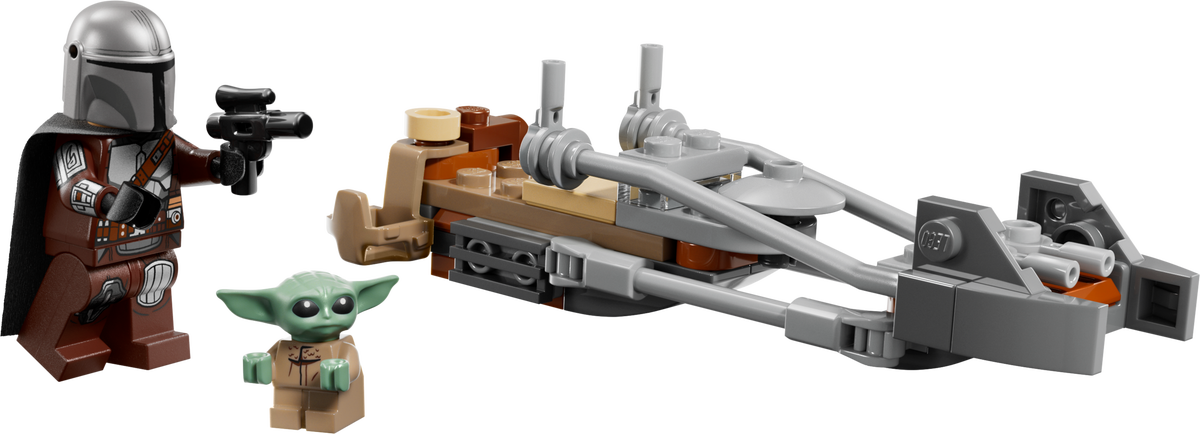
75436 The Mandalorian & Grogu's Speeder Bike (58 pieces): entry-level set, but still includes articulated speeder-bike handlebars and pose-able riders. LEGO engineering consistency is visible even at the $10 price tier.
The pattern across the wave: every set with play features gets play value through mechanical engineering rather than electronic components. The designers have clearly optimized within the mechanical-construction constraint rather than treating it as a limitation.
The Razor Crest
The Razor Crest — cargo bay, landing gear, cockpit canopy — purely mechanical play.
Grogu's Homestead
107 pieces. Grogu's Homestead with opening gate and scene-play elements.
The Mandalorian & Grogu's Speeder Bike
58 pieces. Mando & Grogu speeder bike — mechanical engineering at the $10 tier.
What this signals about LEGO's long view
LEGO's 2026 Star Wars strategic choices — accessible pricing, midi-scale ambition, traditional play features over electronics — collectively suggest the company has renewed conviction in construction-set fundamentals as the driver of its core brand value. Electronics haven't been abandoned across LEGO's broader portfolio (Mindstorms and Technic still use powered components), but they've been consciously kept out of Star Wars, the company's most visible theme.
The implication for collectors: Star Wars sets you buy in 2026 will be mechanically compatible and functionally operable for decades. There's no battery to replace, no app to become obsolete, no cloud service that might shut down and orphan the play features. This is LEGO at its most durable — the same construction promise that's carried the brand since 1958.
For fans who had been holding out for Smart Bricks specifically, the 2026 wave's lack of electronic integration may read as a missed opportunity. But the broader reception — reviewers, collectors, and mainstream press — has treated the mechanical-engineering focus as a strength rather than a limitation. The Venator 75441, the AT-AT 75440, the Razor Crest 75447, and the midi Original Trilogy wave have all drawn strong reviews specifically because of the build craft, not despite any lack of electronic augmentation.
Short version: LEGO bet that traditional construction would outperform speculated electronics for Star Wars in 2026. Reviewer consensus says the bet paid off.