Most licensed LEGO themes are anthologies. One Piece isn't.
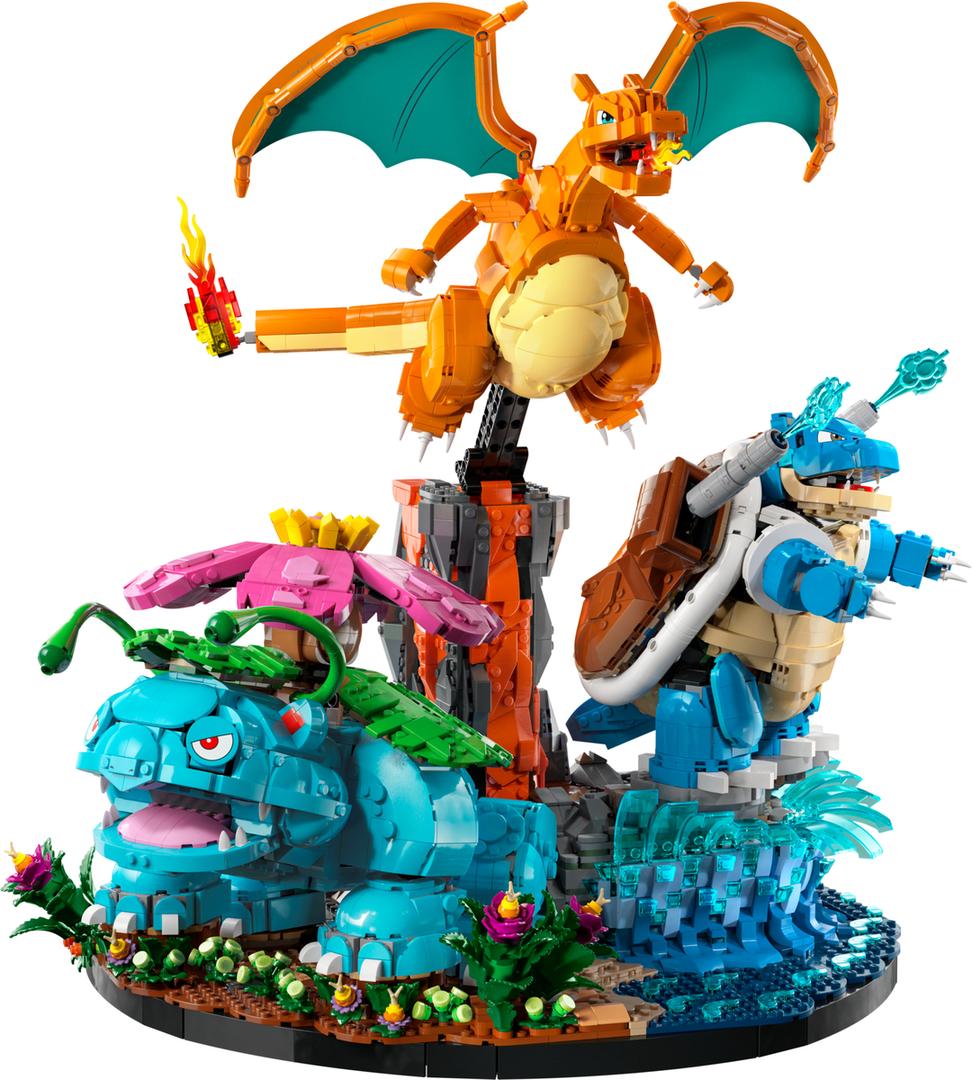
Take a step back and look at how LEGO typically builds licensed themes. Harry Potter launches a new wave and the sets are distinct locations — Hogwarts Astronomy Tower one year, Hogsmeade Village the next, Diagon Alley after that. Pokemon's 2026 launch was five character-focused sets: Pikachu, Eevee, the Kanto trio, and two promos. Each set stands alone. A fan who buys only the Pikachu can display it without needing any other set in the wave to make sense of it.
This is the anthology model. Each set is a self-contained object. The theme persists across years because LEGO keeps finding new iconic locations or characters to build, but the sets themselves don't build toward a larger shared display. You can buy Hogwarts Castle once and never look at another Harry Potter set.
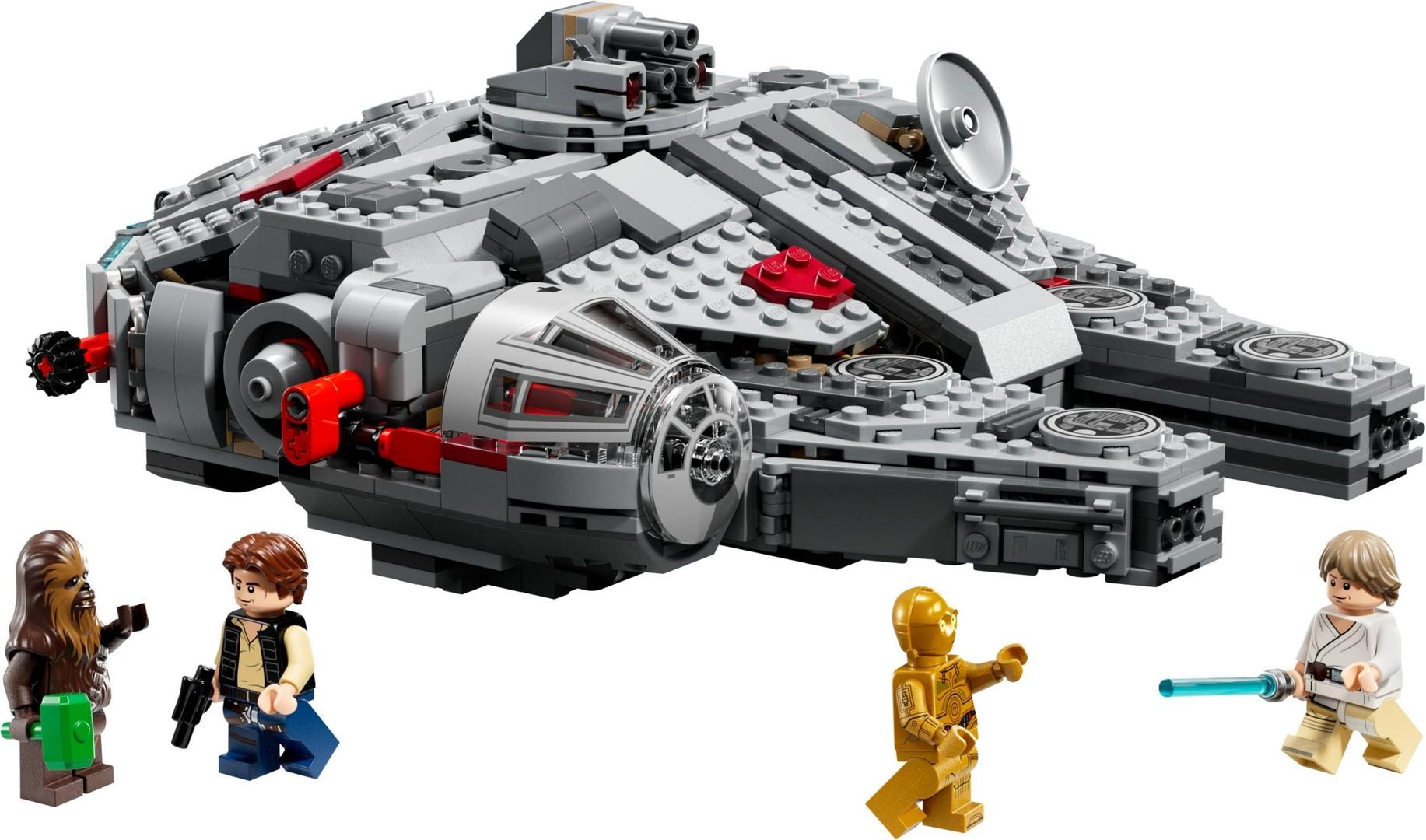
Star Wars is the exception that proves the rule. LEGO Star Wars has been running since 1999, and the sets build out across a continuous cinematic universe — Episode I ships, Original Trilogy vehicles, sequel-era builds, spinoff characters. Collectors expand collections laterally across Jedi, Rebels, Empire, Mandalorian factions. Sets cluster around specific films and shows, but they also reference and complement each other across decades of product.
One Piece is the first new LEGO theme in years to clearly adopt the Star Wars model. And the signs are showing up fast enough that it's worth paying attention to.
LEGO One Piece waves build forward narratively, not in anthology format
What LEGO One Piece is actually doing
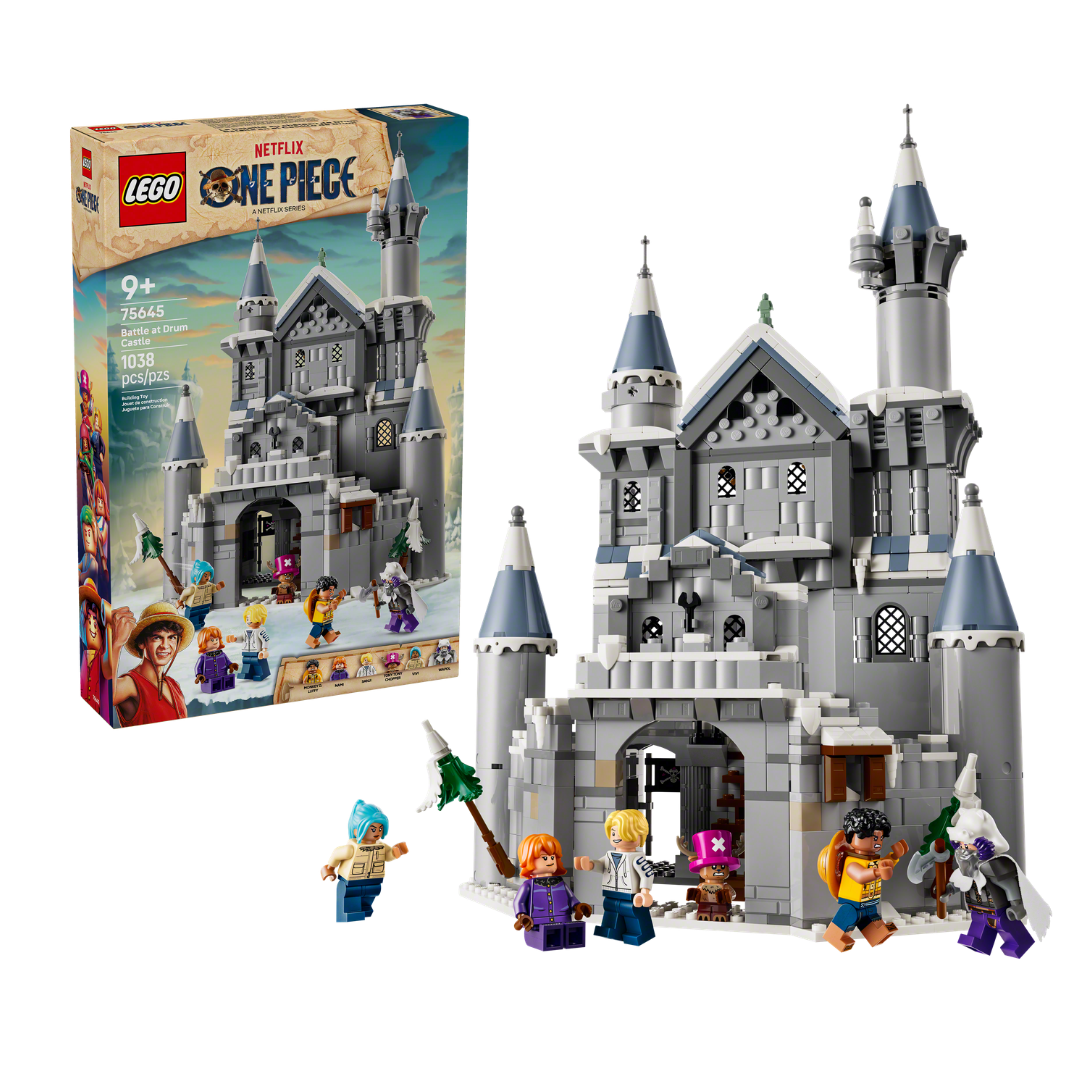
Look at how the 2025 launch wave and 2026 follow-up wave fit together. The 2025 wave covered the East Blue saga through Arlong Park — Luffy's recruitment of the core Straw Hats, the Buggy Clown arc, the Arlong Park battle, and the Baratie restaurant where Sanji joins the crew. The 2026 wave picks up immediately after, covering Loguetown (Smoker), Little Garden (Dorry vs. Brogy), Drum Island (Hiriluk's Hideout, Drum Castle, Chopper joining), and introduces Garp's Marine Battleship.
That's narrative continuity. A collector who bought the 2025 wave is not being asked to re-buy variant versions of sets they already own. They're being asked to extend their existing collection forward in the story. The 2025 Going Merry stays on the shelf. The 2026 Marine Battleship goes next to it. The sets compound into a multi-shelf display that depicts the Straw Hats' actual journey across the manga.
That's a fundamentally different product-design philosophy than LEGO Pokemon or LEGO Harry Potter uses. It requires LEGO's designers to plan waves years in advance, with each set anchored to a specific story location and serving as a building block for the next wave. It requires LEGO's licensing team to coordinate with the IP holder (in this case, Toei Animation and Shueisha) across multiple product cycles. And it requires LEGO's retail partners to understand that the product value compounds over time rather than spiking with each launch.
LEGO has historically reserved that kind of long-term coordination for Star Wars and Ninjago (their own in-house property). One Piece is the first licensed crossover to get it.
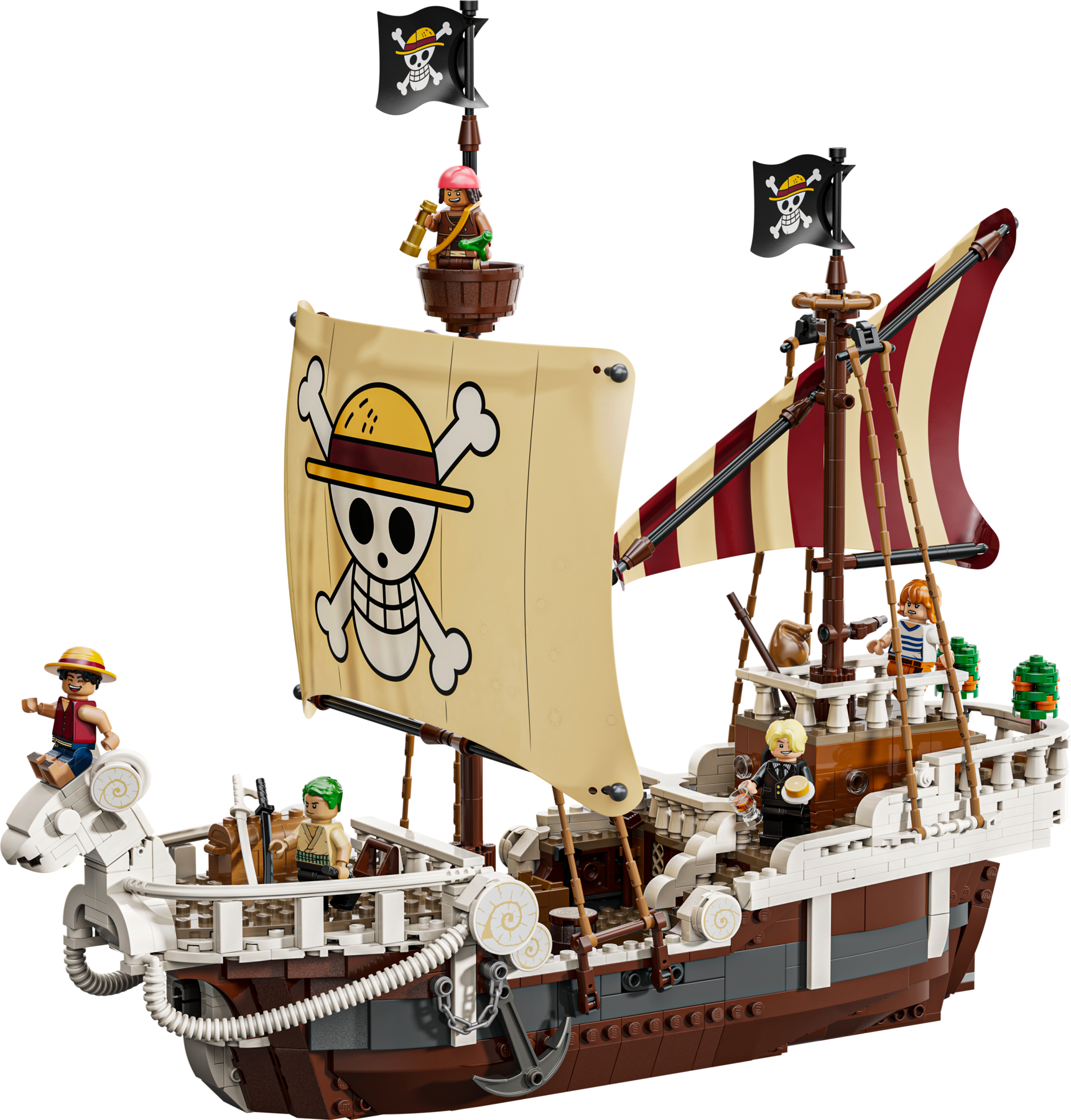
The Going Merry Pirate Ship
The Going Merry — launched 2025, still the line's consensus pick.
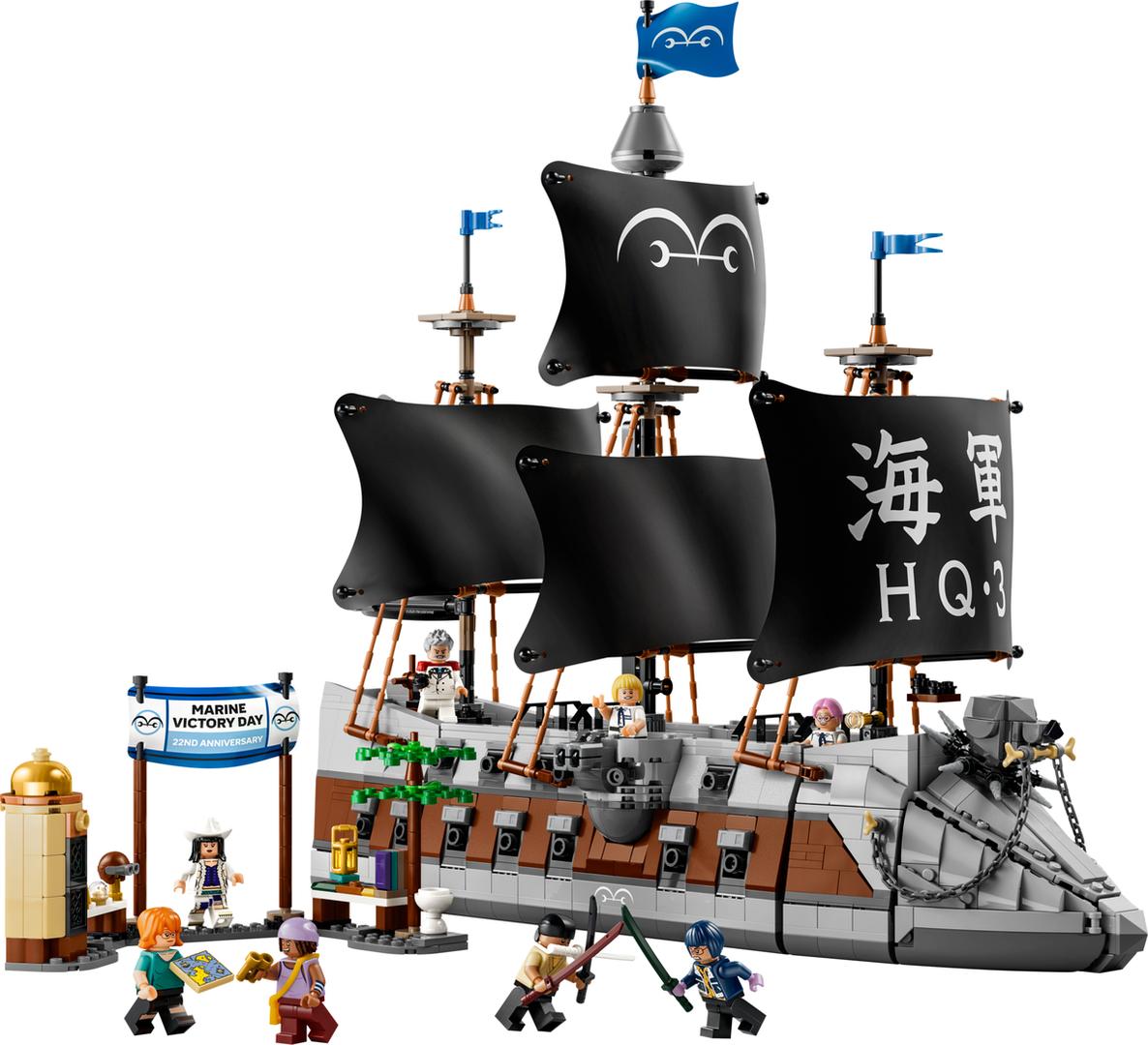
Garp's Marine Battleship
Garp's Marine Battleship — the faction-pair that reveals the strategy.
The faction-vs-faction pattern is the smoking gun
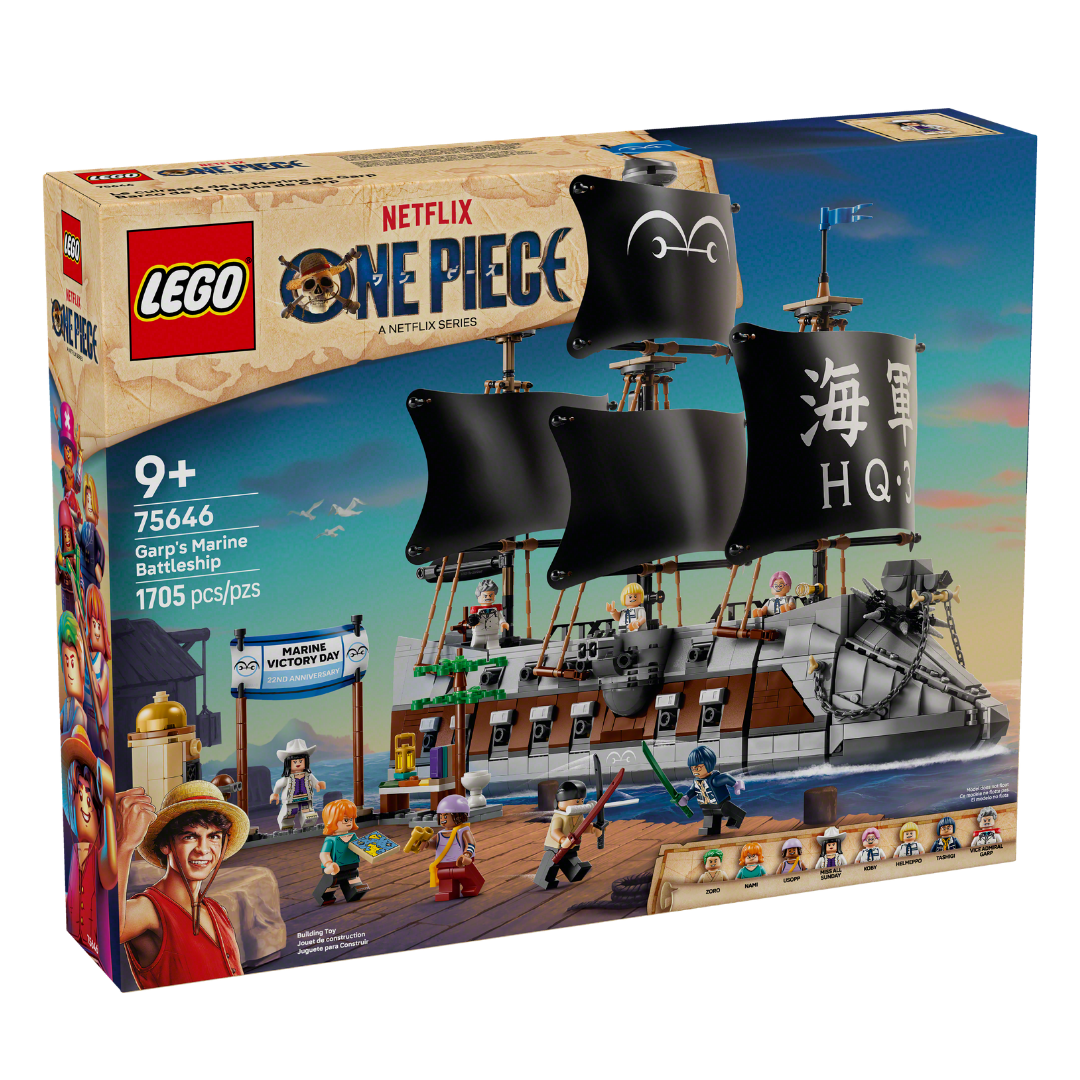
The most revealing single design decision in the 2026 One Piece wave is 75646 Garp's Marine Battleship. The set has no obvious stand-alone purpose. Garp is not a main character — he's a supporting antagonist who appears sporadically across the manga. A Marine-faction ship doesn't introduce new iconic builds the way the Baratie did. It doesn't feature fan-favorite minifigs.
What it does is give the Going Merry a faction partner. Garp's ship is the antagonist vessel to place next to the protagonist ship. That's a display-complementarity design decision. It only makes sense if LEGO is thinking about the One Piece line as a system of sets that interact, not as a series of individual products.
Compare this to LEGO Star Wars, where the X-wing and the TIE fighter ship together. Rebel and Imperial ships pair for display. Jedi and Sith figures balance each other. The entire Star Wars LEGO line is built around this principle — sets acquire meaning through what they sit next to, not just what they depict.
If Garp's Battleship is the first of multiple Marine-faction builds across future One Piece waves (Akainu's ship? Aokiji's? Smoker's personal vessel upgraded?) — and early signals suggest it is — LEGO is running a Star Wars faction-pair strategy for One Piece. That's a significant commitment.
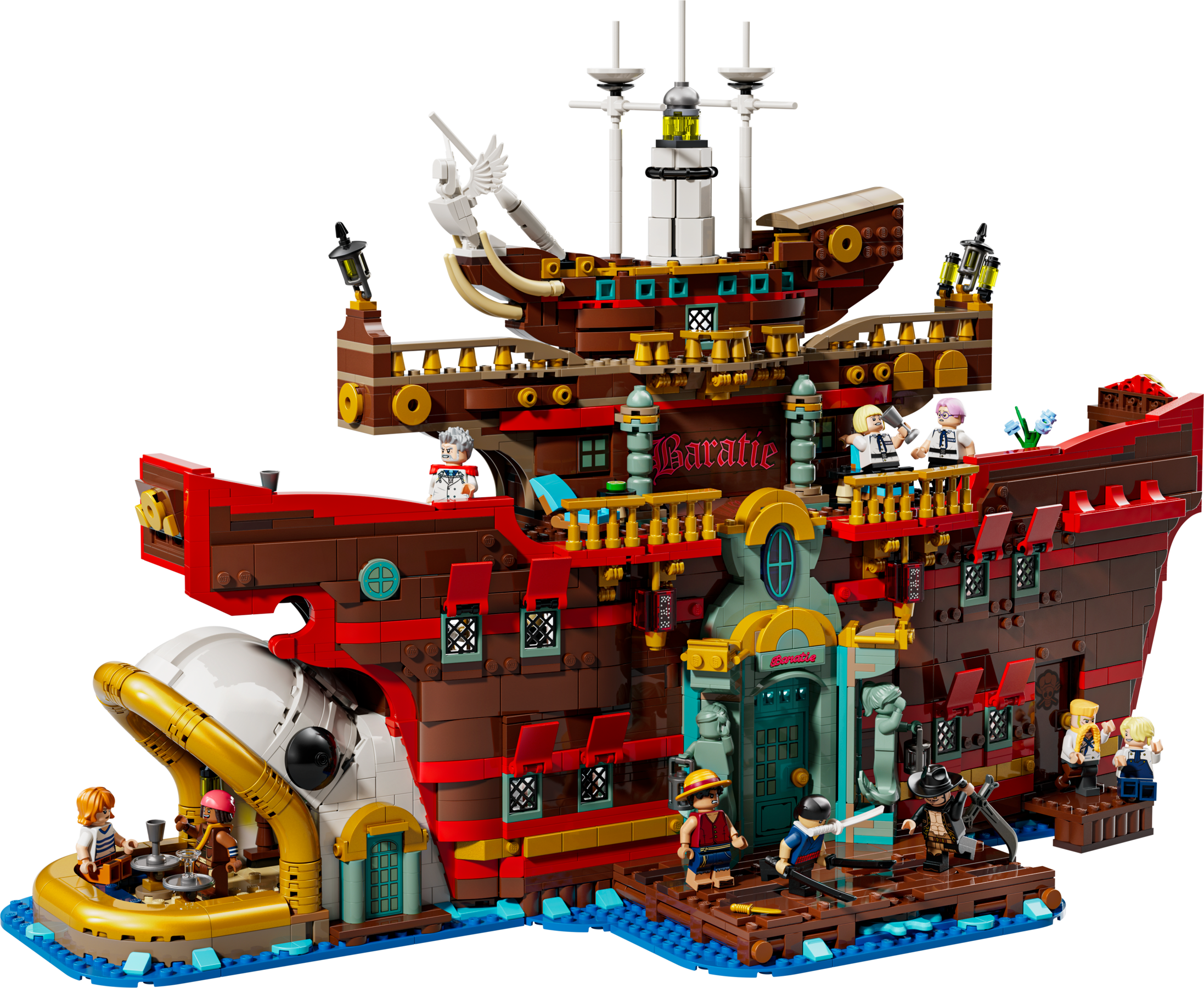
The Baratie Floating Restaurant
The Baratie — East Blue saga anchor.
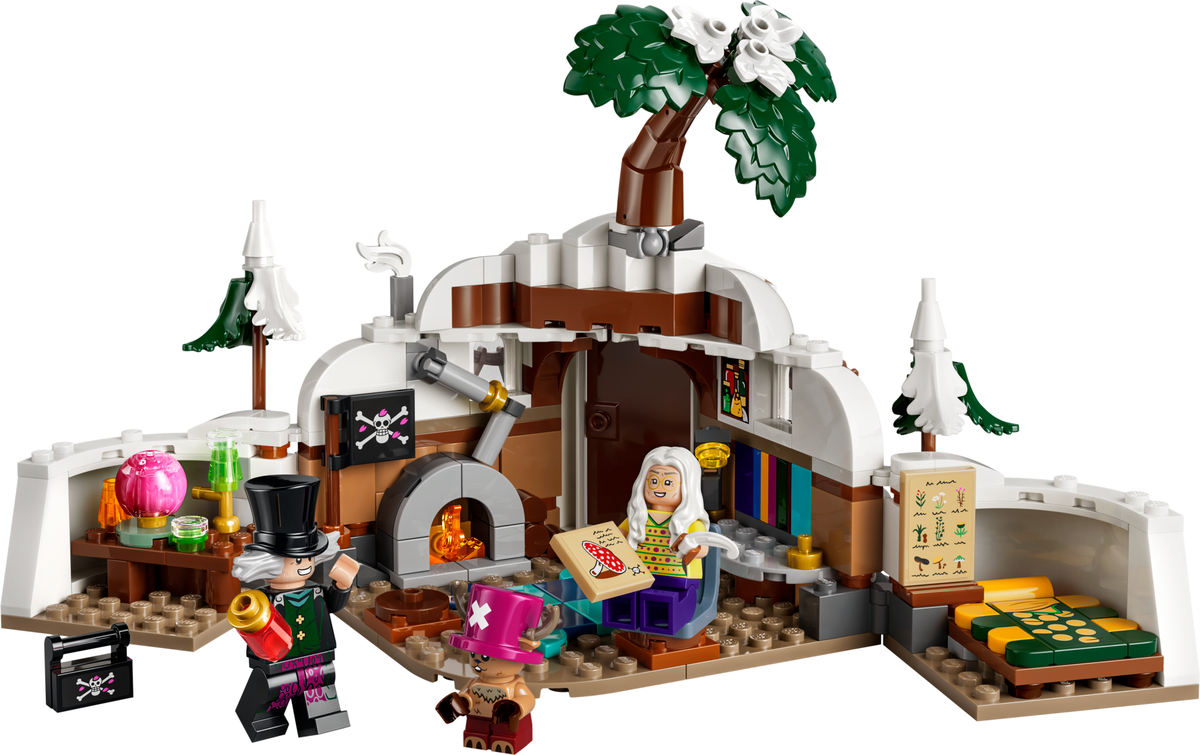
Dr. Hiriluk's Hideout
Hiriluk's Hideout — Drum Island setup.
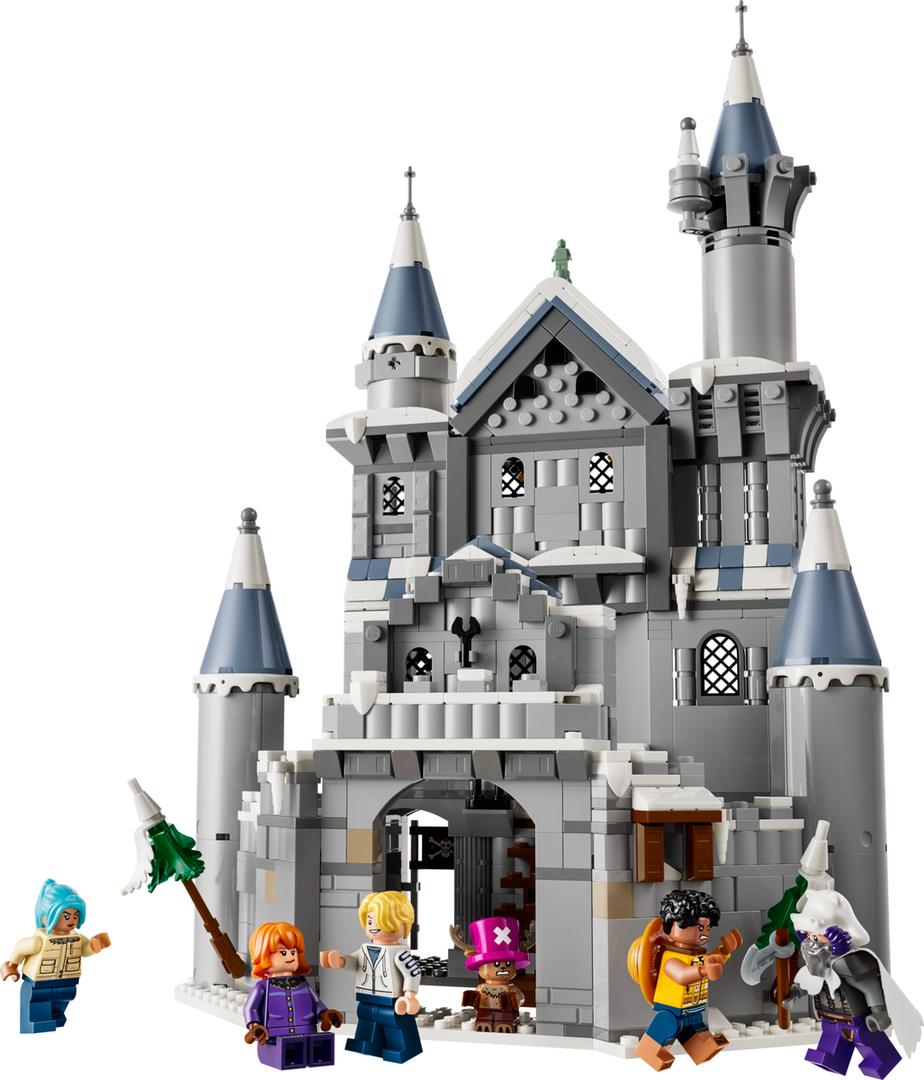
Battle at Drum Castle
Drum Castle — the arc's climax.
Why this matters for Pokemon, Zelda, and what comes next
Pokemon's 2026 launch was anthology-model. Five sets, each distinct. The rumored summer wave appears to maintain that structure — Rayquaza, Mewtwo, Johto starters, each as a standalone product. That's a perfectly defensible strategy and it's consistent with LEGO's Pokemon design history. But if One Piece's multi-year continuity model outperforms Pokemon's anthology model on collector retention and set-to-set revenue, expect LEGO's Pokemon strategy to shift.
Zelda is the more interesting comparison. The 77093 Great Deku Tree from Breath of the Wild is LEGO's first Zelda set (launched late 2024). A second Zelda set has been rumored but not confirmed. If LEGO extends Zelda using the One Piece playbook — multi-wave narrative continuity, faction-vs-faction builds (Link vs. Ganon? Kokiri Forest vs. Hyrule Castle?) — Zelda becomes a multi-year franchise like Star Wars. If LEGO extends Zelda using the Pokemon playbook, it becomes a rotating anthology.
The Gundam line is the other test case. Gundam is one of the most storied mecha franchises in anime, with decades of distinct timelines and factions. An aggressive One Piece-style rollout could establish LEGO Gundam as a multi-year mecha franchise in a way LEGO has never successfully built before. A one-off anthology approach would undersell the opportunity.
What LEGO chooses with these other themes in the next 18 months will tell collectors a lot about whether One Piece was the test case or the outlier.
The Netflix question
The 2026 One Piece wave timing aligns with Netflix's live-action One Piece Season 2 — the first clear evidence that LEGO is coordinating product calendars with streaming releases at the theme level. This is different from event-driven tie-ins (Ahsoka set released alongside the Ahsoka show, Obi-Wan set released alongside Obi-Wan show). Those are episode-driven releases.
What LEGO is doing with One Piece is closer to the Star Wars/Disney+ model on steroids. Entire yearly waves are being paced to hit when the show content drops. The product lineup is shaped to include characters and locations audiences will see for the first time through Netflix's adaptation (Chopper, for example, who is introduced in Season 2).
For collectors, this means two things. First, launch windows will get tighter as the Netflix audience discovers the LEGO product. Second, LEGO's theme lifespan will track closer to the streaming show's lifespan. If Netflix keeps renewing One Piece through all of the manga's 100+ story arcs, LEGO's commitment to the theme will track similarly. If Netflix cancels the show, LEGO's long-term One Piece planning will shorten.
This is new territory. LEGO Star Wars never depended on any single streaming show's survival because Star Wars had 40 years of cinematic history to draw from. One Piece's LEGO future is, uniquely, bound to Netflix's adaptation decisions.
What collectors should take from this
The practical consequence for anyone buying One Piece LEGO is that sets now have compound collection value. The Going Merry gets more collectible as the 2026 wave fills in the surrounding story. Garp's Battleship gets more collectible if the 2027 wave introduces additional Marine-faction ships. Every individual set's shelf life extends as the line builds out.
This changes the buy-or-wait calculation. Under the anthology model, holding on a set is safe — the theme will keep producing standalone sets. Under the continuity model, holding on a set risks losing the display-pairing value of the companion set it was designed to anchor. If you skipped the 2025 Going Merry and the 2026 wave builds out the surrounding story, the Going Merry becomes harder to display in isolation and harder to buy as it ages toward EOL.
The same calculation will apply to Zelda, to any future One Piece additions, and to whatever the next multi-year LEGO IP turns out to be. Anthology themes reward patience. Continuity themes reward early commitment.
One Piece, based on everything shipped through 2025 and revealed for 2026, is a continuity theme. Plan accordingly.