Overview
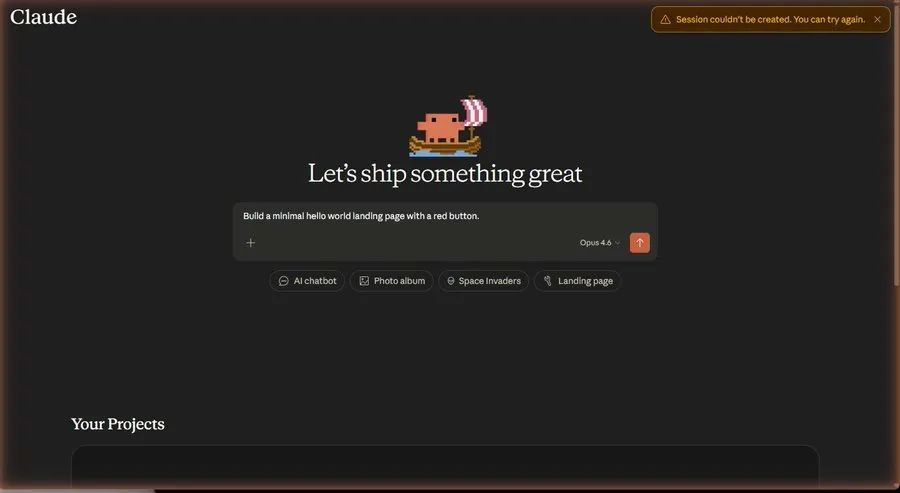
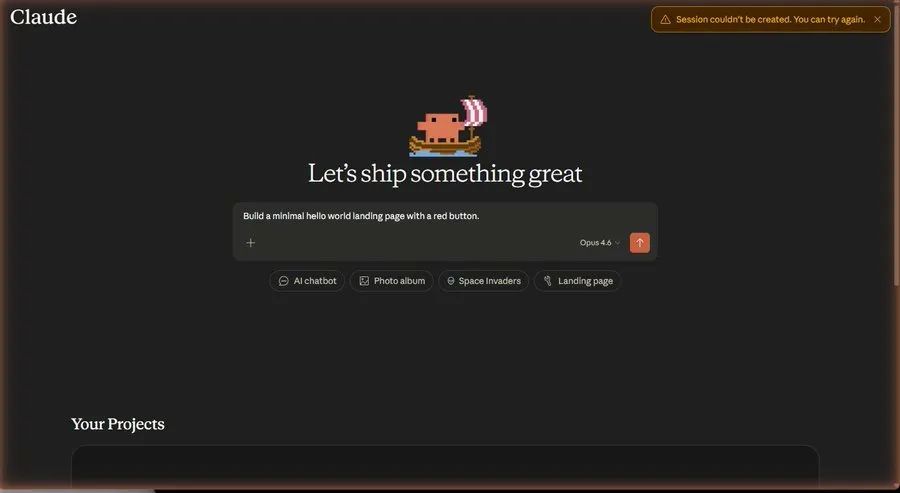
Screenshots leaked on X this week show what appears to be a full-stack app builder embedded inside Claude. The interface, branded with the tagline "Let's ship something great," lets users turn conversational prompts into working applications with live previews, integrated databases, authentication, and a one-click deploy button. The images circulated fast: over 5 million views before Anthropic could respond, which so far they have not done. No confirmation, no denial, no statement.
The scale of the reaction surprised even veteran AI watchers. Most product leaks generate discussion among developers. This one pulled in general audiences. The reason is obvious in retrospect: an interface that lets anyone describe an app and watch it build in real time crosses a threshold that API access never did. It makes software creation legible to people who have never opened a terminal.
Screenshots show an app builder with live previews and one-click deployment
What the Screenshots Show
The leaked interface includes a project settings panel with discrete sections: Security, Database, Storage, Authentication, Users, Secrets, and Logs. These are not lightweight wrappers. They suggest a full deployment environment managed by Anthropic, where the infrastructure stack is abstracted away entirely. Users can apparently build landing pages, AI chatbots, photo albums, and games like Space Invaders through conversation alone. The live preview updates as you talk.
The authentication and secrets management panels are particularly telling. Those are not features you build for a demo. Handling auth and secrets requires real infrastructure decisions: session management, token storage, encryption at rest. If those panels are functional, Anthropic has built or partnered for a backend that can host production applications. That is a significant infrastructure investment, not a prototype.
This is distinct from Claude Code, Anthropic's terminal-based coding assistant aimed at developers. Claude Code requires familiarity with version control, dependency management, and local development environments. The app builder targets a completely different user: someone with an idea who has no interest in the underlying machinery. The positioning is not "AI helps you code faster." It is "you do not need to know how to code."
The Competitive Landscape
If real, this puts Anthropic in direct competition with Lovable, Bolt, Replit, and Vercel's v0 - platforms that already let non-technical users build apps through AI. The difference is that Anthropic has the model advantage. Building the app builder on top of Claude means the AI layer is native, not bolted on. Lovable and Bolt use external models. Anthropic owns the model and can optimize the entire pipeline from natural language intent to deployed code.
The timing aligns with broader signals. Reports of an AI design tool for websites and presentations, combined with the app builder leak, suggest the company is expanding Claude from a conversation and coding tool into a full productivity platform. Whether that expansion is strategic or reactive to competitive pressure is hard to say. But the direction is consistent.
Why This Is a Different Bet Than Claude Code
Claude Code is a developer tool. It lives in the terminal, it speaks the language of git commits and dependency trees, and it assumes you know what a pull request is. The target user is a software engineer who wants to move faster. The app builder in the leaked screenshots assumes none of that. The target user is a product manager with an idea, a marketer who wants a landing page, a small business owner who needs a client portal.
These are categorically different bets. Claude Code competes on developer productivity, where the competition is GitHub Copilot, Cursor, and a dozen other AI coding assistants. The app builder competes on creative accessibility, where the comparison is Squarespace and Webflow before they were cool. The market ceiling on the second bet is substantially larger. Developers are maybe 30 million people globally. Non-technical people who would build something if building were easier is an order of magnitude bigger.
The strategic risk is that building a platform is hard. Hosting applications means taking on support burden, uptime commitments, billing complexity, and enterprise security requirements that model APIs do not face. Anthropic has so far been a research and API company. Running a deployment platform is a different operational challenge entirely. The leaked interface suggests they are willing to take that on.
What a Successful Launch Would Mean for Anthropic
Anthropic currently makes money by selling API access to developers and enterprises. That model is good but exposed: it depends on developers choosing Claude over GPT-4o or Gemini, a choice that can reverse quickly when a competitor ships a better model or a cheaper price. A deployed-app platform changes the economics. When a user builds something on Claude and deploys it, they create a dependency. Their app runs on Anthropic infrastructure. Switching models means rebuilding from scratch.
The subscription math is also attractive. Anthropic's current Claude Pro subscription is $20 per month. A platform that hosts production apps can justify $50, $100, or more per month for serious users. Enterprise teams building internal tools on the platform represent contract sizes that dwarf consumer subscriptions. If the app builder works, it creates a natural upsell path from the free tier through Pro to a platform plan with hosting, custom domains, and SLAs.
There is also a data network effect. Every app built on the platform generates usage data that can improve the model's ability to build apps. The more apps users create, the better Claude gets at creating apps. This is the kind of flywheel that makes platforms durable. API businesses can be disrupted by a better model. Platform businesses are disrupted by a better platform, which is a harder bar to clear.