

AMD's handheld monopoly is about to crack
<iframe width="100%" height="400" src="https://www.youtube.com/embed/gF51k1QE0kQ" frameborder="0" allow="accelerometer; autoplay; clipboard-write; encrypted-media; gyroscope; picture-in-picture; web-share" allowfullscreen title="Edd Saavage video"></iframe>
AMD has had a really good run owning the handheld PC GPU market. The Steam Deck shipped with a custom AMD APU, the ROG Ally went AMD, the Legion Go went AMD, and the OneXPlayer line went AMD. For three generations of handhelds the answer to GPU choice has been one company. That is not a healthy market structure and Intel just gave us the first real reason to expect that to change.
The Arc G3 is not a generational leap on its own. It is a competitive option in a price and power envelope where there has been zero competition. That is a bigger deal than any single benchmark number, because OEMs design handhelds around the assumption that they have to pick AMD or design without a GPU vendor at all. Now they have a second option that is plausibly equivalent.
Intel Arc G3 is the first non AMD handheld GPU that competes on equal footing for handheld power draw envelopes.
What the benchmarks actually show
The early Arc G3 numbers in the handheld power band look strong. AMD still wins some specific workloads, particularly older DirectX 11 titles and certain compute heavy emulator scenarios. Intel wins in DX12, ray tracing where it actually fires, and a meaningful chunk of recent UE5 titles.
The competitive picture matters more than the wins. Two years ago AMD's lead in this space was uncatchable for Intel. One year ago it was uncatchable but Intel was closing. Now it is matchable, and on some workloads beaten. That curve is the real signal.
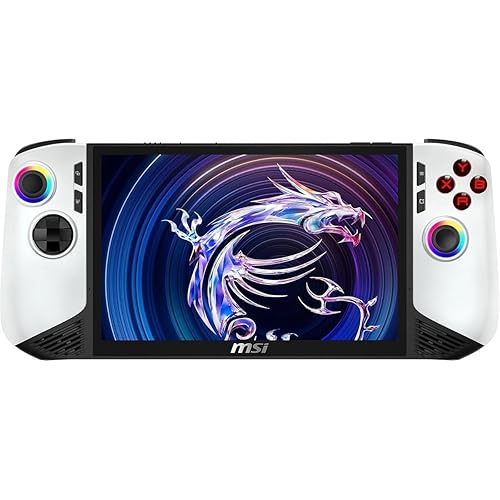
MSI Claw 8 AI+ Handheld
Windows gaming handheld pick for Intel and Arc handheld coverage
Affiliate links. We may earn a commission at no extra cost to you.
Battery life is the real handheld spec
Raw GPU performance does not win the handheld market. Battery efficiency at the target framerate wins it. The Steam Deck OLED is competitive against newer AMD handhelds primarily because Valve's tuning of the APU into the power envelope is just better than what the average OEM ships.
If Intel can deliver Arc G3 handhelds that hold 30 to 40 FPS at 720p with 4 to 5 hours of battery, that is a competitive product. If they ship with the same 90 minute battery life that plagued early Arc desktop reviews, the chip's wins do not translate. The OEM tuning matters as much as the silicon. We will know in the first three reviews.
OEM diversification changes the calendar
The story most reviewers are missing is what this means for the OEM side. Lenovo, Asus, AYANEO, GPD, and OneXPlayer have all been roadmapping their next handhelds around AMD silicon. Intel offering a credible alternative means at least one or two of those OEMs will hedge and ship Intel variants of their next generation. That diversification is healthy for the market.
It also puts pressure on AMD. If Intel is competitive on perf per watt, AMD has to push harder on the next Steam Deck APU partnership and on the broader handheld roadmap. Competition is what drives the next two years of handheld improvements, and we just got it.
What I would actually do
If you are shopping for a handheld in the next six months, this is the first time the answer is not automatically AMD. Wait for the first Arc G3 handheld review cycle before you commit. The market is about to get more interesting.
If you are watching for a Steam Deck 2 timeline, the pressure on Valve just went up. Intel competing for the next Deck partnership is now a real possibility, which means Valve has leverage they did not have before. The Deck 2 spec sheet got more interesting because of this chip, regardless of whether Valve ends up sticking with AMD.


