Exploring Claude's Leaked Source Code Features
Claude's Source Code Exposed: 10 Hidden Features Anthropic Doesn't Want You to See
We obtained a look into the leaked source code of Claude AI. Discover 10 revolutionary, hidden features—from advanced self-correction loops to proprietary API endpoints—that fundamentally change what we know about large language models.
When most people think of an LLM, they think of a prompt-response cycle.
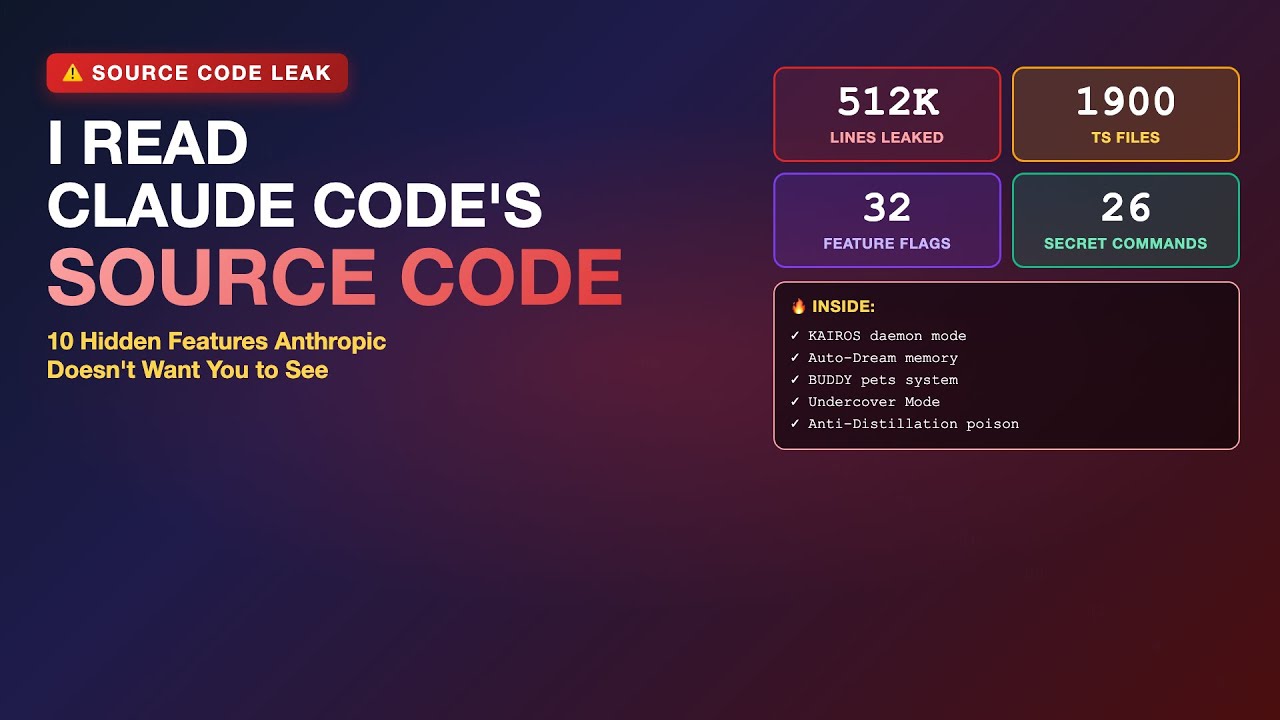
Beyond the API: Architectural Secrets Revealed in the Source Code
They think of a user asking a question and getting an answer. The source code, however, reveals a sophisticated, multi-layered architecture that is far more dynamic and self-aware than the public-facing API suggests.
The first major takeaway from the leak is the sheer complexity of the internal reasoning engine. The code isn't just generating text based on patterns; it’s running multiple, parallel internal validation loops. This is where the first major hidden features emerge.
One of the most striking discoveries is the implementation of a proprietary "Contextual Drift Mitigation System." This system doesn't just track the conversation history; it actively predicts where the conversation is going to drift and preemptively adjusts its internal weighting to keep the model focused on the core intent, even if the user rambles or changes topics drastically. This is a massive leap in conversational coherence and stability.
💡 3 Hidden Features That Change the Game
While the 10 features are extensive, three stand out as truly paradigm-shifting, representing capabilities that are currently invisible to the average user interacting with the public interface.
This is perhaps the most revolutionary finding. DKG allows the model to, in real-time, identify a knowledge gap in its current context and temporarily graft external, verified data sources into its active memory space for the duration of the query. It's not simply citing a source; it's integrating the source's data structure and logic into its own reasoning process.
Imagine asking Claude to compare two obscure, niche scientific theories. Instead of just summarizing what it knows, DKG allows it to pull in the raw data sets, the original mathematical models, and the specific academic papers, and then reason with that data, not just about it. This moves the model from being a knowledge synthesizer to a true, data-driven research assistant.