Gundam had the room
At Bandai Card Games Fest 2025, Gundam was not just another booth with nice art. It had the noise. It had the tables. It had the crowd energy that tells you a game is turning into a scene.
That is wild when you step back. Gundam is old enough to have generations of fans, but the card game did not feel like nostalgia karaoke. It felt like players were discovering that the mechanics actually had teeth.
Gundam Card Game had the energy at Bandai Fest because the mechanics match the IP.
The cards understand the source material
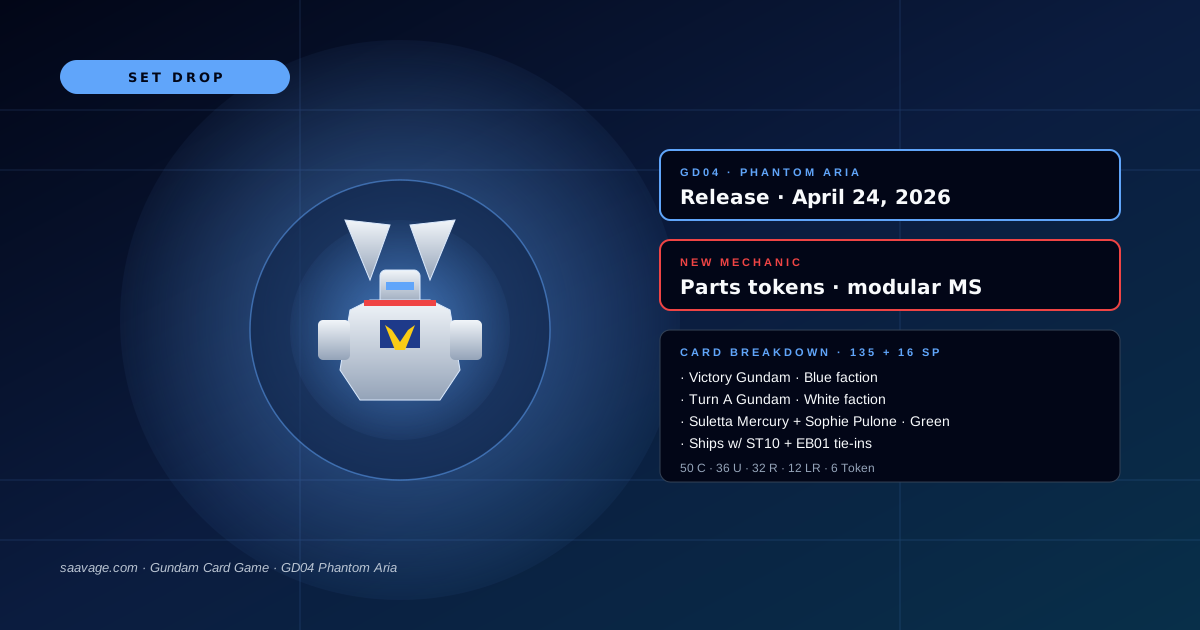
The reason Gundam works is simple: the cards feel like Gundam. Mobile suits do not just wear the art. Their abilities sell the fantasy. Fast suits feel fast. Heavy suits feel heavy. Factions create deck identities that make sense if you know the universe.
That is where a lot of licensed games miss. They paste a famous character onto generic mechanics and hope collectors carry the product. Gundam is doing the better version, where the IP teaches you how the game wants to be played.
Bandai is treating it like a real scene
The tournament infrastructure matters as much as the cards. Full tables, judges who know the game, casual areas that stay busy, multiple levels of play. That does not happen by accident.
Bandai looks like it is building a long-term competitive product, not just a one-year release calendar. That is the signal players should care about. A TCG lives or dies on support after the hype weekend ends.
This is the lesson for every new TCG
The market is not rejecting physical card games. It is rejecting generic ones. Gundam, One Piece, Lorcana, and the stronger licensed games all understand that modern players want mechanics, community, and IP to line up.
Gundam's ceiling depends on what Bandai does next, but the floor already looks higher than most new TCGs get. If the release cadence respects the meta and organized play keeps growing, this can be more than a collector spike.