

The headline number is not the whole story
DeFi losing $13B in TVL sounds catastrophic. That is the number that travels. It is also the number that hides the actual mechanics.
What happened after the KelpDAO exploit was not a clean $13B of capital walking out the door. A lot of it was leverage unwinding. Same dollars, counted multiple times on the way up, disappearing multiple times on the way down.
The $13B TVL drop was not a dollar-for-dollar capital exit.
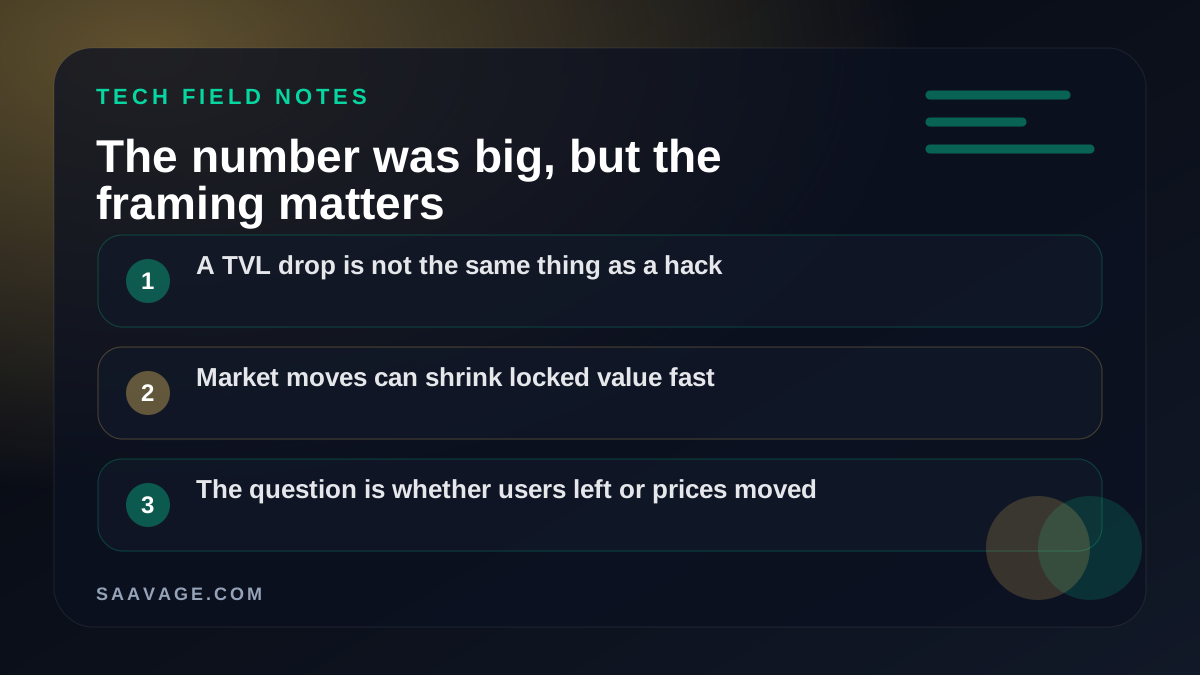
TVL breaks when leverage stacks
Total value locked is useful until it pretends to be cash in a vault. In DeFi, one position can get deposited, borrowed against, swapped, restaked, and deposited again. Every loop makes TVL look bigger than the underlying capital.
So when confidence breaks, the unwind looks enormous. The KelpDAO exploit hit a weak point, but the reason the number moved so hard is that the system had built a tower of strategies on top of thin yield and shared assumptions.
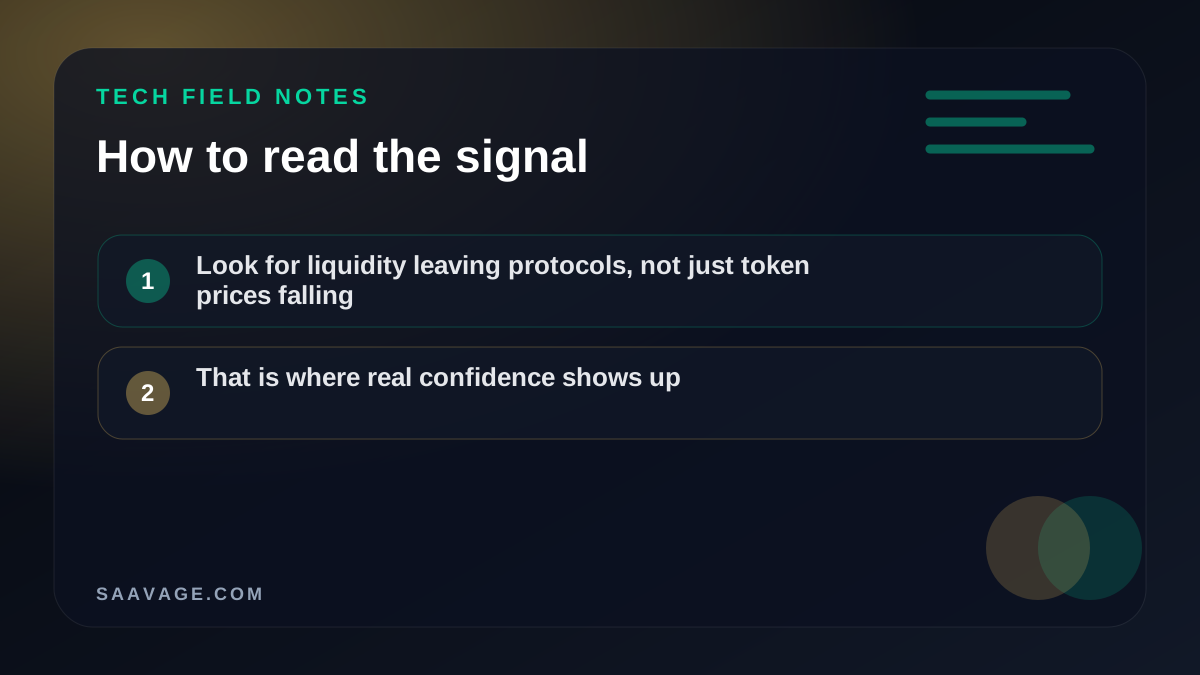
The yield problem came first
The uncomfortable part is that DeFi yield had already been getting less exciting. When returns start looking ordinary, people reach for complexity to make them look special again. That is how looping strategies become normal instead of aggressive.
KelpDAO did not create that appetite. It exposed it. The exploit was the spark, but the kindling was a market that had been stretching for yield without fully pricing the risk of every extra layer.
Smaller might be healthier
A smaller DeFi market is not automatically a dead DeFi market. If TVL falls because fake size and over-looped strategies get flushed out, the remaining number is more honest.
The next cycle has to prove something better than leverage gymnastics. Real yield, cleaner risk, better verification, and fewer stacked dependencies. DeFi can survive this kind of reset, but only if it stops pretending every inflated TVL print is growth.


