Geopolitics Drives Crypto Market Volatility and Power
The crypto market doesn't care about quarterly earnings reports, and it shouldn't. It reacts to power, instability, and the sudden, unpredictable shifts in global capital.
If you thought Bitcoin’s price action was purely dictated by tech cycles or institutional adoption, think again. This past week proved that when the geopolitical landscape shifts—when the major powers suddenly hit the pause button on conflict—the money follows the risk.
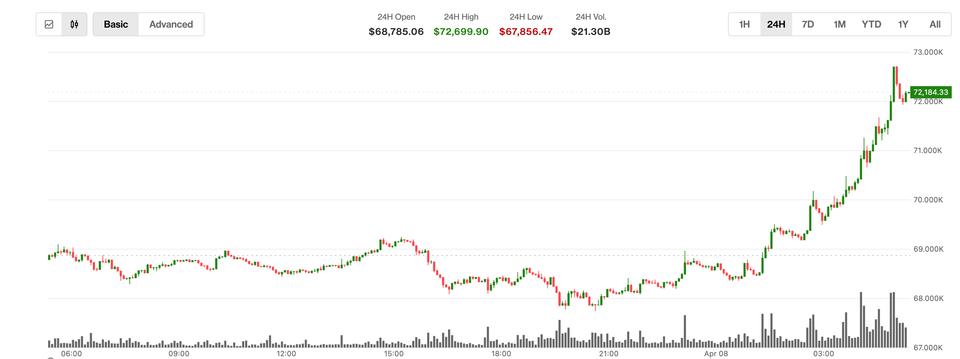
We saw it play out in real time: A major escalation of tension between the U.S. and Iran, followed by a sudden, unexpected two-week ceasefire announcement. The fallout was immediate, dramatic, and textbook. Oil prices tanked, risk assets surged, and Bitcoin didn't just climb—it vaulted past the critical $72,000 mark.
To understand the crypto surge, you first have to understand the commodity market.

The Geopolitical Trigger: Oil and the Ceasefire
To understand the crypto surge, you first have to understand the commodity market. For years, the threat of conflict in the Middle East has been the single biggest dampener on global risk appetite. Energy supplies, particularly those passing through critical choke points like the Strait of Hormuz, are always viewed through the lens of potential war.
The announcement of a two-week suspension of planned military action between the U.S. and Iran fundamentally changed that equation. The initial uncertainty, which had kept risk assets perpetually suppressed, evaporated instantly.
The most visible casualty of this newfound peace was crude oil. West Texas Intermediate (WTI) and Brent crude prices plummeted by more than 10% in a single trading session. This wasn't just a minor dip; it was a sharp, systemic correction reflecting the sudden removal of a massive, persistent supply risk.
The Risk-On Cascade: From Oil to Equities
The collapse in oil prices didn't just impact energy stocks; it triggered a massive, coordinated "risk-on" trade across the board.
When geopolitical risk drops, capital doesn't sit still. It accelerates into assets that promise higher returns and greater growth potential. This is the fundamental mechanism of the risk-on trade.
The immediate beneficiaries were traditional markets. Futures tied to the S&P 500 and the tech-heavy Nasdaq jumped significantly. The Dow Jones futures also saw substantial gains. These movements signaled that institutional money was flowing back into growth sectors, betting that the period of uncertainty was over and a period of stable, profitable expansion was beginning.