Overview
Jeff Bezos' Project Prometheus has secured a key talent acquisition with the hiring of Kyle Kosic, a co-founder of Elon Musk's xAI. Kosic's background, which includes leading infrastructure development at OpenAI, immediately places Prometheus at the center of the next generation of industrial AI. The move suggests that the startup is rapidly scaling its technical capabilities to tackle complex, real-world engineering problems.
Kosic is reportedly tasked with advancing the core AI infrastructure at Prometheus. This focus on foundational compute power is critical, as the company is building systems designed not merely to process data, but to understand the physical world itself. The initial applications cited for this technology include complex tasks like engine design and advanced architectural engineering, moving AI out of the purely digital realm.
The broader scope of Prometheus is staggering. Led by Bezos alongside former Google executive Vikram Bajaj, the venture is positioning itself as a permanent, massive investment vehicle. Reports indicate the goal is to raise tens of billions of dollars, aiming to acquire stakes across foundational industries such as aerospace and architecture, signaling an intent to reshape entire sectors of the global economy.
The Infrastructure of Physical World Understanding
The Infrastructure of Physical World Understanding
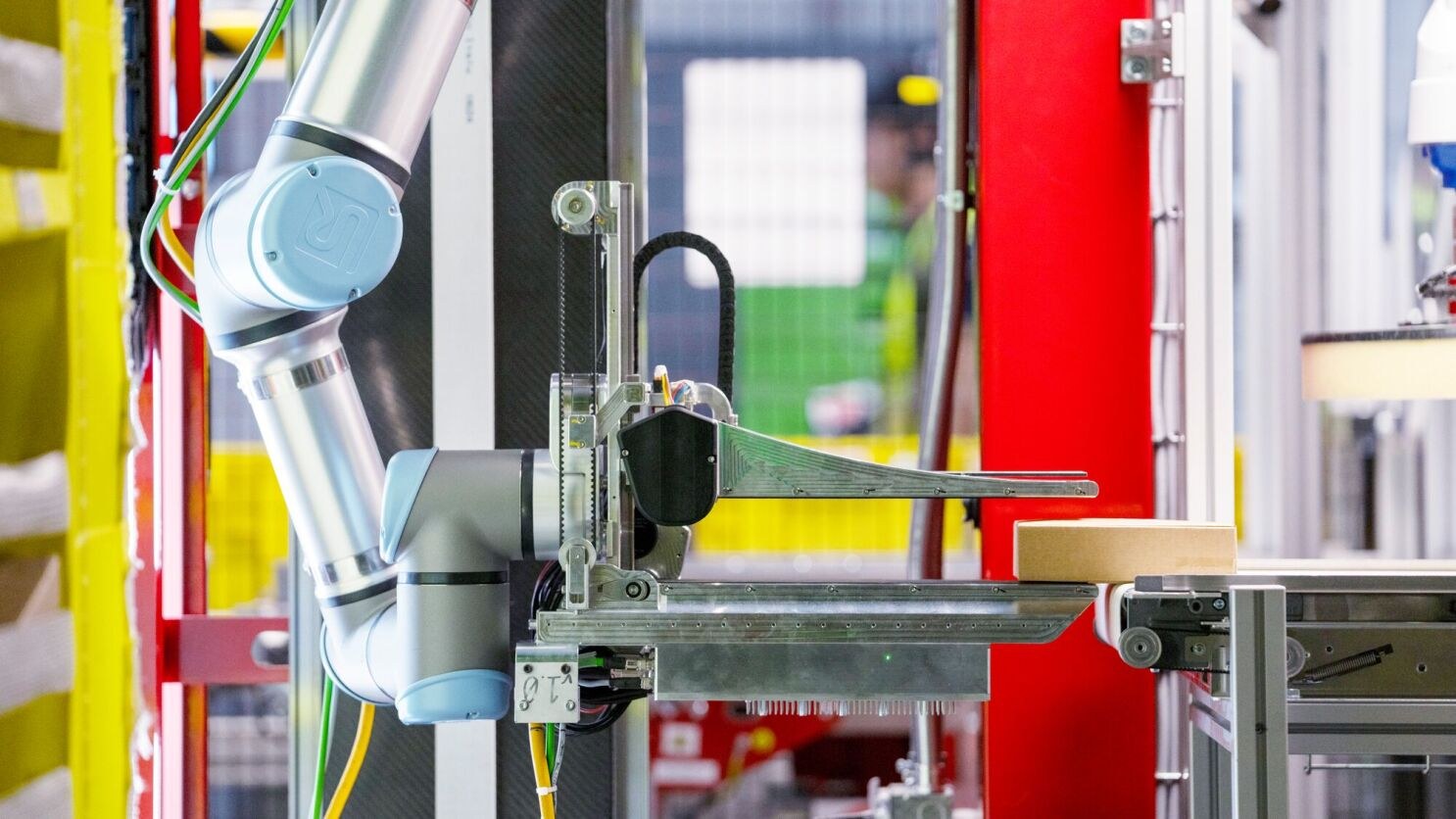
The hiring of Kosic underscores a critical pivot in the AI industry: the move from large language models (LLMs) to embodied, physical intelligence. While many startups focus on refining conversational AI or optimizing digital workflows, Prometheus is tackling the hardest problems—those requiring deep physical simulation and real-world interaction.
Kosic's experience leading the infrastructure behind xAI's Colossus supercomputer is highly relevant to this mission. Building a system capable of understanding physical constraints—such as thermodynamics, material stress, and fluid dynamics—requires compute power and architectural design far exceeding typical cloud-based LLM training. It demands a specialized, dedicated infrastructure capable of running massive, physics-informed simulations.
This focus differentiates Prometheus from many of its competitors. Instead of optimizing the prompt-response cycle, the goal is to build a generalized intelligence layer that can ingest engineering requirements and output validated, functional designs. The infrastructure must therefore be robust enough to handle the iterative, resource-intensive nature of industrial design, where failure in simulation translates to millions in physical costs.
Scaling Mega-Capital for Industrial Transformation
The financial ambition underpinning Project Prometheus is arguably as significant as the technical hiring. The stated goal of raising tens of billions of dollars positions the venture not as a typical startup, but as a sovereign investment entity focused on industrial modernization.
This level of capital deployment suggests a strategy of deep vertical integration. By acquiring stakes across diverse, capital-intensive sectors—aerospace, architecture, and specialized engineering—Prometheus aims to create a self-reinforcing ecosystem. The AI systems developed internally can then be immediately applied to optimize the acquired companies, creating a powerful feedback loop of capital, data, and technological advancement.
This model contrasts sharply with the typical venture capital lifecycle. Instead of seeking a quick exit via IPO or acquisition, Prometheus appears structured for sustained, decades-long industrial dominance. The investment thesis is that the physical world, constrained by physics and material science, represents the ultimate frontier for AI utility, and the company intends to own the tools required to unlock that potential.
The Competitive Landscape of Foundational AI
The movement of talent and capital into Prometheus signals a fierce escalation in the race for foundational AI capability. The hiring of a high-profile co-founder from xAI, who previously worked at OpenAI, highlights the intense battle for expertise at the highest levels of AI infrastructure development.
The market is currently fractured among several mega-players: OpenAI/Microsoft, Google DeepMind, Anthropic, and now Prometheus. Each entity is staking a claim on the future of intelligence, but their immediate focus areas differ. While some prioritize multimodal generative AI (creating images, video, and code), Prometheus is laser-focused on the "hard compute" problems of the physical world.
This specialization is a strategic move. By focusing on the engineering domain, Prometheus attempts to build a moat that is difficult for general-purpose AI models to cross. Solving engine design or structural failure prediction requires a level of domain-specific knowledge and computational rigor that goes far beyond pattern recognition; it requires predictive physics. This specialization gives the venture a unique, defensible niche in the AI arms race.