The rapid shift in the AI development landscape
Artificial intelligence development is advancing at an extreme pace. Models considered cutting-edge recently are now facing challenges, replication efforts, or outright bans. The current AI landscape is defined by major policy shifts, unexpected leaks, and an intensifying race toward open-source dominance.
If you thought the AI industry was stable, think again. Anthropic, the company synonymous with the Claude model, has been at the epicenter of a whirlwind week of developments. From the controversial banning of a model like OpenClaw to the unexpected public leakage and subsequent open-sourcing of core Claude code, the guardrails of proprietary AI are crumbling.
But the story isn't just about Anthropic. This week also saw the continued rise of powerful open-weights models like Gemma 4 and the impressive unveiling of Qwen 3.6, solidifying a new era where the best AI capabilities are increasingly available to everyone.
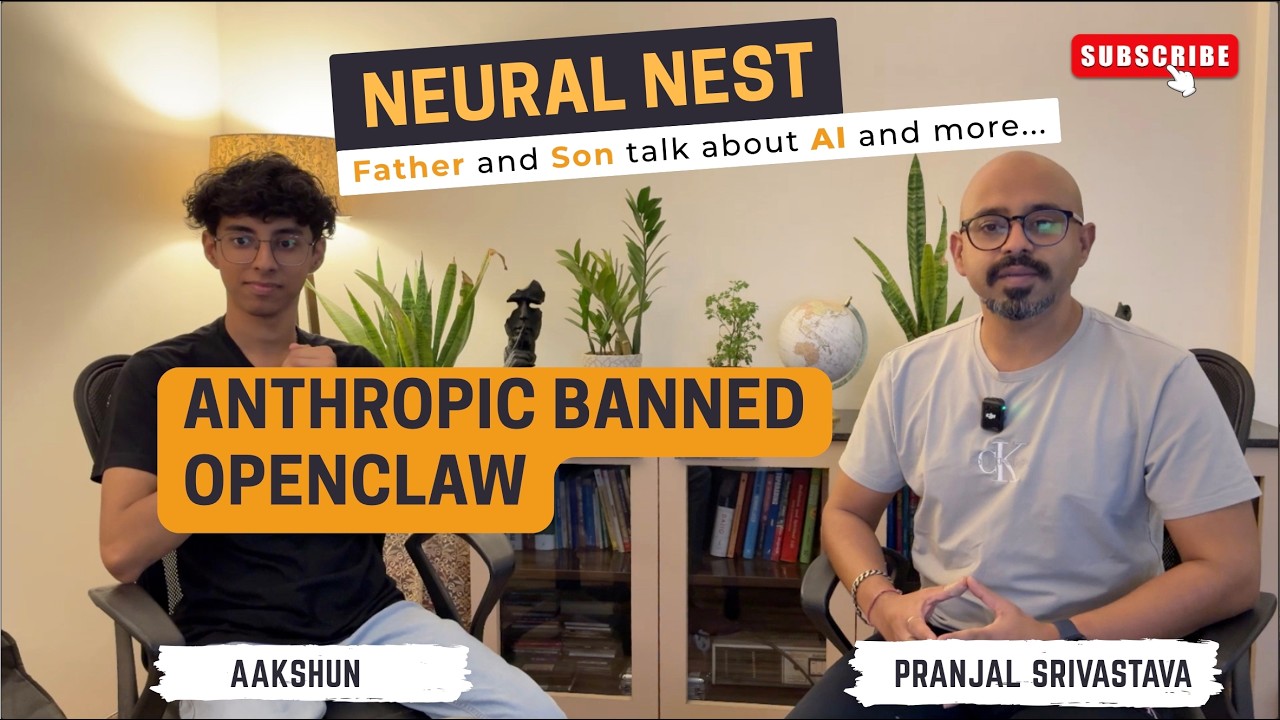
The week started with a dramatic policy intervention: the banning of OpenClaw.
The Great Unraveling: Anthropic, OpenClaw, and the Open-Source Paradox
The week started with a dramatic policy intervention: the banning of OpenClaw. While specific details surrounding the ban are still emerging, the incident itself highlights a growing tension within the AI industry—the struggle between safety, proprietary control, and accessibility.
When a model like OpenClaw is suddenly restricted, it sends ripples through the developer community. It forces researchers and companies to ask critical questions: Are the guardrails being applied too broadly? Is the industry moving too fast for regulation to keep up?
This tension was immediately amplified by the news surrounding Claude. The leakage of core Claude code was, initially, a massive security concern. However, the subsequent community reaction was one of immediate, fervent adoption. Instead of panic, the leak fueled a massive open-source movement. The availability of foundational code, even if leaked, allows thousands of developers globally to dissect, improve, and build upon the architecture.
The Open-Weights Powerhouses: Gemma 4 and Qwen 3.6 Reshape the Landscape
While Anthropic dominated the headlines with its policy shifts, the true engine of change this week came from the open-weights giants. The performance and availability of models like Google's Gemma 4 and Alibaba's Qwen 3.6 are not just updates; they are fundamental shifts in the market structure.
Gemma 4's Impact: As a highly capable, open-weights model, Gemma 4 represents the gold standard for accessible, high-performance AI. Its release reinforces the trend that state-of-the-art performance is increasingly being decoupled from closed, expensive APIs. For enterprises, this means the ability to run powerful AI models on private infrastructure, addressing critical concerns around data privacy and vendor lock-in. Gemma 4 proves that top-tier performance doesn't require a subscription to a closed ecosystem.
Qwen 3.6: Expanding the Frontier: Qwen 3.6 continues to demonstrate the breadth and depth of the open-source community's contributions. These models are often highly optimized for diverse use cases, offering robust alternatives that challenge the market leaders. The continuous improvement and rapid iteration seen in models like Qwen 3.6 signal that the "open" side of the AI coin is not just catching up—it is leading the charge in terms of sheer volume, diversity, and adaptability.