The market did not panic for no reason
Claude Design is one of those launches that sounds small until you picture the workflow. You type what you want, Claude turns it into a usable interface draft, and suddenly the first pass of design is not happening inside Figma anymore.
That is why Figma's stock moved. Not because Anthropic shipped a finished Figma killer overnight. It moved because investors saw a credible path where UI work starts in an AI chat, then gets cleaned up in a design tool later. That is a different world for Figma.
Claude Design turns prompts into structured UI mockups, not just pretty images.
What Claude Design actually does
The useful version of this is not a pretty screenshot generator. It is a structured mockup tool. You ask for a checkout page, a mobile onboarding flow, or a dashboard, and the output is meant to have real layout logic behind it: components, hierarchy, spacing, and handoff data that a developer can actually use.
That matters because most AI design demos die at the mood-board stage. They look nice for ten seconds and fall apart the moment someone asks if the buttons are reusable, accessible, or tied to a design system. Claude Design is aiming at that boring middle layer. The boring part is the product.
Figma still has the harder moat
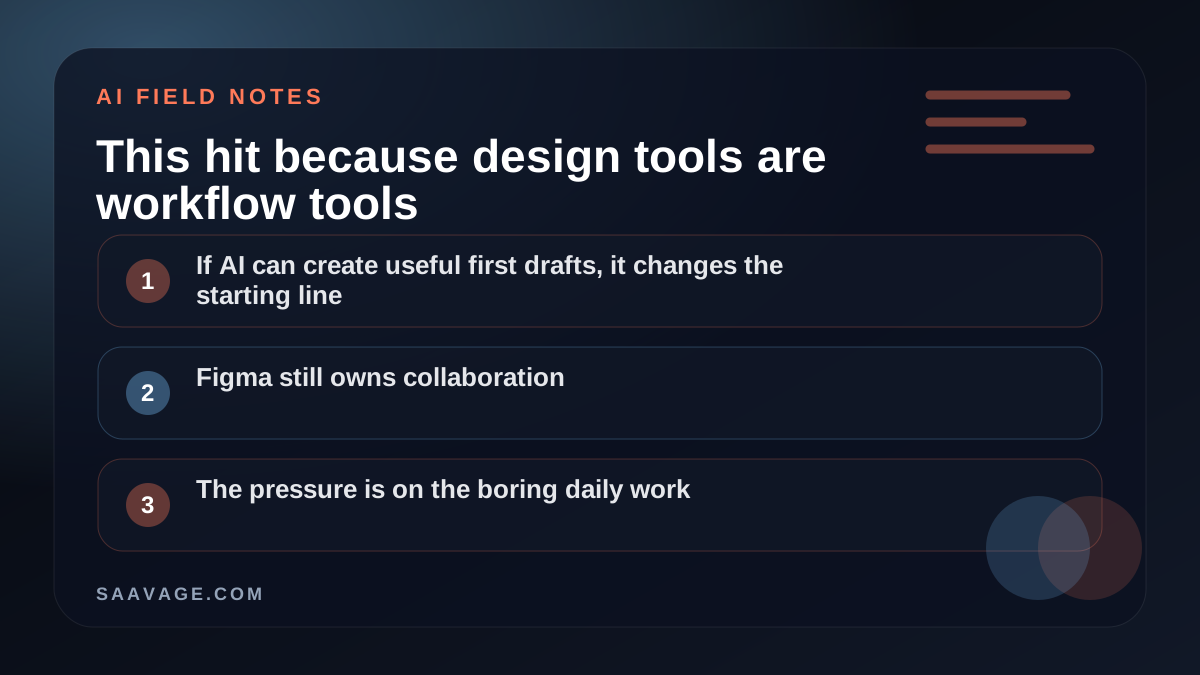
Figma's real moat is not that it can draw rectangles. It is multiplayer editing, design systems, comments, version history, and the fact that half the software world already lives there every day. Anthropic does not erase that with one launch.
But Figma does have a new problem. If AI tools become the place where rough UI ideas are born, Figma risks becoming the cleanup room instead of the starting room. That is still valuable, but it is less powerful than owning the moment where the idea first becomes real.
The version designers should care about
The best workflow is probably not Claude Design instead of Figma. It is Claude Design before Figma. Prompt the messy first draft, get three directions, throw away the bad ones, then let an actual designer make the thing usable, branded, and human.
That is the part I would watch. The danger to Figma is not that designers disappear. It is that the first hour of design work gets compressed into thirty seconds, and whoever owns that first draft gets a new kind of leverage.