Anthropic just told OpenClaw users to pull out a separate credit card
I want to be honest about my reaction here. When I saw the new Claude tier breakdown on April 4, 2026, my first thought was: this was always going to happen, and it still feels worse than it had to. Anthropic restructured Claude into a consumer plan and a developer plan, and the line they drew runs straight through every third-party tool that talked to Claude through a personal Claude.ai account. OpenClaw is the loudest casualty because it has the biggest dev install base, but the same change wipes out a long tail of indie wrappers, agent frameworks, and side-project shells that have been quietly piggybacking on $20-a-month Pro plans for the last year.
The mechanics are simple. Claude.ai Pro at $20 a month is now strictly browser chat. There is no first-party way to point an external client at it and have that work. If you want OpenClaw to keep working, you need an API plan, which starts at a developer tier and meters every token. For a heavy OpenClaw user running long agent sessions, that easily clears $40 to $80 a month, and it can run hot if you let an agent loop on a big repo. The cost is not catastrophic. The shape of it is what people are reacting to: a tool they were treating as a flat subscription is now metered, and the meter is fast.
Anthropic did not phrase it as a ban. They did not have to. The migration window is short, the messaging is gentle, and the technical effect is the same. OpenClaw on a Pro plan is dead. OpenClaw on the API plan works fine and costs you real money.
Anthropic's new tiering separates consumer Claude.ai chat from API-grade access used by third-party clients
Why Anthropic actually did this, in plain English
Margin. That is the entire first paragraph. Anthropic's consumer business is finally a real line item, and consumer subscribers paying $20 a month for a chat box are subsidizing developers who route an unbounded amount of agentic traffic through the same plan. That math was always going to break, and once your consumer revenue is large enough to matter to your investors, you fix it. I do not think anybody at Anthropic is being cruel here. I think they ran the numbers and the numbers said the cross-subsidy was over.
The second reason is abuse. OpenClaw and friends make it trivial to wrap Claude inside an autonomous loop that hits the model thousands of times in a session. Some of that is legitimate dev work. A non-trivial chunk is people building scrapers, content farms, and grey-market resellers who pay $20 once and then sell access to ten clients. Anthropic does not love being the cheap upstream for that, and a metered API plan is the only honest way to price it.
The third reason, the one nobody at a model lab will say out loud, is competitive control. If your most enthusiastic developers are running you through a third-party client, you do not own the surface where they evaluate you. You do not see their prompts. You do not collect their feedback. You do not get to ship them new features first. Pushing them onto your own API plan and your own console is how you take that surface back. It is a defensible move. It is also why every big lab eventually does it.
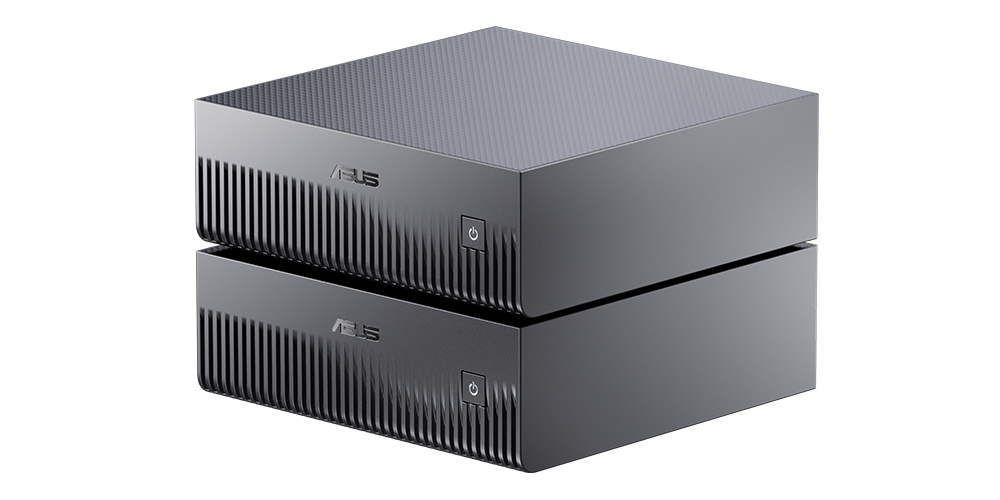
ASUS Ascent GX10 Personal AI Supercomputer
Local AI workstation pick for model testing and AI hardware stories
Affiliate links. We may earn a commission at no extra cost to you.
The OSS community's anger is not just performance
I have been reading the OpenClaw GitHub issues, the Hacker News thread, and a handful of subreddits since the announcement, and the anger is real and it is specific. The argument is not that Anthropic owes anybody free compute. The argument is that OpenClaw and tools like it were the bridge that brought Claude into a lot of professional workflows. People tried Claude inside OpenClaw on a personal $20 plan, decided they liked it more than GPT, and then carried that preference into their day jobs where the API spend was someone else's problem. Killing the on-ramp before you have a real free tier for that audience is a strange way to grow.
There is also a fairness complaint that I think is fair. Anthropic specifically marketed Claude.ai Pro as a power-user subscription, and a lot of the marketing was friendly to exactly this kind of usage. The change is technically allowed by the terms. It is also a real shift from how the product was sold to people in 2025. When you do that, you should expect a backlash and you should not act surprised when you get one.
The part that makes me cranky is how thin the alternative path is. Anthropic does not currently offer an OpenClaw-style first-party agent tool you can drop into your terminal at the Pro price. So the message to a developer using OpenClaw is essentially: pay more, or leave.
Where OpenClaw users are actually going
Three real options, in roughly the order I see people moving. First, OpenAI's Codex CLI. It is genuinely good now, it ships under the Plus plan for most reasonable usage, and it is the obvious lateral move for anyone who was using OpenClaw mostly for code agents. You lose Claude's writing voice and you gain a tool that is tighter inside a real shell. For a lot of devs that trade is fine.
Second, local models. Llama 4, Qwen 3, and a couple of the new mid-size Mistral models will all run on a 24 GB consumer card or a 64 GB Mac well enough to power an OpenClaw-style agent on small repos. The quality gap to frontier Claude is real, but the gap to 2024-era frontier is small, and for a lot of agent loops you do not need frontier. You need consistency and speed, and local gives you both for the price of electricity. I expect the OpenClaw fork that ships with first-class Ollama support to get a lot of stars over the next month.
Third, Gemini's developer tier. Google has been quietly aggressive on developer pricing, and for someone who was paying $20 for OpenClaw on Claude, Gemini's free tier plus light paid usage is a credible substitute. I do not love Gemini's outputs as much as Claude's for prose, but the cost story is hard to argue with.
What I'd actually do if OpenClaw was my main tool
If I were a working developer who lived inside OpenClaw on a Pro plan, here is the call I would make this week. I would set a hard monthly cap on Claude API spend, twenty or thirty bucks, and use that for the parts of my workflow where Claude's quality clearly wins. Long-form writing. Tricky refactors. Code review on PRs that matter. The places where the model's voice and reasoning actually justify the meter.
Then I would move every other agentic loop to a local model. Background tasks, file shuffling, repo summaries, doc generation, scratch experiments. None of that needs frontier quality. Most of it needs throughput, and throughput on local hardware is free after the upfront cost. This is the split I expect most heavy OpenClaw users to land on by summer, and I think it is the healthier setup anyway.
Verdict: this is a watch, not a panic. Anthropic has not killed OpenClaw. They have just made it a paid hobby for the people who want top-tier output, and a free hobby for people willing to run local. Both of those are fine outcomes. The thing I will be watching is whether Anthropic ships its own first-party OpenClaw equivalent inside Claude.ai Pro. If they do, this whole episode becomes a quiet repositioning. If they do not, they will keep eating exactly the developer goodwill they cannot afford to lose.
Related coverage
More from saavage on the same beat: my piece on Anthropic discovering functional emotions in Claude (/ai/anthropic-discovers-functional-emotions-in-claude), the breakdown of Claude Design taking shots at Figma (/ai/anthropic-launches-claude-design-knocks-figma-7), and the earlier read on Anthropic cutting off third-party access and what it implied (/ai/anthropics-claude-access-cut-highlights-ai-vendor-control-risks).
If you came here for the bigger lab dynamics, the trillion-dollar arms race piece (/ai/google-vs-anthropic-vs-openai-inside-the-1-trillion-ai-arms-race-that-will-defin) sets up why this kind of margin defense becomes inevitable once the consumer tier kicks in.