Overview
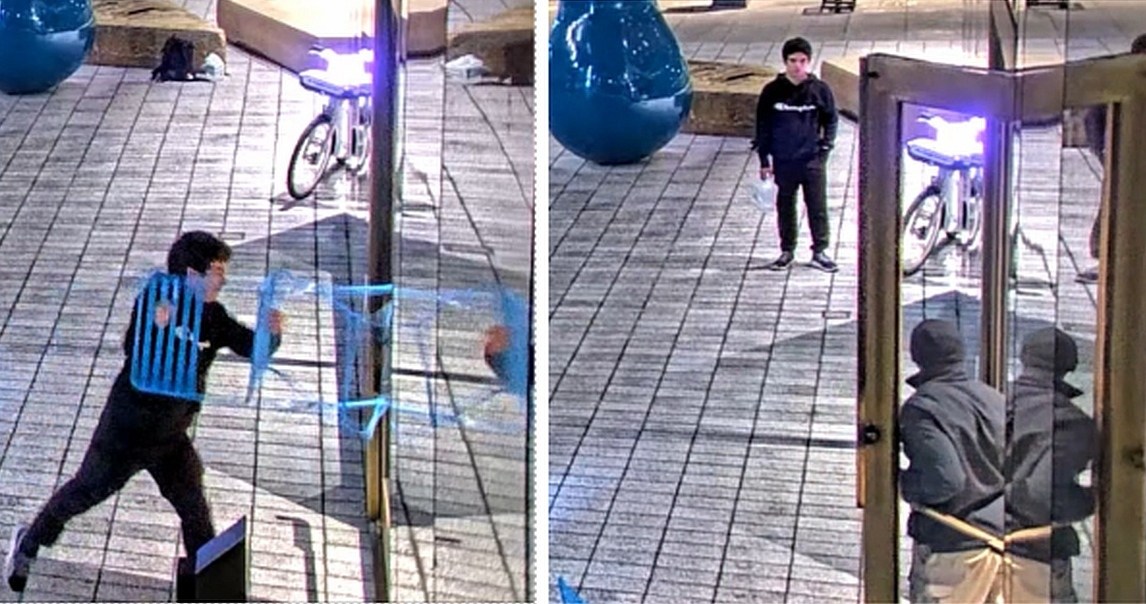
Federal prosecutors have charged Daniel Moreno-Gama with multiple counts of assault and trespassing following an alleged attack on Sam Altman’s private residence and OpenAI’s corporate headquarters. The charges signal a dramatic escalation in the physical risks associated with the development and deployment of frontier AI models. This incident moves the conflict surrounding AI from the theoretical realm of ethics and regulation into the tangible sphere of criminal law and physical security.
The nature of the alleged attack—targeting both the personal life of a key industry figure and the physical infrastructure of a major tech corporation—suggests a deep level of antagonism. It frames the pursuit of advanced AI not merely as a commercial venture, but as a point of contention significant enough to warrant criminal prosecution for violence.
The case immediately draws attention to the perceived fragility of the AI industry’s leadership. As companies like OpenAI and Anthropic amass unprecedented levels of capital and computational power, the concentration of influence has created a high-stakes environment. The legal action against Moreno-Gama is less about the specific assault charges and more about the volatile tension between revolutionary technology and established societal order.
The Security Vacuum Around Frontier AI

The Security Vacuum Around Frontier AI
The incident exposes a critical gap in the security architecture surrounding the most valuable assets in the AI sector: the people and data that drive the models. While OpenAI maintains state-of-the-art digital defenses, the physical security of its leadership and key facilities appears to have been breached.
The charges detail multiple instances of trespassing, suggesting a sustained effort to infiltrate secure areas. For a company whose core value proposition is intelligence and predictive capability, the inability to guarantee physical safety represents a profound vulnerability. Industry analysts have long warned that the speed of AI development has outpaced the corresponding advancements in corporate security protocols.
Furthermore, the legal proceedings will inevitably scrutinize the protective measures in place at OpenAI's campus. The question is not whether the facility was breached, but how the breach was executed and whether the security team failed to identify the threat until it was too late. This raises systemic questions about whether current private sector security models are adequate for protecting assets whose value approaches national infrastructure.
The Weaponization of Discontent
The profile of the alleged attacker, Moreno-Gama, and the nature of the charges suggest a motive rooted in ideological or anti-technology sentiment. This moves the narrative beyond simple vandalism and into the realm of organized, targeted opposition.
The escalating nature of these threats suggests that dissent against the rapid pace of AI development is becoming increasingly militant and physical. Critics of large language models (LLMs) and generative AI often focus on issues of job displacement, algorithmic bias, and the concentration of power among a handful of Silicon Valley entities. This incident provides a dramatic, albeit criminal, manifestation of that deep-seated discontent.
From a regulatory standpoint, the case forces lawmakers to confront the difficulty of governing an industry that operates globally, moves at lightning speed, and often outpaces legislative capacity. If the threat is ideological, then the solution cannot simply be increased private security; it requires a fundamental re-evaluation of how AI's societal impact is managed.
Legal Precedent and Corporate Immunity
The federal charges against Moreno-Gama set a potential legal precedent for how corporate entities can defend themselves against threats related to proprietary technology. The prosecution will need to build a case that not only proves criminal intent but also links that intent directly to the perceived power or existence of the AI enterprise.
This introduces a complex legal dynamic: how much protection do corporate assets—especially intellectual property that is constantly evolving—warrant under existing criminal law? If the state treats the disruption of an AI HQ as equivalent to attacking critical infrastructure, it fundamentally changes the balance of power between the state and the private tech sector.
The outcome of these charges could influence future corporate risk assessment. Companies developing foundational models will likely increase spending on physical security, but they may also face increased scrutiny regarding their internal governance and ethical guardrails, especially if the public narrative frames them as unchecked power centers.