Overview
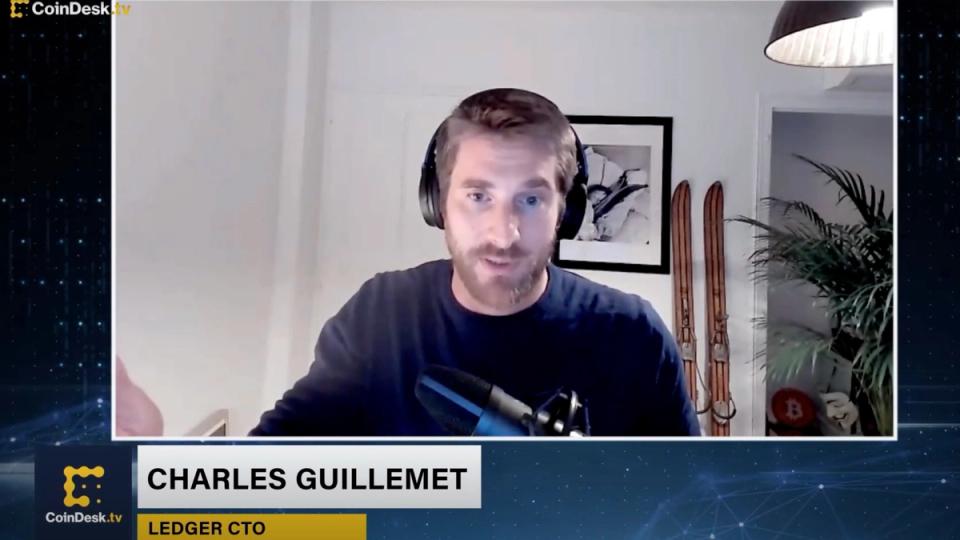
The confluence of generative AI and decentralized finance protocols has created a critical security inflection point for the crypto industry. Charles Guillemet, Chief Technology Officer at Ledger, stated that artificial intelligence is fundamentally eroding the economic barrier to entry for cyberattacks, making sophisticated exploits cheaper and faster than ever before. The traditional model of crypto security, which relied on making attacks prohibitively expensive, is rapidly breaking down.
The threat is not theoretical. Over the past year alone, crypto platforms suffered losses exceeding $1.4 billion due to hacks and exploits, according to DefiLlama data. Recent incidents, such as the $285 million drain from the Solana-based protocol Drift, underscore the severity of the vulnerability landscape. Guillemet argues that AI tools are transforming the asymmetry of cyber warfare, shifting the cost of finding and executing vulnerabilities toward zero.
This development forces a complete reassessment of how blockchain protocols and digital assets are protected. The industry can no longer rely on outdated security practices or the assumption that complex codebases are inherently safe. Developers and institutional players must now confront a reality where the speed and accessibility of offensive tools far outpace the pace of defensive development.
The Erosion of Asymmetry by AI Tools

The Erosion of Asymmetry by AI Tools
Security historically maintained its advantage by ensuring that the effort required to breach a system significantly outweighed the potential reward. This asymmetry was the core principle of digital defense. AI is systematically dismantling this principle. Tasks that once required months of dedicated effort from highly specialized researchers—such as reverse engineering proprietary software or chaining multiple complex exploits—can now be executed in seconds using advanced AI prompts and code generation tools.
This capability is particularly dangerous within the crypto sphere, where code often directly controls massive pools of capital. The ability to rapidly identify logical flaws or memory vulnerabilities dramatically lowers the barrier to entry for malicious actors. Guillemet warned that the current state of development suggests that "finding vulnerabilities and exploiting them becomes really, really easy," implying that the cost of attack is approaching zero.
The problem is compounded by the integration of AI into the development workflow itself. As more developers utilize AI code generators to accelerate development cycles, the risk of systemic vulnerability increases. The CTO cautioned that there is no simple "make it secure" function; instead, the industry risks producing vast amounts of code that are insecure by design, simply because the tools used to write them lack intrinsic security checks.
Rebuilding Trust Through Formal Verification and Hardware Isolation
The escalating threat profile necessitates a radical pivot away from traditional security auditing methods. Guillemet emphasized that the industry must adopt mathematically rigorous approaches to code validation. The primary alternative proposed is formal verification, a method that uses mathematical proofs to validate that code behaves exactly as intended, eliminating the possibility of hidden bugs that standard audits might miss.
Beyond the code level, hardware-based security is critical for mitigating the physical exposure of private keys. Hardware wallets, which isolate seed phrases and private keys from internet-connected systems, represent a necessary layer of defense. This approach ensures that even if a user's primary device is compromised—for instance, through malware scanning for wallet seed phrases—the foundational assets remain inaccessible.
The need for this hardware isolation is growing as malware becomes more sophisticated. Attack vectors are moving beyond simple phishing schemes; they are targeting the user's local environment, attempting to drain funds without requiring the user's explicit interaction. This necessitates a return to foundational security principles: keeping critical assets physically and digitally segregated from the internet.
The Developer Imperative: Assuming Failure is Inevitable
The message to protocol developers is stark: perfection is no longer a viable goal. Guillemet stressed that developers must assume that their systems will fail. This mindset shift is crucial because the speed and cost of attack are accelerating faster than the rate of defensive innovation.
This means that security cannot be an afterthought or a feature added during the final testing phase. It must be integrated into the foundational architecture of the protocol itself. For decentralized finance (DeFi) protocols, which manage billions in user funds, this implies a need for deep, multi-layered redundancy and immutable security checks.
The current trend of rapid, high-yield deployment in DeFi, while driving innovation, often bypasses these rigorous, time-consuming security checks. The resulting gap between deployment speed and security maturity is the primary vulnerability point. The industry must slow down and prioritize mathematical certainty over market hype to survive the AI-fueled arms race.